U.S. Army Delays Planned Detonation
The U.S. Army postponed a planned detonation of several tons of explosive chemicals in southeast Iowa. Public concerns over environmental contamination and health risks caused this delay. Initially scheduled for Friday, the detonation will now occur on Monday.
Iowa Governor Kim Reynolds was among the voices urging for this delay. She expressed her concerns directly to Acting Secretary of the Army Adam Telle. Environmental groups also took legal action, seeking emergency court intervention to prevent the planned detonation.
Background on the Lead Azide Situation
The planning for this detonation began when Army personnel found degraded barrels of lead azide at the Iowa Army Ammunition Plant. The material was deemed unstable, and an emergency permit approved by the U.S. Environmental Protection Agency highlighted the dangerous situation. Relocating the barrels posed high risks due to possible accidental detonation, especially with freezing temperatures increasing instability.
Army officials made plans to conduct the detonation just before a forecasted temperature drop. As part of preparations, they advised residents in the nearby town of Middletown to consider temporary evacuation. Public communication was emphasized as a crucial element for maintaining trust.
Community Reactions and Preparations
The decision to delay took place late Thursday. Many schools and businesses had already planned closures on Friday, including those in the town of Danville. Pat Wallace, Superintendent of Danville Schools, determined that closing was the best choice given the uncertainties.
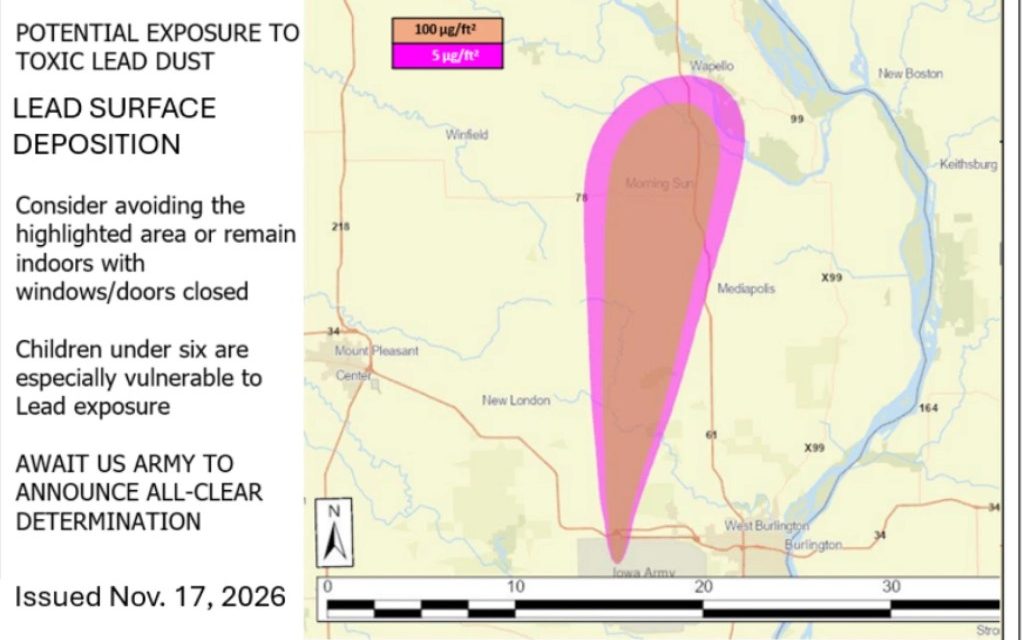
Mediapolis, situated less than 20 miles from the plant, also planned for school and library closures. Additionally, the local fire department intended to clean playgrounds potentially exposed to lead particles. Officials anticipated vibrations from the detonation, which could potentially damage structures like old windows.
Environmental and Health Concerns
The Army projected that lead particle levels in the air would remain below thresholds requiring EPA interventions. Nevertheless, they advised residents to clean outdoor surfaces and vehicles. Community concerns were still present, with residents expressing fears on social media.
In March, Middletown citizens were informed that unstable lead azide required safe disposal. Lt. Col. Daniel Nosse, plant commander, stressed the importance of safety for both soldiers and local residents. Experts in various fields crafted the detonation plan, as moving the barrels posed significant risks.
Precautionary Measures and Legal Action
University of Iowa professor Patrick O’Shaughnessy noted uncertainties about contamination extents. Lead’s neurological toxicity can damage the brain and nervous system, particularly affecting young children with long-term exposure. Purdue University’s Andrew Whelton highlighted risks of short-term exposure inducing lead poisoning.
Public concern flooded the Iowa State’s Des Moines County Extension field office, which ran short of soil test kits. Environmental groups filed lawsuits, claiming the EPA neglected to consider safe alternatives adequately. Alternative methods such as chemically neutralizing the contents could increase accidental detonation risks.
 Lewis Pugh’s Swim Through Danger Highlights Strait of Hormuz Crisis
 Detroit Boy in Critical Condition After Unsecured Firearm Incident
 Building Resilience Amid Stress and Uncertainty
 How to Prepare for Aging Parents: Practical Steps for Families
 House Urged to Embrace Historic Permitting Reform
 California Prepares for Future Wildfire Seasons with Major Investments