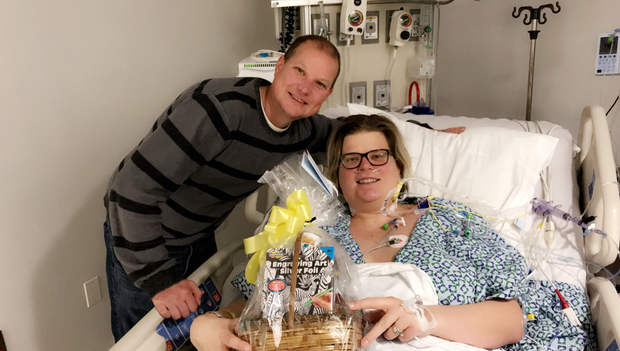
Megan Kaverman began experiencing unusual symptoms at 18, such as weight gain and shortness of breath. Her family doctor never identified the cause. By 25, she was dealing with extreme fatigue and difficulty breathing. Despite seeing multiple doctors, her health issues were dismissed as non-serious due to her age.
In 2016, a visit to the emergency room revealed she was in the early stages of heart failure. Determined to get answers, she insisted on a complete diagnosis, leading to the discovery of heritable pulmonary arterial hypertension (HPAH). This rare genetic condition causes lung arteries to narrow, raising blood pressure and straining the heart.
Megan defined her diagnosis day as her “rebirth,” citing treatment at the Cleveland Clinic as instrumental in her return to normal life.
Two years later, Megan noticed similar symptoms in her sister, Katie Gusching, following her first child’s birth. Katie struggled with breathlessness even during simple tasks and experienced leg swelling. Inspired by Megan’s journey, she suggested doctors check for pulmonary hypertension.
Katie underwent tests that confirmed she also had the condition. She credits Megan’s perseverance for saving her life. “If she hadn’t gone through all that, who knows if I’d be here,” Katie remarked.
HPAH affects less than 4% of people with pulmonary arterial hypertension, with fewer than one in a million diagnosed, according to Orphanet. Most patients are diagnosed only once in heart failure. While incurable, the disease can be managed with treatment and medications.
Katie admits she initially grieved her diagnosis, thinking of activities she might no longer enjoy, such as hiking or swimming. Navigating insurance and medications was challenging, but Megan’s support proved invaluable.
The sisters receive care from the Cleveland Clinic, participating in clinical trials for new treatments. Dr. Kristen Highland highlighted the progress in treating pulmonary hypertension, with many patients now responding well.
Kaverman and Gusching advocate for awareness of pulmonary hypertension. Megan encourages anyone with unresolved cardiac symptoms to inquire about the possibility of the disease. “I want to help advocate for those who can’t,” she said.
Both sisters have their condition under control now. Katie resumed hiking, conquering a 3-mile trek she once thought impossible. Megan, at 36, enjoys running 5Ks without getting winded. They plan a trip to the Dominican Republic for Katie’s birthday.
Despite past challenges, the sisters find positivity in shared experiences. They schedule clinic visits together, fostering closer ties. “We’ve always shared a lot,” Megan said. “This only brings us closer together.”
 Emerging Wellness Trends: Lymphatic Drainage and Ice Sculpting
  Increased Use of GLP-1 Medications Among Young Adults: Examining Trends and Concerns
  Lisa Fasone’s Journey Through Prolactinoma and New Parenthood
  Examining Testosterone Therapy for Menopausal Women
  Impact of ‘Food Divorce’ on Relationships
  Long-Term Health Impacts of the 9/11 Attacks