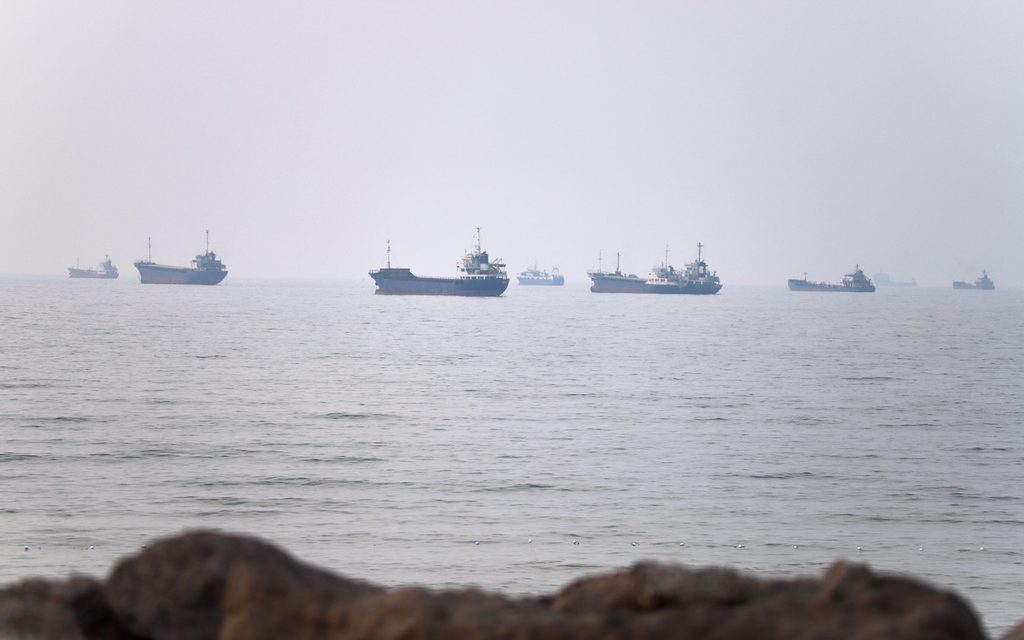
Commercial vessels were spotted in the Strait of Hormuz near Bandar Abbas, Iran on June 30, 2026, coinciding with a significant diplomatic development. Speeches from three leaders with divergent views introduced a notable circumstance. Pakistan’s Prime Minister, Shehbaz Sharif, stated that ballistic missiles “were never a subject of discussion.” President Masoud Pezeshkian of Iran asserted that the missile matter “never will be” part of any agreement. Meanwhile, at the G7 in Evian, President Trump dismissed missiles as weapons that “hurt a little location” but “don’t blow up the planet.” These remarks from individuals rarely in agreement highlighted a shared understanding of a critical omission.
The U.S.–Iran Memorandum of Understanding (MOU) lacks any reference to ballistic missiles, the primary delivery system for nuclear weapons. While it contains a commitment from Iran not to develop nuclear weapons, ballistic missiles, which play a key role in Iran’s military strategy, remain unaddressed. The exclusion reflects a significant structural decision, as Washington effectively distinguished the warhead from the vector, viewing them as separate negotiation paths.
A nuclear program without missiles is a science project; a missile program without nuclear warheads constitutes an operational military force currently in use. Notably, during the October 2024 conflict, Iran used ballistic missiles to overwhelm Israel’s air defenses, revealing interception limits. The MOU unintentionally legitimizes this ability, shielding it from further international pressure.
This omission has broader implications. Iran retains its missile program intact while Washington sought an agreement more urgently than Tehran needed concessions. The U.S. decision to prioritize agreement speed resulted in viewing missile negotiations as a “second track” neglected during talks.
In response to sanctions relief, Iran may access up to $16 billion in assets over 60 days, allowing it to bolster its missile production base. Iran’s missile production capabilities are domestically supported and resilient to manufacturing sanctions. However, sanctions relief aids access to crucial dual-use components—guidance systems, propellant, and advanced electronics. Each asset release without missile constraints enhances Iran’s strike capability with diplomatic backing.
Countries like Israel, Saudi Arabia, Qatar, and the UAE are key targets of Iran’s missile arsenal. Denied consultation, these allies may opt for unilateral strategies. Israel accelerates its independent options while Gulf states focus on enhancing missile defenses and forming ties with non-U.S. suppliers. The MOU illustrates Washington’s willingness to manage escalation post-incident instead of through prevention.
Iran values its missile program as vital for regime stability. Unlike the nuclear program, which deters existential threats, the missile program counters conventional interventions and supports regional influence. The recent agreement validates Iran’s strategy by demonstrating that maintaining conventional strike power generates leverage.
Iranian Parliamentary Speaker Mohammad Bagher Ghalibaf noted Lebanon’s prolonged battle was on behalf of “Islamic Iran,” illustrating Iran’s proxy doctrine. Meanwhile, Iranian negotiators secured an agreement leaving those military tools untouched.
The window for missile negotiation inclusion appears closed. Once Iran demonstrates partial nuclear compliance, pressure builds to maintain the agreement, complicating missile inclusion. Without Iranian willingness or a new pressure approach, the current trajectory does not forecast missile negotiation success.
The MOU reallocates potential escalation risks, as any future ballistic missile confrontations arise outside the agreed framework. The agreement addresses a weapon Iran might build but ignores its existing arsenal. If missiles do not become a fixed negotiation condition in future talks, the MOU might mark not the start of denuclearization but Washington’s unintended endorsement—and funding—of an escalating threat.
Journalist Charbel A. Antoun specializes in U.S. foreign policy, focusing on the Middle East and North Africa.
 Iran’s Attacks on Bahrain: The Impact on Military Families
  United Russia’s Dominant Election Result: Implications for Putin’s Ukraine Policy
  Canada’s Tariff Reduction on Chinese EVs Raises Security Concerns
  Hunter Shoots Woman Mistaken for Deer in Delaware
  Logan and Jake Paul’s Visit to the Pentagon Raises Eyebrows
  Trump’s Shift in Foreign Policy and Its Implications