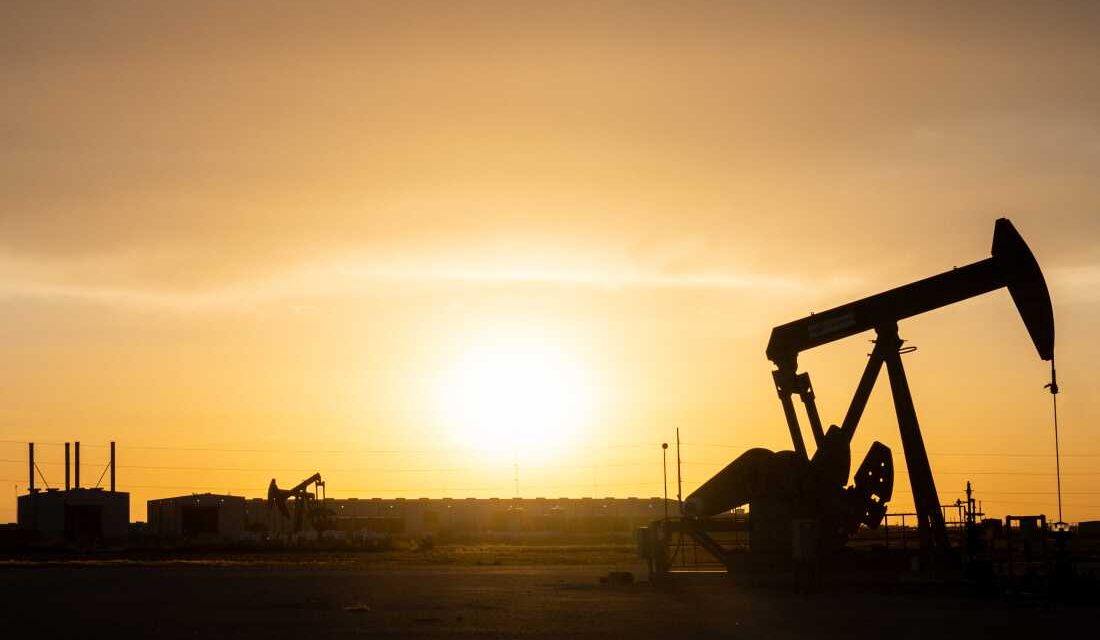
The recent conflict between the U.S. and Iran has triggered a rise in oil prices, increasing gasoline costs for American consumers. While oil and gas companies are benefiting from these higher prices, the cost of producing oil remains relatively stable, according to the American Petroleum Institute.
Some U.S. lawmakers are advocating for a tax on windfall profits, which are sudden, unexpected profits earned by oil companies during times of global turmoil. Environmental nonprofit Global Witness and the Guardian report that during the early days of the U.S.-Israeli conflict with Iran, the top 100 oil and gas companies gained $30 million per hour in excess profits.
Dominic Eagleton from Global Witness explains that the surge in oil prices globally is responsible for these profits. Despite these gains, oil production costs have not seen significant changes, as noted by the American Petroleum Institute.
The collaboration between Global Witness and other environmental groups determined that the top six European oil firms achieved at least $22 billion in profits in the first quarter of 2026, representing a 43% increase compared to the corresponding period of 2025, an NPR report indicates.
The windfall tax example set by the U.K. and European Union provides context for the proposal in the U.S. Following Russia’s invasion of Ukraine in 2022, both regions implemented such a tax on oil profits. The U.K.’s tax policy raised more than $12 billion from 2022 to the end of fiscal 2025, while the European Union’s temporary tax generated almost $30 billion over two years.
Sen. Sheldon Whitehouse of Rhode Island is leading efforts to introduce a windfall profit tax in the U.S. He outlined how the tax would function. The approach involves evaluating the average oil price before the conflict and comparing it to current spikes to assess profits from these barrels. Oil companies would be allowed to retain half of the excess profits, while the remainder would be allocated to support lower-income Americans.
Whitehouse, in collaboration with Democratic Rep. Ro Khanna of California, initially put forward a proposal for such a tax in a 2022 bill, reintroducing it in March.
Eagleton explains that profits raised by the European Union went primarily to assist families burdened by high energy bills. Ministers from Austria, Germany, Italy, Portugal, and Spain have called for another EU windfall tax.
Historically, the U.S. implemented a windfall oil tax in 1980 following the spike in oil prices during the prior decade. However, the revenue generated was below projections due to a collapse in oil prices in the mid-1980s. Tyler Priest, an historian at the University of Iowa, noted that oil companies managed to modify operations to shield their profits.
Whitehouse’s current tax proposal considers lessons from the 1980 tax by accounting for overall oil prices, preventing individual companies from manipulating costs. It also accommodates both imports and domestic oil, potentially increasing revenue.
The American Petroleum Institute views the proposed tax as misguided. API’s Dustin Meyer argues that penalizing energy production is misplaced, especially during current circumstances.
Whitehouse notes that the proposed tax would target larger oil companies producing or importing more than 300,000 barrels daily, leaving about 70% of U.S. production exempt.
Discussion on the tax proposal’s likelihood of passing includes comments from proponents like Independent Bernie Sanders and approximately a dozen Democratic Senators. Whitehouse acknowledges the challenges ahead but emphasizes the necessity of highlighting industry profits and encouraging climate-friendly alternatives.
 Poll Reveals Voter Preferences Between Socialist Democrats and MAGA Republicans
  Challenges of Electing a Female President: Insights from ‘The View’
  Upcoming Concerns and Influence in Health Politics
  Rep. Donalds Distances Himself from Trump as Florida Governor Race Tightens
  Controversy Surrounds President Trump’s Proposed D.C. Arch
  AOC and the 2028 Presidential Election: Gender, Race, and Politics