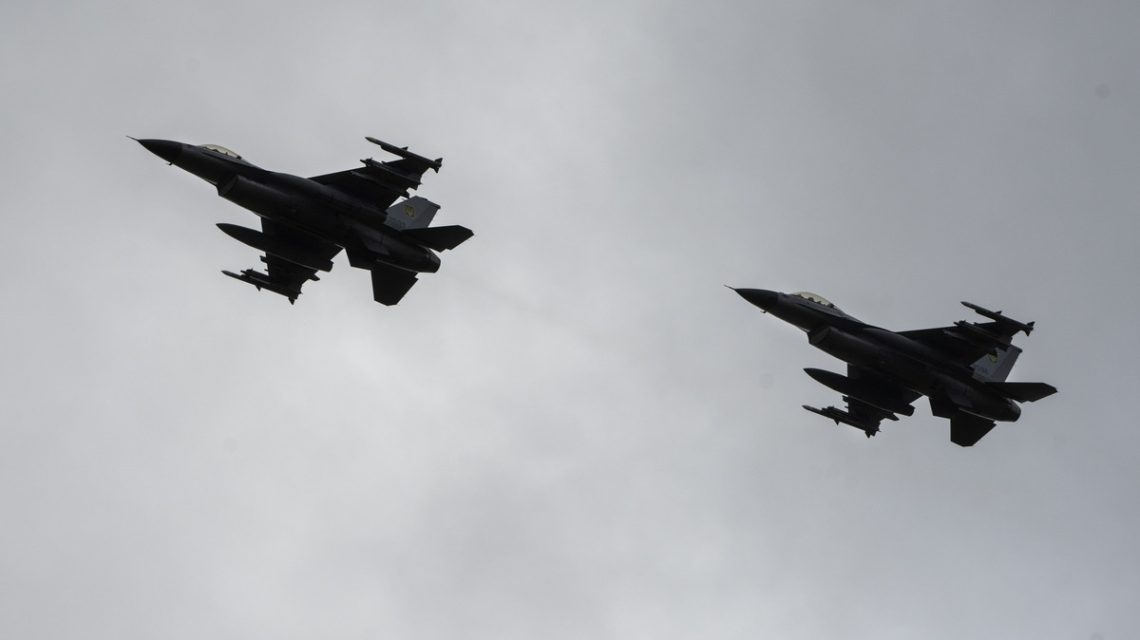
For the first time, a Ukrainian F-16 fighter jet has downed a Russian jet in a notable aerial engagement, announced General Dan Caine, the chairman of the U.S. Joint Chiefs of Staff, to U.S. lawmakers. This incident brings the spotlight back to the U.S.-made F-16, an aircraft that has remained relatively low profile in Ukraine since its initial arrival in the conflict-ridden nation two years ago.
General Caine did not specify the model of the Russian aircraft targeted. However, Ukrainian media highlighted a statement from the country’s air force dated July 8, claiming the downing of an Su-35 over eastern Ukraine.
A Russian Telegram channel with alleged ties to Moscow’s air force reported that three Ukrainian aircraft and a Patriot anti-aircraft system targeted the Su-35. It mentioned that the pilot survived the encounter and identified two of the Ukrainian jets as F-16s.
Both the F-16 and Su-35 belong to the category of fourth-generation fighter jets. Experts describe these as effective but not as advanced or stealthy as the modern fifth-generation planes such as the U.S. F-35s or F-22s. Nevertheless, the F-16s represent a technology improvement over the older Soviet-era jets like the MiG-29 or Su-27, which Kyiv had used for several years.
Ukrainian officials have persistently advocated for Western allies to provide F-16s as these countries gradually phase them out in favor of upgrading to fifth-generation aircraft.
Since the summer of 2024, Ukraine has been operating F-16s. This follows pledges from four NATO countries to send about 80 Lockheed Martin-manufactured jets to Kyiv. However, the delivery has faced delays. Some of the jets have been assigned to active combat against Russian forces, while others serve as spare parts.
Ukraine frequently employs its F-16s to intercept Russian missiles and drones aimed at Ukrainian urban centers, rather than executing long-range strikes within Russian territory. The country struggles with a shortage of air defense systems and missiles, which are essential for neutralizing Russian missiles and drones before they impact populated areas or significant military sites. Meanwhile, Russia has amplified its assaults on Ukraine.
In late 2025, Ukrainian F-16s were reported to have almost run out of the necessary missiles for a period close to a month, based on a March report by Reuters. Currently, Ukraine’s F-16 fleet is estimated at approximately 39 aircraft, as per the Ukrainian defense publication, Defense Express.
Ukraine has accounted for at least three F-16 losses, with another jet reportedly damaged by June 2025, resulting in the pilot’s death. In a strategic move, Kyiv has recently agreed to acquire 16 Gripen jets from Sweden, expecting these to operate in Ukraine’s airspace within three years. Sweden’s commitment also includes sending 16 older Gripens from its own fleet to Kyiv.
For further details or inquiries, Newsweek editors Frances Mao and Tony Phillips can be contacted.
 Ontario Synagogue Shooting During Yom Kippur Leaves One Officer and Shooter Injured
  Pope Leo XIV’s Upcoming Visit to Latin America: An Overview
  Ukraine Deploys Ground Robots in ‘Operation Vivaldi’
  Understanding AI’s Impact Compared to Historical Threats
  State Department Alerts on Middle East Travel Amid Rising Tensions
  Iran’s Attacks on Bahrain: The Impact on Military Families