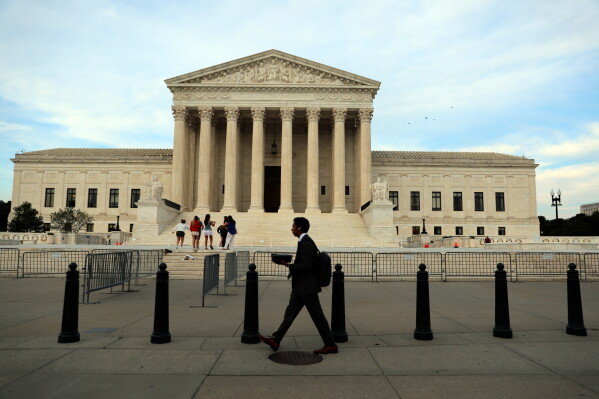
The Trump administration has expressed clear views on birthright citizenship. This practice grants automatic citizenship to nearly everyone born on U.S. soil, soon to face scrutiny by the Supreme Court. President Donald Trump described it as “a disgrace.” White House adviser Stephen Miller called it “the gravest and most preposterous of all constitutional abominations,” and Vice President JD Vance labeled it as “the dumbest immigration policy in the world” in 2025. Trump noted in an interview, “You know, we’re the only country that has it,” a claim he has repeatedly made, albeit falsely.
The Supreme Court is set to rule on a Trump executive order that could disrupt over a century of constitutional history. “It’s all up to a couple of people,” Trump stated recently, expressing hope for a favorable decision.
The History of Birthright Citizenship
Birthright citizenship became law in 1868 with the ratification of the 14th Amendment, aiming to ensure citizenship for former slaves after the Civil War. In the late 1800s, the case of Wong Kim Ark expanded this right to children of immigrants. Supreme Court rulings have continually affirmed that anyone born in the U.S. is a citizen, regardless of their parents’ immigration status, with few exceptions for children born to foreign diplomats.
This principle has long been part of U.S. jurisprudence. Historically, many Republicans viewed immigration positively. Former President Ronald Reagan, at a 1984 naturalization ceremony, acknowledged the contributions of immigrants, stating, “And all of them have added to the sum total of what your new country is.”
Controversy Under the Trump Administration
Trump’s opposition to immigration is central to his platform. Birthright citizenship, he asserts, is a “magnet for illegal immigration.” Officials from his administration highlight the phenomenon of “birth tourism,” where non-U.S. citizens travel to the country to give birth. Legal arguments often focus on the phrase “subject to the jurisdiction thereof” in the 14th Amendment. Contrary to most legal scholars, government lawyers argue it allows denying citizenship to babies born to women in the U.S. illegally. However, during the Supreme Court oral arguments, even some conservative justices questioned this reasoning.
Global Perspectives on Birthright Citizenship
Trump’s claim that only the United States practices birthright citizenship is incorrect. While many countries base citizenship on parental nationality, dozens of nations, especially in the Americas like Canada, Mexico, and others in Central and South America, offer unrestricted birthright citizenship. Several other countries use a mix of parenthood, birthplace, residency, and ethnicity to determine citizenship.
For further information and fact-checking, visit AP Fact Checks.
 Italian PM Giorgia Meloni Skips UN General Assembly Amid Growing Tensions
  Calls Grow for Ireland’s Soccer Team to Boycott Matches Against Israel
  Congressman Randy Fine’s Bold Political Stance and Views on AI Regulation
  Political Messaging and Strategy Leading Up to Midterms
  President Trump Proposes ‘Super Intelligence’ as New AI Term
  Trump Administration Considers Diesel Export Ban Amid Rising Prices