China Decoded is Newsweek’s newsletter focusing on China’s growing global influence. It provides insights into Beijing’s approach and its effects on the United States and its allies. Subscribers receive in-depth analysis directly in their inbox from experienced journalists such as Didi Kirsten Tatlow and John Feng.
China’s Industrial Playbook
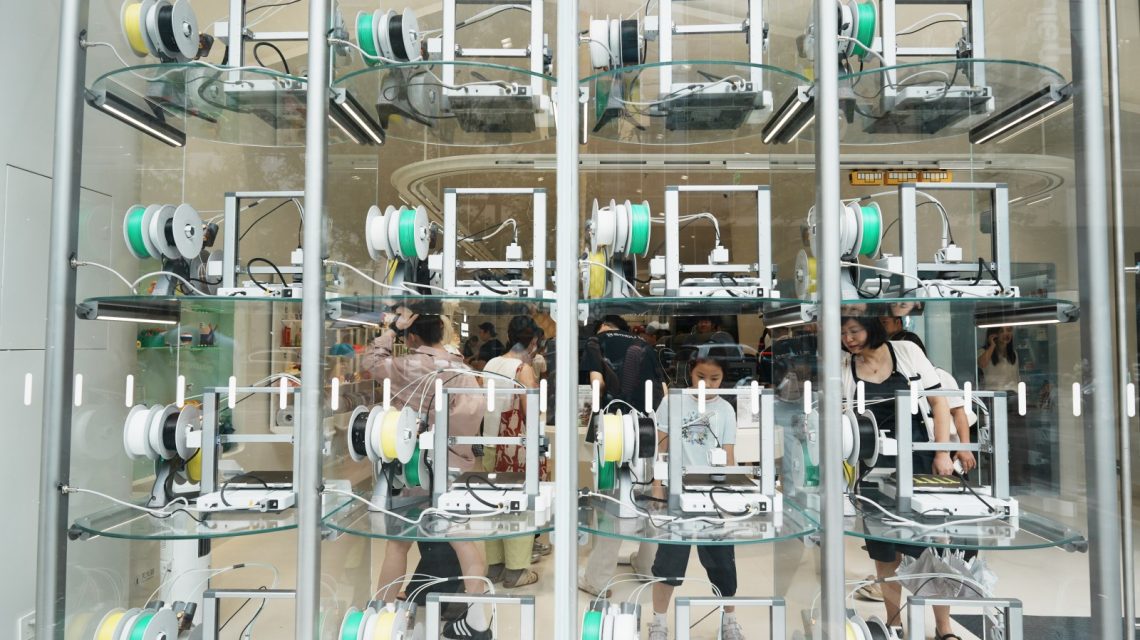
China’s strategy for industrial dominance relies heavily on acquiring new technology through various means, backed by substantial subsidies and industrial support. This approach is evident in sectors like 3D printing, also known as additive manufacturing (AM). AM works by building objects layer by layer from digital models and is crucial for industries requiring rapid production. A Czech study titled Blueprinting the Future, highlights China’s rising dominance in AM as an economic and security issue.
China’s Additive Manufacturing Strategy
In 2023, China spent 4.4% of its GDP supporting industrial policies, utilizing methods such as subsidies, tax benefits, subsidized land, and preferential credit. This rate is exceedingly high compared to other economies. AM is classified as a strategic industry, integral to China’s military-civil fusion, which has merged military with non-military manufacturing over decades. Leading Chinese companies, such as Bambu Lab and Xi’an Bright Laser Technologies, signify China’s expanding market presence.
The Global Impact of China’s AM Ecosystem
The authors of the study argue that China’s approach poses risks related to intellectual property, technology transfer, and data security. Chinese companies benefit from localization policies and state support, leading to a distorted competitive landscape. Western companies face challenges in market entry and securing venture funding.
The strategic concern is not only about industrial competitiveness but also about supply chain resilience, technology, and national security. The authors propose seven recommendations to counter China’s influence, emphasizing the protection of technology, collaboration with allies, and bolstering homegrown innovation.
The Data Behind China’s AM Success
China is transforming into a significant power due to its subsidized manufacturing sector. Its AM industry was valued at about $10.5 billion as of January, dominating nearly 40% of global AM devices sold last year. Although China leads in output, it trails the United States in value.
The global AM market is expected to grow significantly, reaching $168.9 billion by 2033, with the Asia-Pacific region expanding rapidly. While China excels in producing desktop machines, Western firms dominate in high-value sectors like medical and aerospace, where the actual profits lie.
Chinese competitors are likely to enter the highest-value sectors soon, continuing their practice of leveraging a mature manufacturing approach.
To learn more about China’s influence in technology and global economics or discuss these insights, reach out to journalists Didi Kirsten Tatlow and John Feng.
 Tragic Roof Collapse at Peshawar School: 28 Dead, Many Injured
  Harry and Meghan’s Return to Nottingham: A Day of Charitable Engagements
  Confusion Surrounds Starlink Restrictions in Ukraine
  President Trump Offers Support to Pope Leo XIV After Cancer Diagnosis
  U.S. Air Force Withdraws Bomber Aircraft from UK Base
  Former U.S. Ambassador to Greece Faces Ethical Violation Allegations