
Every American encounters the Declaration of Independence at some point. For most, it is regarded as a foundational text in the nation’s civic ethos, stressing human equality with its iconic statement: “We hold these truths to be self-evident, that all men are created equal, that they are endowed by their Creator with certain unalienable rights, that among these are life, liberty and the pursuit of happiness.”
The Declaration stands as a profound declaration of values, reflecting a universal desire for human liberty. President Gerald Ford once referred to it as the nation’s “Polaris,” a guiding star of freedom. Ford emphasized its unchanging nature due to its articulation of eternal moral truths.
The Historical Complexity of the Declaration
While the Declaration serves as a testament of civic principles today, its historical context reveals a more intricate narrative. Thomas Jefferson, the principal author, intended it to be a statement on political authority and a bold claim to the right of revolution. This was heavily influenced by Enlightenment thinkers like John Locke, focusing on government preconditions rather than a direct roadmap to freedom.
“The opening assertions of ‘self-evident’ truths concern men in a ‘state of nature’ before government was established,” observed historian Pauline Maier in “American Scripture: Making the Declaration of Independence.” Equality, in this context, meant that no one had authority over another by virtue of birth or divine right.
Jefferson mirrored a widespread sentiment of Revolutionary-era America, a political belief easily accessible through sermons, newspapers, or schoolbooks without needing to engage deeply with political theory. Thomas Paine’s “Common Sense,” for example, argued six months before the Declaration that “all men being originally equals, no one by birth could have a right to set up his own family in perpetual preference to all others forever.”
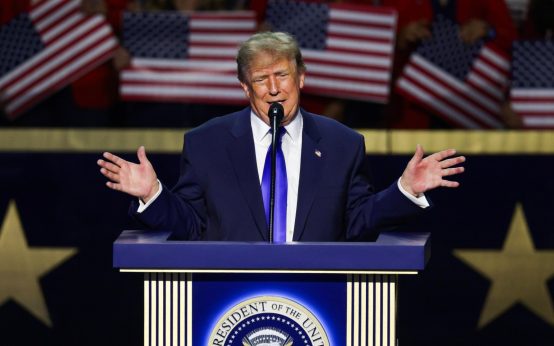 Republican Senator Criticizes Trump’s $5,000 Check Proposal
  Trump’s Approach to Iran at the United Nations
  Trump’s Triumphal Arch Controversy
 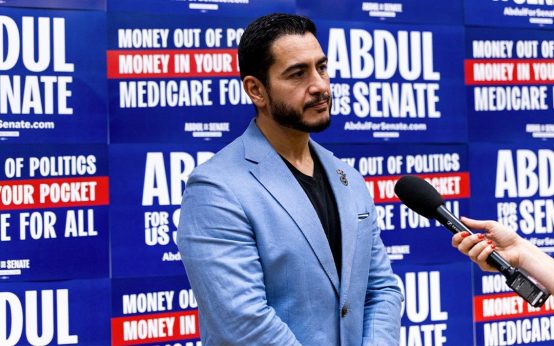 Concerns Over Abdul El-Sayed’s Potential Senate Role and National Security
  Kentucky Governor Andy Beshear Discusses Tariffs, Faith, and Political Ambitions
 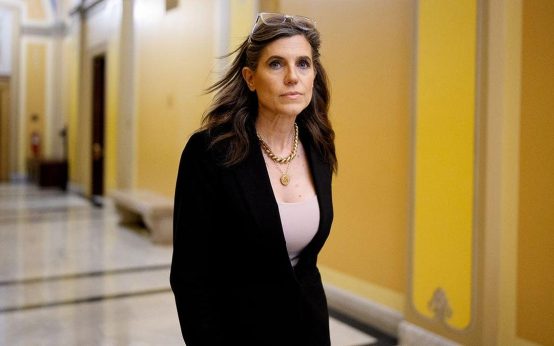 Sunday Highlights: Lane Kiffin, Nancy Mace, and College Football Drama