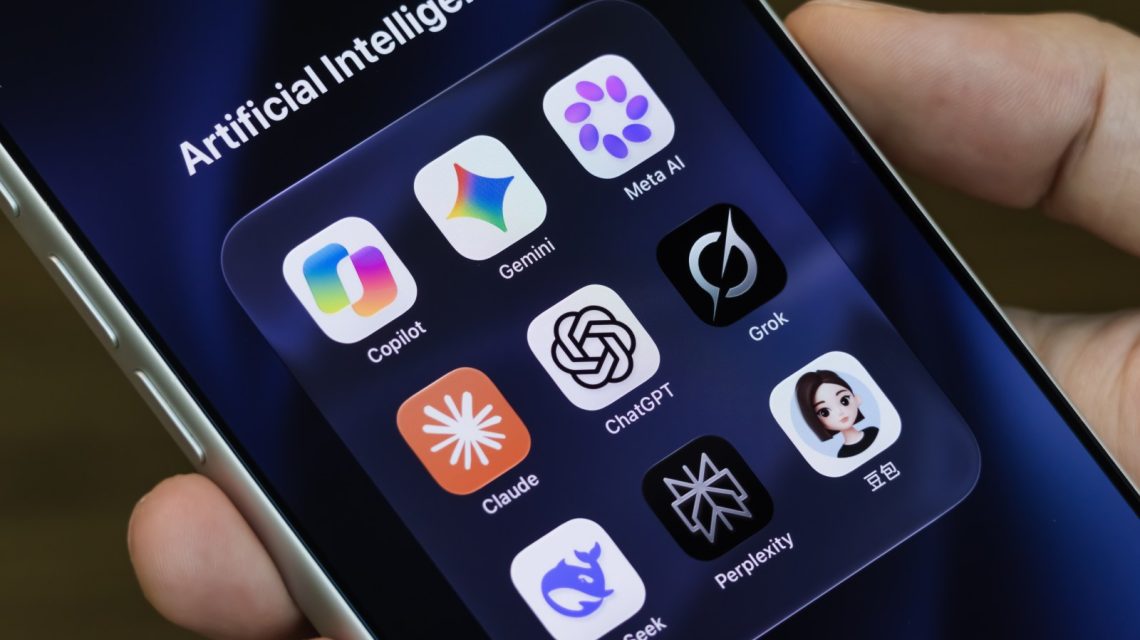
President Donald Trump has prioritized keeping China away from America’s top technology as a strategy to lead in the AI race. However, a challenge arises: many researchers enhancing America’s AI capabilities are originally from China. As Chinese President Xi Jinping visits Washington on September 24, artificial intelligence will be a key topic of discussion.
Washington and Beijing have been engaged in talks, contemplating integrating an intergovernmental AI dialogue into a broader economic session. This dialogue was originally agreed upon during a meeting between the two leaders in May.
The Talent That Built the Lead
A significant aspect of America’s AI advantage comes from foreign-born talent, with China being a major contributor. Yao Shunyu, a researcher trained at Tsinghua and Princeton, left OpenAI in 2025 to work with Tencent. He advocates for China to develop robust long-term AI research.
Another example is Yang Zhilin. After completing his undergraduate studies at Tsinghua University and earning a doctorate at Carnegie Mellon University, he returned to China in 2023 to establish Moonshot AI. This company has secured more than a billion dollars in funding, and its Kimi model series has become a key open-source resource.
These moves followed years of tension. A study by the Carnegie Endowment for International Peace highlighted challenges such as visa uncertainty and geopolitical tensions that have influenced researchers’ decisions to return to China.
The study tracked 100 top-tier Chinese-origin AI researchers in the US as of 2019. By 2025, ten had returned to China, many taking on influential roles in academia or industry.
Despite this, retention rates remained high, with 87 of the 100 staying in the US. Many work at major tech companies like Google and Amazon.
The Cost of the Crackdown
Attracting new talent has become more challenging for the US. Data from the Paulson Institute shows a shift, with researchers of Chinese origin staying in China. The percentage of top-tier AI authors with Chinese undergraduate degrees working in the US dropped from 59% in 2019 to 42% in 2022.
Proposed visa restrictions and indictments have contributed to this shift. A survey found that 42% of Chinese researchers felt racially profiled by the US government. This has affected academic movements, evidenced by the departure of around 50 scholars of Chinese descent from US universities in the first half of 2025.
This trend affects non-Chinese researchers too. Omar Yaghi, a Nobel laureate, left the US for Tsinghua University to lead an AI initiative in materials discovery.
The Stakes of Winning
Debate continues on how to define ‘winning’ the AI competition. Some Chinese officials view US AI models as tools of propaganda. US officials emphasize the importance of leading in advanced AI technologies for strategic advantage.
Chris Miller, a Tufts University professor, notes that having the most advanced AI companies is crucial. Success also involves rapid deployment of AI technologies to leverage their benefits.
David Lin, a former analyst, highlights that turning technical capability into productivity and public service improvements is vital. Sheehan and Zhuang recommend investments in education, research, and visa policies to retain top AI talent in the US.
These crucial topics are not part of the agenda for the meeting on September 24.
Contact Newsweek editors on this story: Jason Lemon and Sam Wilson.
 Criticism Surrounding Alex Ovechkin’s Political Appearance
  Trump Announces Plan for AI Force and Czar Amid AI Regulation Debate
  Affordable Premiums for Seniors Act Proposed to Extend Medicare Drug Subsidy Program
  AI Integration in Healthcare: Navigating Challenges and Opportunities
  Rising Gasoline Prices and Political Impact Ahead of Midterms
  Texas Polls Show Democrats Gaining Ground as GOP Faces Internal Divisions