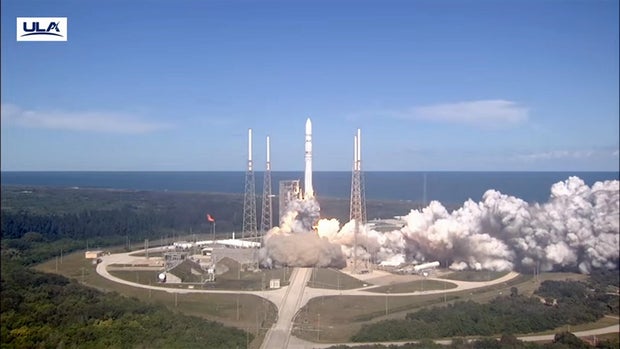
The new Vulcan rocket, developed by United Launch Alliance (ULA), experienced a malfunction during its ascent to space. This incident led to the loss of 40 Amazon Leo internet satellites. ULA confirmed the malfunction occurred ten minutes into the flight, preventing the mission from reaching orbit.
ULA is collaborating with Amazon and relevant bodies to identify the failure’s cause and determine how to fix it. Sunday’s launch departed from Space Launch Complex 41 at Cape Canaveral Space Force Station. This launch was the Vulcan’s first mission failure since ULA’s inception in 2006.
This launch marked the fifth flight of the Vulcan rocket and followed a nine-month hiatus due to issues with Northrop Grumman’s strap-on solid-fuel boosters. These boosters functioned as intended during the recent launch, helping the rocket achieve liftoff. The rocket’s first stage, powered by two methane-burning BE-4 engines, continued toward orbit but seemed to fire longer than expected.
Problems arose after the first stage separated, with the hydrogen-fueled Centaur upper stage engines taking over. Ultimately, issues during the Centaur firing prevented the satellites’ successful deployment.
Sunday’s attempt is part of Amazon’s broader plan, which includes 38 Vulcan flights, to launch its Leo satellites. Amazon intends these satellites to compete with Starlink and other space-based internet services. ULA has already executed eight Leo flights using Atlas 5 rockets.
Aside from ULA’s scheduled launches, Amazon has arranged 24 Leo launches with Blue Origin’s New Glenn rocket, 24 using the European Ariane 6, and 13 with SpaceX’s Falcon 9. The mission’s failure means a delay in expanding the constellation of over 3,300 Leo satellites.
ULA’s CEO, Mark Peller, expressed a commitment to finding the failure’s cause alongside Blue Origin, which built the BE-4 engines. The engines had undergone retrofitting to fix an earlier identified valve issue.
NASA Administrator Jared Isaacman pledged their support in the investigation and remediation efforts. The Vulcan’s successful return to flight is crucial for ongoing missions including Artemis and the Moon Base.
 Experiences with an Influential Tech Leader at Nvidia
 AI’s Unseen Influence in Recent Tech Outages
 Anthropic’s Surprising IPO
 Anthropic’s Impressive IPO Debut
 Grand Theft Auto VI Introduces Realistic Police Mechanics
 Nvidia Faces Engineer Retention Challenge Post-Huang Ouster