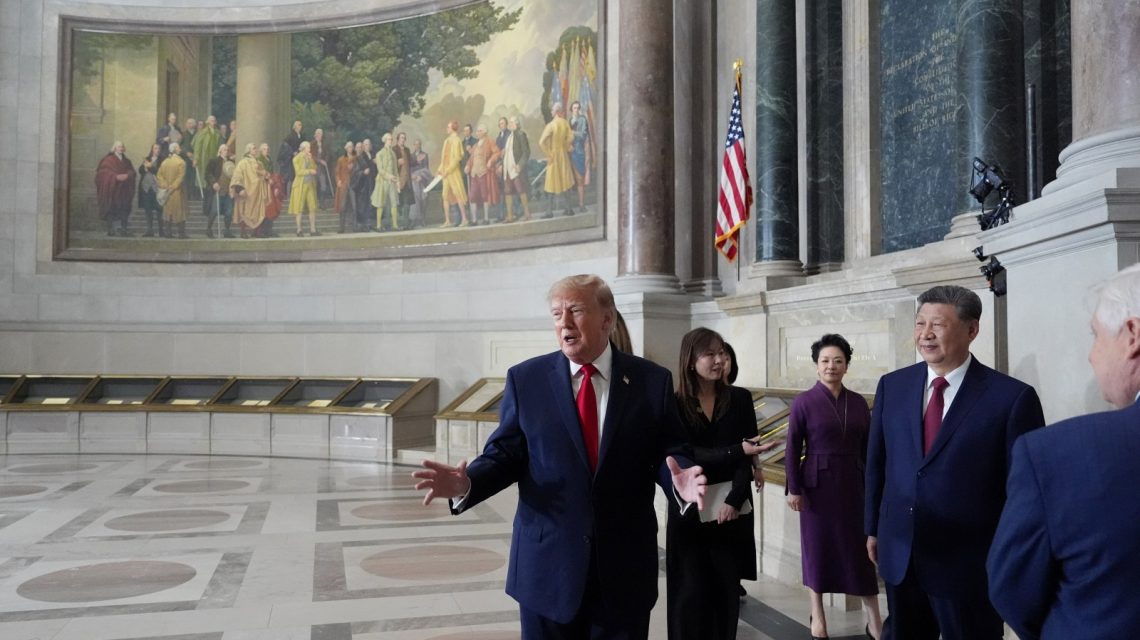
Chinese President Xi Jinping concluded his three-day visit to Washington, marking the end of a diplomatic gathering with President Donald Trump amid restored live television coverage. This live coverage resumed due to a federal judge’s decision to temporarily block the Trump administration’s media ban on CNN, MS NOW, and Politico.
The reinstatement of the television pool allowed for full broadcast access to presidential events for the first time during Xi’s visit. The Chinese leader’s final day in Washington began with a reception at the White House, hosted by Trump and First Lady Melania Trump. They welcomed Xi and his wife, Peng Liyuan, for tea. In a brief televised speech, Trump expressed satisfaction with the visit, stating, “We’ve had a tremendous visit from two spectacular people. We’ve enjoyed it, and I think we’ve made tremendous strides. Very positive for both countries.”
Trump also thanked reporters for fair coverage, at odds with sharp criticisms he voiced against major networks the previous day. On Truth Social, Trump criticized CNN and MSDNC for not covering Xi’s arrival, calling it “one of the Biggest and Most Beautiful Events.” He accused networks of being “Fake News” for skipping coverage, alleging they did not want credit to be given to him.
An observed change in Trump’s approach toward Xi contrasted with his comments before assuming the presidency. During Xi’s U.S. visit in September 2015, Trump criticized the Obama administration’s state dinner for Xi. He suggested serving the delegation McDonald’s instead. In an interview with Bill O’Reilly, Trump had jokingly mentioned offering Xi a “double-size Big Mac,” criticizing China’s economic policies. However, Xi’s 2026 visit featured full state pageantry including a state dinner and meetings, in sharp contrast to Trump’s earlier remarks.
Following tea at the White House, Trump escorted Xi to the National Archives. There, Xi surveyed America’s founding documents like the Declaration of Independence and the Constitution, while the visit emphasized the United States’ historical 250th anniversary celebrations. Trump explained that, as ancestors traded and learned across oceans, the U.S. and China continue similar exchanges today. The National Archives event marked the official close of Xi’s summit, filled with ceremonial events showcasing warmth between the leaders of major world economies.
Trump aimed for Xi to view “some of the greatest treasures” of American history and artifacts illustrating long-standing and complex relations between both countries. While entertaining reporters during the visit, Trump compared U.S. history’s 250-year timeline with China’s 6,000-year-old history.
Post-visit, Xi described it as “very successful.” A 90-minute closed-door meeting covered international topics like the Middle East, Ukraine, and the Korean Peninsula, but few details emerged publicly. At the Archives, Trump mentioned discussing the situation in Iran without further detail.
The state visit concluded with Trump and Xi partaking in a farewell handshake at the National Archives before departing separately. During Xi’s visit, a backdrop of protests emerged, with activists critiquing China’s policies regarding Tibet, Xinjiang, Hong Kong, and Taiwan, demanding increased political and religious freedoms.
Despite tight security, the protests coincided with Xi’s final visit, matched by pro-Beijing supporter groups who advocated for stronger U.S.-China relations.
Xi Jinping’s departure marks the end of his America tour, yet future engagements with Trump are anticipated. Xi invited Trump to visit China for the Asia-Pacific Economic Cooperation (APEC) summit in Shenzhen this November, alongside potential meetings at the G20 summit in Miami in December. Trump confirmed upcoming encounters at these summits on Truth Social, where he claimed this summit strengthened bilateral ties.
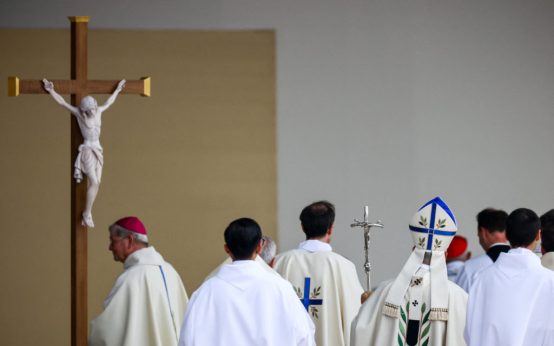 Papal Mass in Paris Draws Massive Crowd
 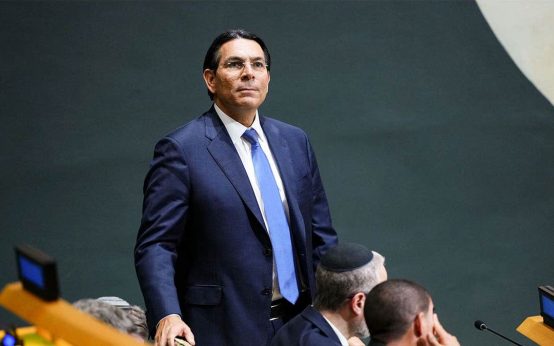 Israeli Ambassador’s Viral Video Reaches Millions in Iran
 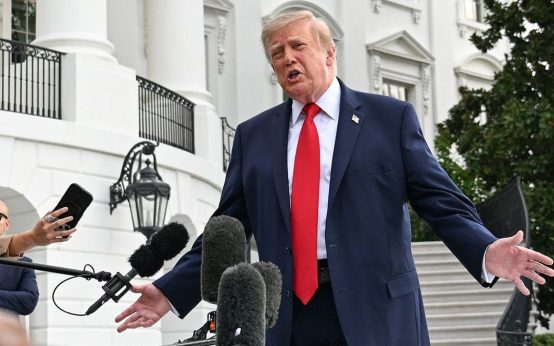 Trump Discusses Ukraine-Russia War and Patriot Missile Agreements
 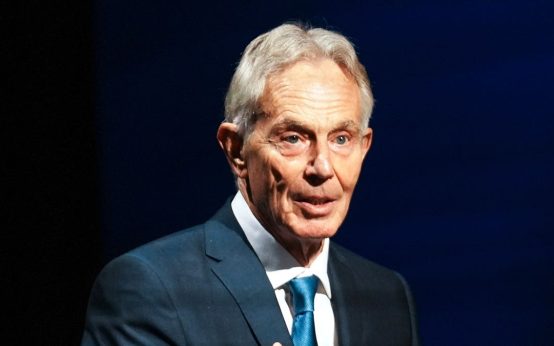 Tony Blair Discusses Europe’s Alliance with the U.S.
 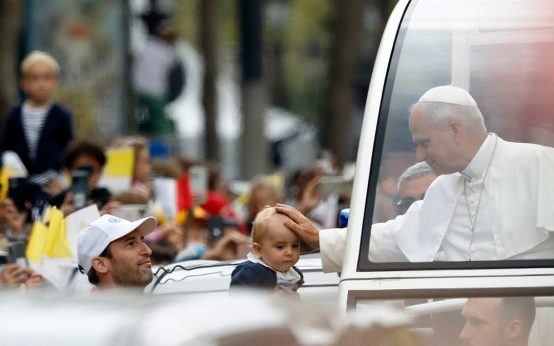 Pope Leo XIV’s Mass in Paris Draws Hundreds of Thousands
 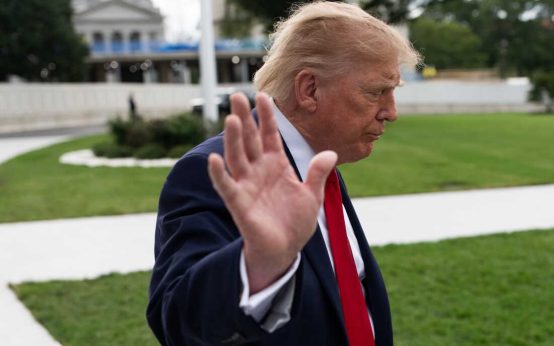 Trump Rejects Iranian Proposal to Reopen Strait of Hormuz