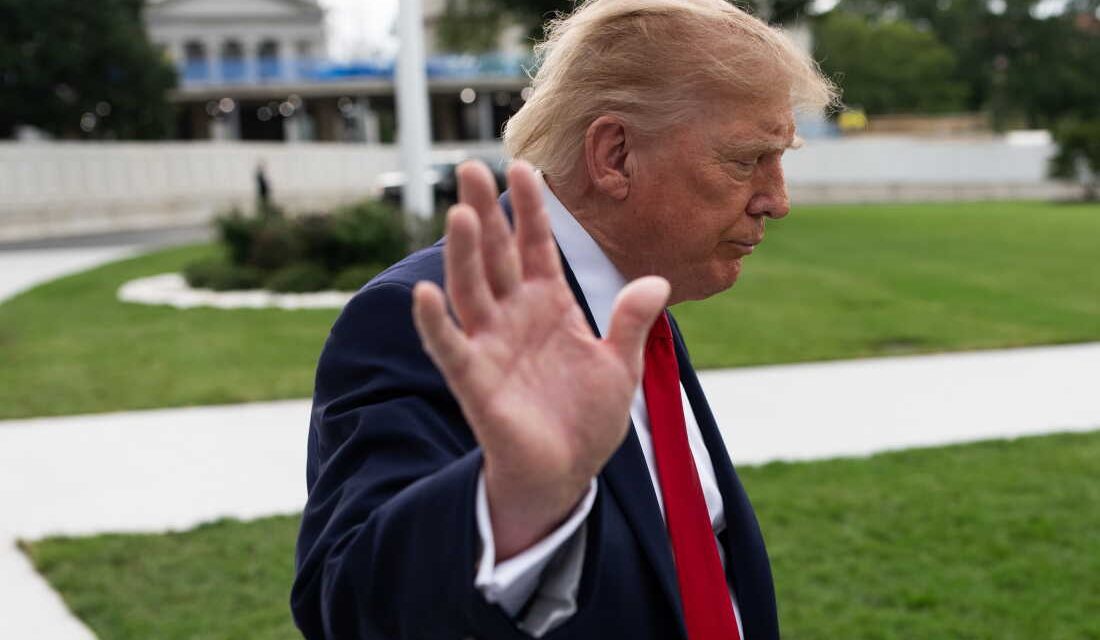
On September 26, 2026, President Trump, standing on the South Lawn of the White House, announced his rejection of an Iranian proposal to reopen the Strait of Hormuz. The President was on his way to Knoxville, Tennessee, to attend a college football game between the University of Tennessee and the University of Texas.
In his statement, Trump made it clear that the proposed deal would not be acceptable to the United States. “I like making a deal too,” he acknowledged, but emphasized, “I’m not — that deal would not be acceptable.” He added, “They want to make a deal where they open the strait immediately because they’re losing so badly.”
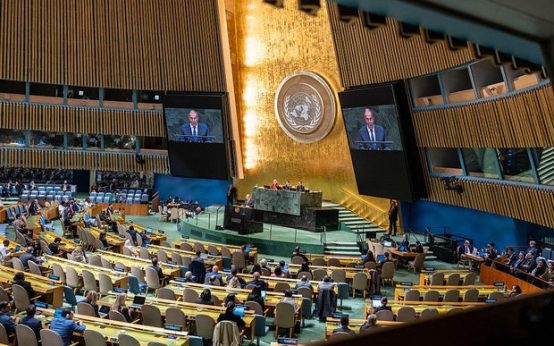
The Iranian plan, presented during the United Nations General Assembly meetings in New York, called for reopening the strait and resuming negotiations with the U.S. Iranian Foreign Minister Abbas Araghchi revealed that Iran had communicated a “concrete seven-day plan” to the U.S. through Qatar. Iran had previously closed the strait following attacks from the U.S. and Israel on February 28.
The repeated closures of the Strait of Hormuz have significantly disrupted the global oil supply. Araghchi stated, “If the necessary conditions are met, the strait can be reopened and normal maritime passage restored within seven days. The choice now rests with the United States.”
The Iranian proposal resembled a prior “memorandum of understanding” from June, which temporarily halted fighting and initiated ceasefire talks. This agreement provided Iran with relief from a U.S. naval blockade, eased sanctions, and released frozen assets in exchange for Iran’s promise not to pursue nuclear weapons and to reopen the strait. Nevertheless, the agreement collapsed due to disputes over control of the strait.
Araghchi remarked, “The actions that the United States should take are not new. They are all already in the MoU. They are already under the commitments of the United States. So we don’t see any difficulty to implement them.”
In a prerecorded CBS interview set to air on Sunday, Iranian President Masoud Pezeshkian emphasized Iran’s willingness to honor its commitments. He insisted that the U.S. must demonstrate its intention not to overthrow the Iranian government. Pezeshkian stated, “If the United States agrees to proceed in that way, everything will return to the way it was before.” He noted both sides needed to take action before returning to negotiations.
Pezeshkian assured that if the U.S. accepted the proposal for reopening the strait and resuming nuclear talks, Iran would permit U.N. nuclear inspectors to enter the country.
Reporters from NPR, Hadeel Al-Shalchi, and Emily Feng, contributed to the coverage of this story.
 Potential Breakthrough in Permitting Reform
  Voter Uncertainty and Trust in Elections
  Republican Candidates Break from Trump’s Agenda Amid Upcoming Elections
  Escalating Tensions at the UN: Russia Accuses Europe of Blocking Peace Plans
 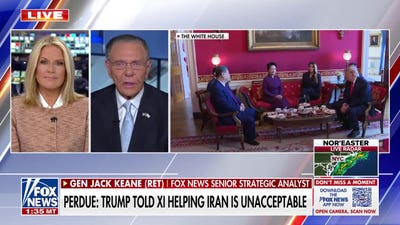 China’s Military Support for Iran Raises Concerns
  Senate Democrats Question if Kennedy Struck Deal in Vaccine Lawsuit