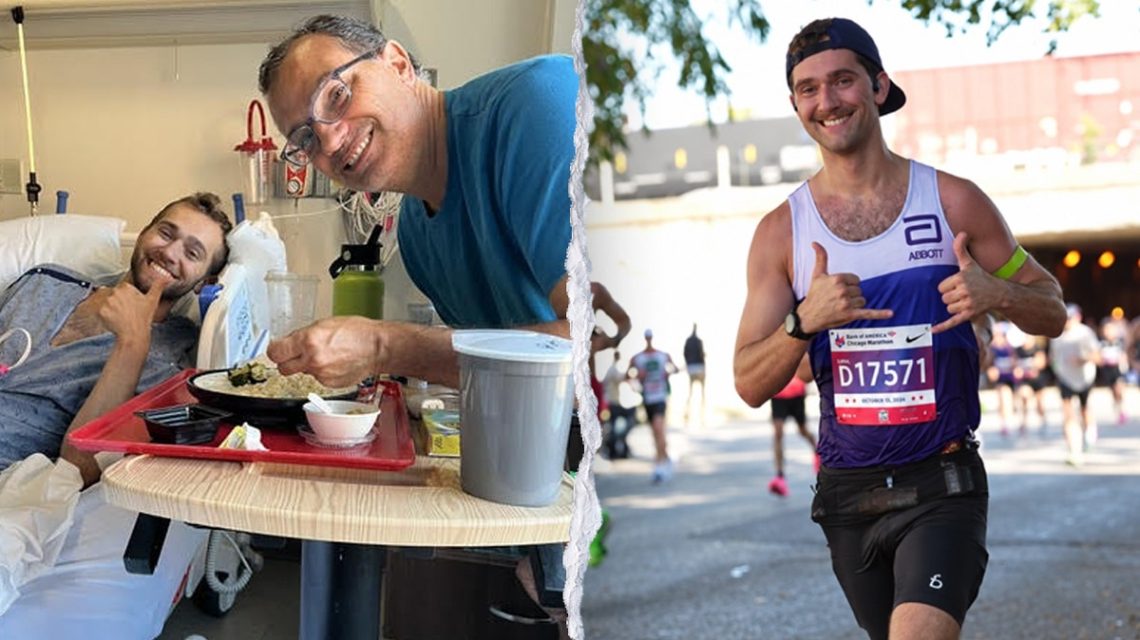
Stroke rates among young adults are climbing. Patrick Mascoli, a 27-year-old engineer from Boston, recently shared his life-threatening experience. A fitness enthusiast, Mascoli ran 40 miles weekly. He had migraines but no other symptoms or warning signs before the event.
A Sudden Medical Emergency
In July 2024, after a 10-mile run and a session at the gym, Mascoli was changing in the locker room when he felt something was wrong. Describing it to Fox News Digital, he said it felt “like a bomb went off in my head.” He experienced an intense burning sensation on the right side of his brain.
At first, Mascoli thought it might be a blood pressure-related fainting spell, similar to episodes from his youth. However, as his vision blurred and the pain grew, it became clear something was seriously wrong. He struggled to control his body, with his legs moving in unintended directions. He managed to text his sister before collapsing again.
Stroke Identification and Initial Treatment
His sister found him on the locker room floor, covered in sweat, and called 911. First responders initially suspected dehydration, and he was treated for vertigo with no relief. It was only at Boston Medical Center that a CT scan and MRI confirmed a stroke.
Mascoli spent days in the hospital, regaining some mobility with the help of a walker. His diagnosis left him scared about the future.
Uncovering the Cause
Doctors searched for stroke causes, conducting extensive tests. An ultrasound revealed a patent foramen ovale (PFO), an opening between heart chambers. Dr. Dheeraj Khurana explained it’s an abnormality sometimes linked to strokes.
In young stroke patients, doctors might check for a PFO if no clear cause surfaces. Though Mascoli has no genetic predispositions, the discovery led to a heart procedure to close the opening.
Rehabilitation and Motivation
Mascoli endured therapy to improve fine motor skills, still facing challenges with activities like writing. He resumed running hesitantly. Afraid of another episode, he monitored his distances closely. Encouraged by his girlfriend, he embraced racing as a motivational tool.
In October 2026, he completed the Chicago Marathon with Team Abbott, representing the company that made his heart implant. Receiving an emotional message from his sister, who helped save him, was meaningful.
Understanding Risk and Prevention
Dr. Khurana noted that young adult stroke risks include high blood pressure, smoking, and unhealthy cholesterol levels. Symptoms like dizziness, headaches, or visual disturbances might be mistaken for exhaustion.
Dr. Sean Levchuck advised young adults to stay active, hydrate, and avoid tobacco. Recognizing stroke symptoms early, such as sudden balance loss or vision changes, is critical. The American Stroke Association urges calling 911 immediately, regardless of age or fitness level.
For Mascoli, the journey emphasized patience and resilience in recovery. He advised fellow stroke survivors to take small steps, as recovery varies for everyone.
Melissa Rudy is a senior health editor at Fox News Digital.
 Update on Current Events: Technology, Health, Labor, and More
 Health and Business Developments: Psychedelic Research, Labor Disputes, and More
 Evaluating the Trend of Olive Oil Shots for Health Benefits
 Running at 50: Eddie Brocklesby’s Journey to Becoming Britain’s Oldest Female Ironman Finisher
 Alzheimer’s Gene CASS4 Shows Potential as Therapeutic Target
 The Impact of Biological Sex on Obesity: Insights from Recent Research