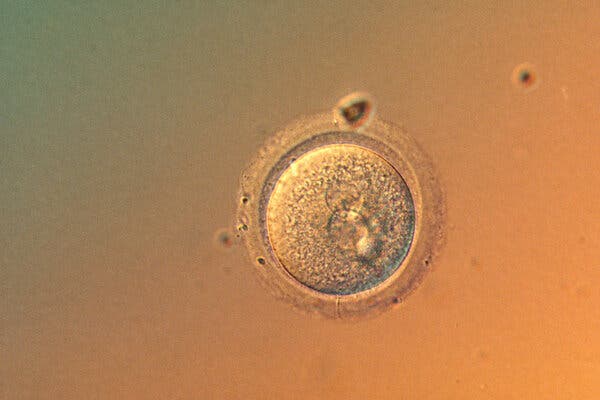
Researchers at Columbia University have used a newer gene-editing technique that may eventually allow for the engineering of embryos. This prospect has raised concerns among bioethicists for some time.
On June 4, 2026, Columbia scientists successfully edited the DNA of early human embryos with unmatched precision. This breakthrough could pave the way for creating babies with specific traits. The potential of this technology to correct disease-causing mutations excites many, but it also raises ethical questions about the possibility of selecting traits, which some compare to eugenics.
Dieter Egli, a geneticist at Columbia University and the research leader, stressed the need for public discussion on the benefits and risks of altering embryonic DNA. “As a scientist, you can provide the data for discussion, but then essentially there you stop and let others take over,” he stated.
Using a method called base editing, Egli and his team replaced individual genetic letters in DNA sequences carefully. This approach avoids the damage often associated with the earlier CRISPR gene editing method. However, Egli warned that many questions about potential side effects remain unanswered. “We’re not saying this is going to be used tomorrow in the clinics,” he noted.
The team has shared their study online, and it is currently under review for publication in a scientific journal.
 The Discovery of Incendiamoeba cascadensis: A Fire Amoeba
  Archaeological Discovery in Germany: Largest Hoard of Roman Coins Found
  Hurricane Formation and Strengthening
  Quality of Sleep Linked to Risk Reduction in Various Diseases
  Exploring Diets and Their Potential to Reduce Alzheimer’s Risk
  Ancient Mastodon Tooth Unearthed in California Creek