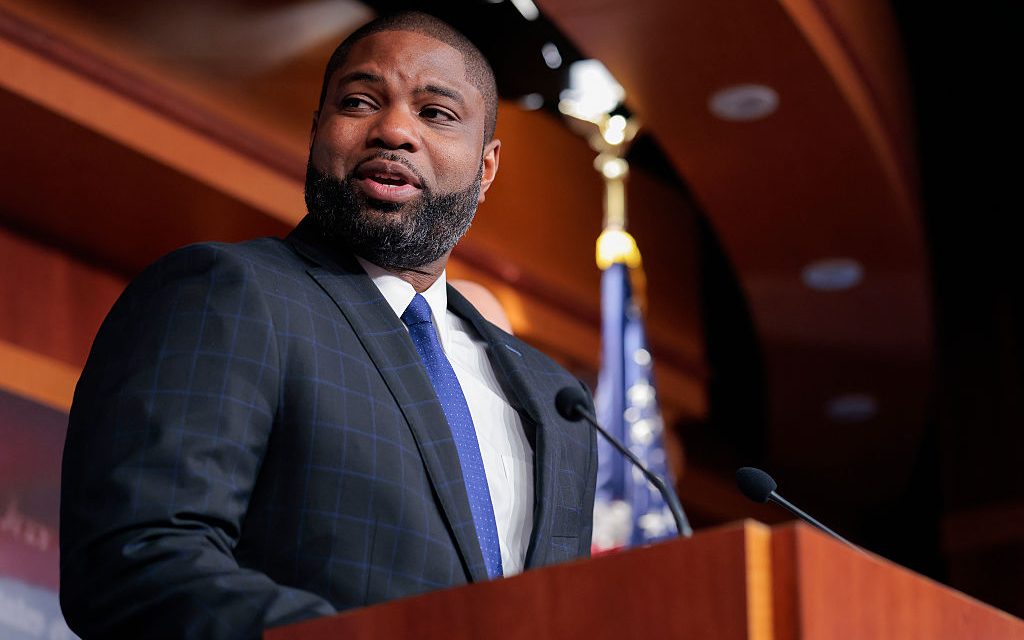
Orange County Mayor Jerry Demings has announced the end of his campaign for the Florida governor’s race. He is undergoing treatment for prostate cancer. Demings was one of only two Democrats polling competitively against Byron Donalds, the likely Republican nominee. This reshapes the Democratic field and leaves former Congressman David Jolly as the leading contender. The change is likely to affect undecided voters and strategy for the race.
Demings disclosed his diagnosis during his final State of the County address. He stated his intention to suspend the campaign to focus on his health. According to WKMG, Demings said, “I received some bad news from my doctor, who confirmed that I have prostate cancer.” He plans to finish his term as Orange County mayor before stepping down in November. His exit removes a prominent Central Florida figure from a competitive race.
Demings Polled Better Than Jolly Against Donalds
In recent polls by Stetson University’s Center for Public Opinion Research and Echelon Insights, Demings slightly outperformed Jolly against Donalds. The Stetson survey showed Donalds leading Demings 46 percent to 42 percent, while leading Jolly 47 percent to 40 percent. The Echelon poll reflected a similar pattern. Although these results do not predict the outcome, Demings resonated with undecided voters who could influence the election.
Democratic Field Response to Demings’ Decision
With Demings’ departure, David Jolly now stands as the most recognized Democrat in the race. Jolly, a former Republican congressman, has raised more funds than Demings but faces a financial disadvantage against Donalds. Donalds has collected over $67 million, including over $22 million in early 2026. Jolly has raised about $5 million since entering the race. Demings had collected around $660,000 before suspending his campaign. His deep ties to Central Florida and public service experience had kept the contest close.
Why the Florida Governor Race Remains Competitive
Florida’s political climate favors Republicans, yet surveys show dynamics that could keep the race tight. Partisan loyalty is strong, with over 85% of voters backing their party’s nominee. Many independents remain undecided, especially in the governor’s race. Historically, these voters turn out less frequently than party loyalists. Gender differences are notable; men often support Republicans, while women lean Democratic.
Economic issues are top voter priorities, with nearly 40% of Florida voters identifying cost of living and inflation as key concerns. This issue ranks higher than immigration, education, or abortion. Kelly Smith, an associate political science professor at Stetson University, observed that economic realities are bridging partisan divides.
Implications of Demings Leaving the Race
Demings’ exit impacts several groups. Democrats must adjust their strategy, especially in Central Florida, where Demings was well-known. Independents, many undecided in both polls, now face different options. For Donalds, it removes a challenger who polled better than Jolly, though the race remained close.
Demings’ decision highlights the uncertainty of the upcoming election. Despite Republican advantages, Democrats remain competitive. His absence introduces new elements into a race already more contested than expected.
 Trump Delivers Warning to Iran, Cuba at UN General Assembly
  Trump Delivers Stern UN Speech on Iran, AI, and Global Security
  Lukashenko and Putin’s Unique Relationship and Belarus’ Strategic Role
  Harris Discusses Potential 2028 Presidential Run
  Far-Left Groups Allegedly Organize Protests in Austin
  Michigan Senate Nominee Abdul El-Sayed Criticized for Remarks on Reproductive Rights