
A U.S. Army Apache helicopter gunship went down near the Strait of Hormuz on a recent Monday, with both crew members safely rescued. The cause of the incident is currently under investigation, as it remains unclear whether the aircraft was shot down, suffered mechanical failure, or encountered another issue.
This event unfolded amidst fluctuating hostilities in the region, with military strikes exchanged between Israel and Iran before a temporary easing of tensions. The tenuous cease-fire highlights the volatility in the area.
The Trump administration had not publicly disclosed the incident by the time inquiries were made by media outlets. Response from the White House and military Central Command was not immediately provided.
The U.S. military, aiming to confront Iran’s restriction of the Strait of Hormuz, has deployed Apache helicopters, MQ-9 Reaper drones, and F/A-18 and F-35 attack planes. Iran has previously shot down approximately 30 Reaper drones, while a few U.S. fighter jets have been lost to both hostile and friendly fire.
The recent incident marks the first loss of an Apache helicopter in this ongoing conflict. Central Command had previously shared imagery of Adm. Brad Cooper flying over the region ahead of a naval operation named Project Freedom aimed at safeguarding commercial navigation through the strait.
The AH-64 Apache, complete with Hellfire missiles, is renowned for its capabilities and operates in part to deter small-boat attacks and intercept drones. Recently, these helicopters have moved closer to Iranian-controlled territory as part of the aggressive stance by U.S. forces.
The United States imposed its own blockade in response to Iran’s actions, restricting access to Iranian ports from April 13 onwards. Since the blockade, U.S. military ships have intercepted 134 vessels, disabling seven that disregarded American warnings, including a Palau-flagged oil tanker moving towards Iran.
In April, two crew members of an F-15E Strike Eagle fighter jet, also downed by Iran, were successfully rescued after ejecting and landing in hostile territory.
Eric Schmitt is a veteran national security correspondent reporting on U.S. military matters for over three decades. Correspondence with him is possible via Signal. Maggie Haberman covers the White House and President Trump, while Jonathan Swan reports on Trump’s administration. Both can be contacted securely through similar channels.
 Lukashenko and Putin’s Unique Relationship and Belarus’ Strategic Role
  Alan Ritchson Faces Backlash Over Political Remarks
  Himalayan Pilgrimage: A Couple’s Narrow Escape and Lingering Questions
  Former CEO Sentenced for Bank Fraud and Sanctions Evasion
 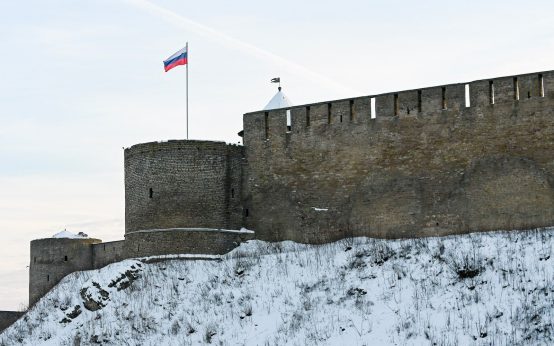 Russia’s Potential Incursion Into Estonia: NATO’s Resilience Under Scrutiny
  Senators Urge Action to Free Imprisoned Journalist in Iran