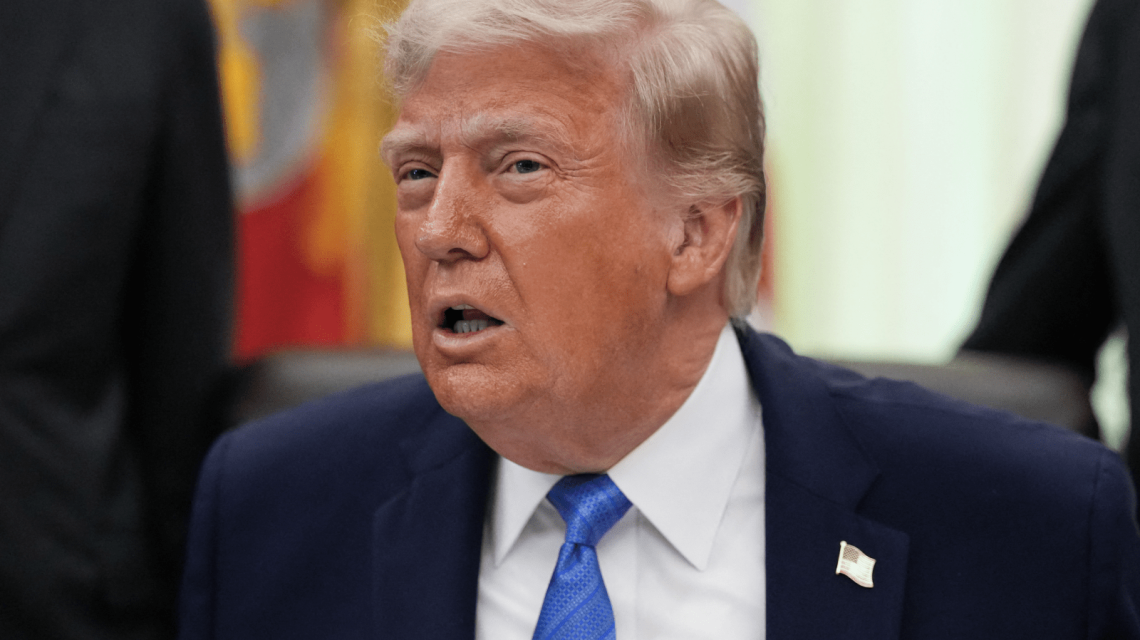
President Donald Trump recently expressed skepticism about renewing North America’s significant trade agreement, the United States-Mexico-Canada Agreement (USMCA). This comes as the United States, Canada, and Mexico prepare to host the 2026 FIFA World Cup, emphasizing the delicate interplay between economic competition and political collaboration.
Trump’s Stance on USMCA
On June 10, Trump hinted he might not renew the USMCA as the three host countries gear up for the FIFA World Cup matches. His statement highlights existing tensions that could reshape North American trade, as active negotiations are underway. This situation creates renewed uncertainty for businesses, exporters, and supply chains across the continent ahead of review talks scheduled later this month.
North America’s trade relationship is entering a crucial review phase in 2026, when the three governments must decide whether to extend the USMCA or risk it drifting toward expiration in 2036.
Political and Economic Implications
Trump’s remarks arrived just before the start of the 2026 FIFA World Cup, an event symbolizing continental unity. Games begin on June 11 across the United States, Canada, and Mexico. Despite this cooperation, Trump’s comments suggest he is “not looking to renew” the trade pact implemented during his first term to replace NAFTA.
The USMCA’s review process in 2026 requires the U.S., Canada, and Mexico to decide on extending the agreement beyond the 2036 expiration date. A failure to approve an extension does not lead to an immediate end. Instead, it triggers annual reviews, leading to prolonged renegotiations.
“I made the deal and the primary reason I made the deal is that NAFTA was the worst trade deal I’ve ever seen,” Trump stated. He emphasized a push to rebalance trade, noting the U.S. deficits with both Canada and Mexico. Reuters data shows a $46 billion goods deficit with Canada and $197 billion with Mexico last year.
USMCA’s Economic Role
The USMCA, supporting approximately $1.6 trillion in annual trade, allows tariff-free movement across North America. It supports integrated supply chains, including sectors like autos, energy, and agriculture. Under its rules, the three countries must decide by July 1 whether to extend the agreement for another 16 years. If they fail to reach a consensus, annual reviews could extend for a decade before expiration.
Trump mentioned, “I don’t know that I’m going to redo it because, to be honest with you. We don’t need anything Canada has, we don’t need anything that Mexico has, but they need everything that we have, and they have to treat us better.” He added that the U.S. should have trade surpluses with Canada and Mexico.
Canada has called for early renewal of the agreement, stressing the importance of long-term stability in cross-border trade. Meanwhile, officials in Canada and Mexico continue to support the framework despite disagreements with Washington over tariffs introduced during Trump’s second term.
Cooperation Amidst Conflict
The timing is notable as North America displays unity on a global stage through a historic sporting event, while economic foundations undergo scrutiny. Trump’s willingness to cooperate on security, culture, and global events while pressing hard on trade extends beyond North America to dealings with NATO partners.
Continuing Trade Developments
The Gordie Howe International Bridge between Detroit and Windsor in Ontario is close to completion. It is expected to ease congestion at a busy trade corridor and play a significant role in U.S.-Canada trade over the coming decades. However, Trump previously threatened to alter project terms, underscoring a hard-line negotiating approach affecting trade discussions. Canadian Prime Minister Mark Carney acknowledged potential delays, stating, “There is no big drama. If it takes a little longer it will take a little bit longer, but this will benefit Canadians, Americans, business, tourists, residents for decades and decades to come.”
Next Steps in Trade Talks
The future of the USMCA will depend on upcoming negotiations. Whether it results in a renegotiated agreement or prolonged uncertainty hinges on talks over the next few weeks. Negotiators plan to meet in Washington on June 16 and 17 to address key sectors such as agriculture, with another round slated for Mexico City in July.
 Trump Delivers Warning to Iran, Cuba at UN General Assembly
  Lukashenko and Putin’s Unique Relationship and Belarus’ Strategic Role
  Alan Ritchson Faces Backlash Over Political Remarks
  Himalayan Pilgrimage: A Couple’s Narrow Escape and Lingering Questions
  Former CEO Sentenced for Bank Fraud and Sanctions Evasion
  Russia’s Potential Incursion Into Estonia: NATO’s Resilience Under Scrutiny