
François Englert, a prominent figure in the field of theoretical physics, played a crucial role in the discovery of the Higgs boson. This discovery was pivotal in explaining how elementary particles acquire mass. On July 4, 2012, excitement filled the large hall at the European Organization for Nuclear Research, known as CERN. Scientists gathered to hear the results of two experiments aimed at finding the Higgs boson, a particle deemed essential in physics. The successful detection of this fundamental particle verified the existence of the Higgs field, which is responsible for imparting mass to particles such as electrons and quarks.
Rolf-Dieter Heuer, then director general of CERN, announced amidst fervent applause, “I think we have it.” Peter Higgs, the scientist after whom the particle is named, was moved to tears. Sitting beside him was François Englert, a Belgian physicist who, alongside Higgs, contributed significantly to the development of the theory behind the Higgs field. This field is a critical component of the Standard Model of particle physics, a framework established in the 1970s that categorizes all known fundamental particles and forces, and is considered a monumental achievement in science.
In 2013, Englert and Higgs were awarded the Nobel Prize in Physics for “the theoretical discovery of a mechanism that contributes to our understanding of the origin of the mass of subatomic particles.” Englert passed away on Thursday in Uccle, Belgium, a suburb of Brussels, at the age of 93. CERN announced his death on its official website.
Englert’s journey in physics began in the late 1950s at Cornell University, where he worked with Robert Brout, a fellow theoretical physicist. Together, they were inspired by Yoichiro Nambu, a Japanese American physicist, who had addressed the challenge of symmetry breaking in subatomic reactions. This collaboration laid the groundwork for the groundbreaking discoveries that would follow.
 Significant Viking Age Silver Hoard Discovered in Finland
  Dogs Use Similar Language Recognition Techniques as Human Infants
  Discovery of Tilcayo Tiger Cat, a New Wild Cat Species in Bolivia
 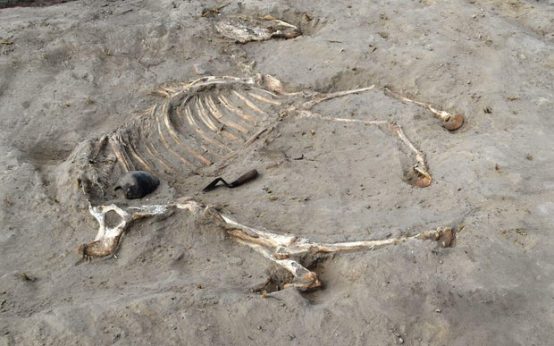 Ancient Egyptian Warhorse Burial Unearthed in Beheira
  Humpback Whale’s Grief Over Stillborn Calf Reveals Emotional Complexity
 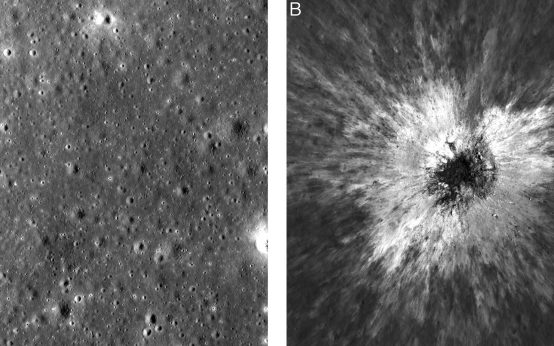 Discovery of Massive Lunar Crater Sheds New Light on Moon’s Surface