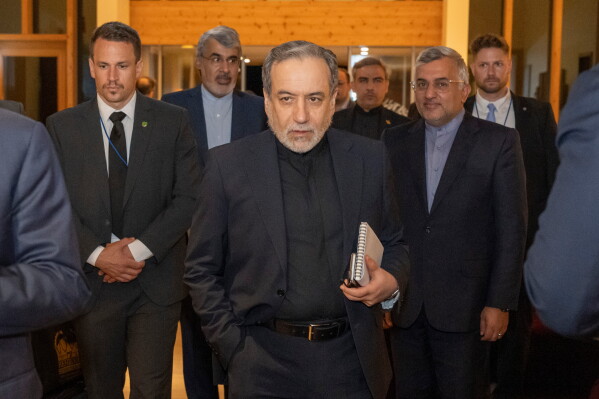
U.S. Vice President JD Vance has arrived in Switzerland to initiate discussions with Iranian leaders. The focus is on reducing Tehran’s nuclear program and building on the interim deal to end the conflict in Iran. The negotiations were formalized last week, setting a 60-day period for detailed technical discussions.
Vance, accompanied by his wife, Usha, landed at Emmen Air Base near Lucerne early Sunday morning. However, initial progress faced challenges due to recent hostilities in Lebanon between Israel and Hezbollah, supported by Iran. Iran also announced the closure of the Strait of Hormuz, a crucial channel for global oil and gas trade.
Originally, Vance was to arrive at the Bürgenstock resort on Friday, but escalations in Lebanon and the cancellation of talks by Iranian officials delayed his departure from the U.S. The announcement by Iran’s military regarding the Strait of Hormuz was disputed by U.S. Central Command, which confirmed ongoing monitoring to ensure continued traffic through the waterway. Millions of barrels of oil have reportedly moved through the strait recently.
Upon Vance’s arrival, Tehran’s negotiators made their way to Switzerland. Iran’s delegation includes figures like parliamentary speaker Mohammad Bagher Qalibaf and Foreign Minister Abbas Araghchi. Vance joins special envoy Steve Witkoff and Jared Kushner, already engaged in discussing the technical aspects of the talks.
Pakistani Prime Minister Shehbaz Sharif, army chief Field Marshal Asim Munir, and Qatari mediators are also part of the dialogue. Though Vance’s stay is brief, his involvement draws attention due to his potential 2028 presidential run. Trump’s administration, alongside Vance, faces criticism from Republican hard-liners who compare the agreement unfavorably to prior deals during the Obama era.
The agreement, signed by Trump and Iran’s President Masoud Pezeshkian, allows Iran to freely sell its oil and access billions in frozen assets. It also requires Iran to reduce its enriched uranium reserves. The deal specifies a 60-day toll-free period for commercial vessels in the Strait of Hormuz, with future fees possible.
President Trump has mentioned imposing U.S. tolls in the strait if no agreement materializes in 60 days. This proposal is tied to services provided to Middle Eastern countries. However, neither Israel nor Hezbollah are part of the current U.S.-Iran deal. Israeli Prime Minister Benjamin Netanyahu assures continued military presence in southern Lebanon to eliminate threats from Hezbollah, which demands Israeli withdrawal for peace.
Clashes between Israel and Hezbollah following the U.S.-Iran deal resulted in 47 deaths in Lebanon and four Israeli soldier casualties.
—
Kim reported from Washington.
 Congressman Randy Fine’s Bold Political Stance and Views on AI Regulation
  Political Messaging and Strategy Leading Up to Midterms
  President Trump Proposes ‘Super Intelligence’ as New AI Term
  Trump Administration Considers Diesel Export Ban Amid Rising Prices
  Texas Senate Race Tightens with Shifting Youth Support
  Flight 93 Hero’s Father Criticizes Ties Between Hasan Piker and Abdul El-Sayed