
Astronomers have discovered two exoplanets that are exceptionally light for their size, resembling super-puffs with densities lower than cotton candy. These planets, orbiting a star 1,110 light-years away, are considered the largest known exoplanets with such low density, according to George Dransfield from the University of Oxford.
“These two planets have densities comparable to a nice blob of shaving foam, fresh from the can,” Dransfield explained in an email.
The researchers published their findings in the Monthly Notices of the Royal Astronomical Society.
Dransfield suggests that these fluffy and lightweight planets may appear white or blue, depending on cloud cover, but probably won’t display cotton-candy pink. Composed mostly of hydrogen and helium, further observations with NASA’s Webb Space Telescope are needed to verify their chemical makeup. Identified by NASA’s Tess satellite, these planets orbit a star located in the constellation Volans, commonly referred to as the flying fish.
The team analyzed the planets’ orbits using terrestrial telescopes to assess their density from 1,110 light-years away. For reference, a light-year is approximately 6 trillion miles or 9.7 trillion kilometers.
In comparison, Jupiter is around 35 times denser than these super-puffs. Such lightweight planets are considered rare in the universe. They are thought to originate in the gas and dust discs around young stars, where gas predominates. Over time, they shed much of their material, becoming even lighter.
Currently, NASA has confirmed nearly 6,300 exoplanets outside our solar system, with fewer than 40 categorized as super-puffs. Dransfield emphasized that studying these unusual systems provides valuable insights into planet formation and our place in the cosmos.
The Associated Press Health and Science Department receives support from the Howard Hughes Medical Institute’s Department of Science Education and the Robert Wood Johnson Foundation. The AP is solely responsible for all content.
 This Week In Science: Spiders, TV Pixels, and Storytelling
  Rare Antler Encounter Captured in Viral Video
 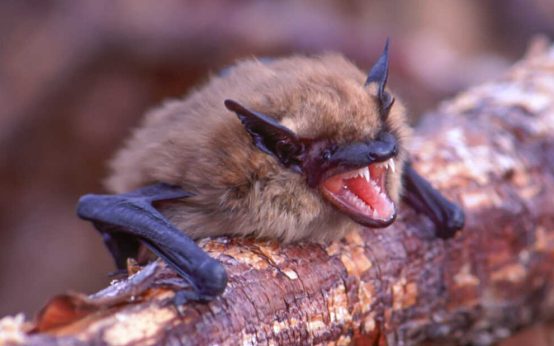 How Little Brown Bat Genes Are Outsmarting a Fungal Killer
  The Growing Threat of Glacial Lake Outbursts and the Urgent Need for Mitigation
  SpaceX Falcon 9 Delivers Crew to International Space Station
  California to Vote on $7.5 Billion Scientific Research Fund