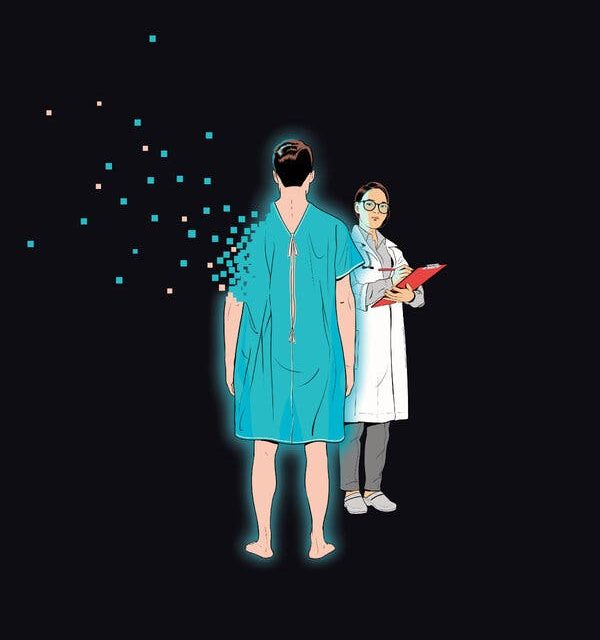
For generations, doctors relied on handwritten summaries of patient exams to diagnose conditions accurately. Now, artificial intelligence (AI) is stepping in to perform parts of this task. This change is altering the traditional process of medical documentation.
Writing clinical notes is an early task for medical students. Even before completing anatomy and physiology courses, they accompany doctors to patient bedsides. Afterward, they write down what they observed and heard, gaining skills to suggest diagnoses and treatment options. This task felt significant during medical school, marking the transition to becoming a doctor.
As students progress to resident and attending physicians, writing these notes becomes time-consuming. The process can detract from direct patient interaction, which is central to treatment. If doctors could reclaim this time, it might enhance patient care.
At my workplace, as an ER doctor, we introduced AI assistants. These tools listen and generate detailed notes during patient interactions. I was intrigued by how AI could free up more time for patient care. Previously, I had discussed AI’s potential with a leader of a major AI medical scribe company, envisioning improved patient interactions without constant computer work.
AI scribe companies promise healthcare facilities reduced burnout and increased efficiency. Nearly all nonprofit health systems in the U.S. reported the development or use of AI scribes. While not every doctor will choose this technology, institutional norms might make it more standard. Adoption rates have reached 80 percent in certain settings.
Adam Rodman, a Harvard Medical School professor, called AI the fastest-adopted medical technology ever. AI offers exhilarating possibilities in medicine: diagnosing rare diseases, assessing health risks, and discovering new drugs. One significant current use is listening to doctor-patient conversations to quickly generate clinical notes.
This AI process goes beyond transcribing interactions. AI scribes synthesize and analyze the conversation, creating documents that follow the traditional format and tone of clinical notes.
 Managing Distress and Discomfort Effectively
  Trump Administration Seeks to Influence NIH Grantmaking
  Congressional Inaction Amid AI Concerns
  Rising Demand for Data Centers Driven by AI Development
  Addressing the Complex Issue of Suicide and Its Prevention
  Understanding AI’s Impact Compared to Historical Threats