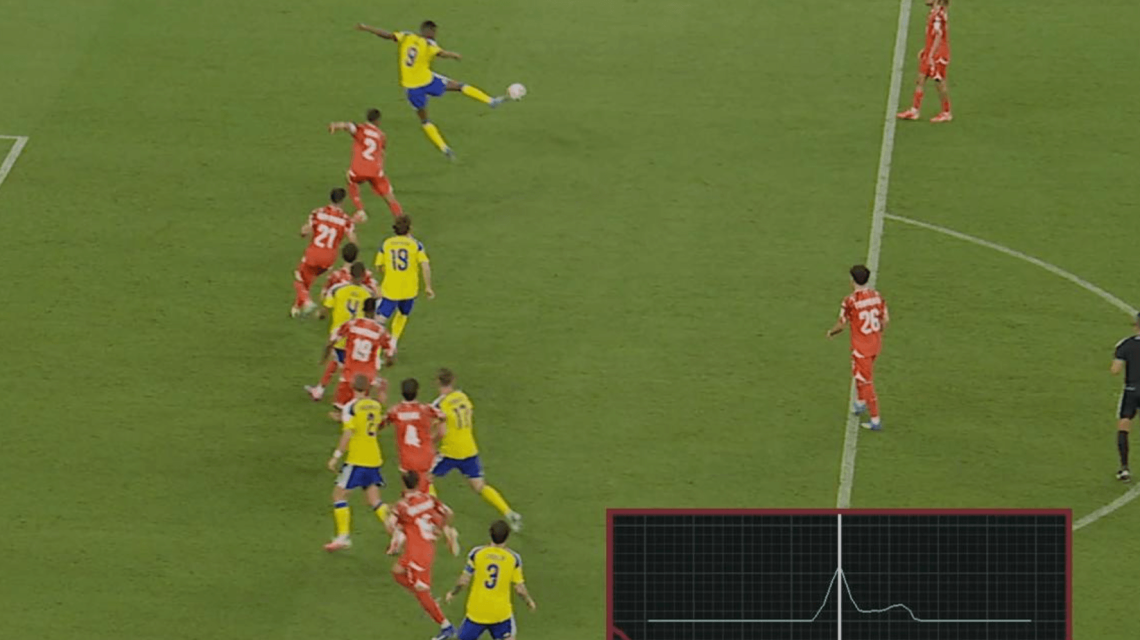
Croatia’s hopes were dashed when a pivotal moment in their clash against Portugal was overturned. With Croatia thinking they had equalized, a VAR check revealed Mario Pasalic was offside when Josko Gvardiol scored. The offside call hinged on a subtle touch from Igor Matanovic, confirmed using technology akin to cricket’s snick-o-meter.
The referee, Espen Eskas, disallowed the goal after verifying the touch during the VAR review. This preserved Portugal’s 2-1 lead and ensured their progression to the last 16.
Technological Influence at the World Cup
This event was not unique. Earlier, technology played a role in Mattias Svanberg’s goal for Sweden against Tunisia. Initially flagged offside, the decision was overturned due to the VAR team identifying a crucial touch from Alexander Isak. The use of technology allowed them to confirm the goal for Svanberg.
“The graphic showed a spike when Alexander Isak touched the ball.”
The Technology Explained
Football has embraced technology over the years. Modern ball design highlights this evolution. Adidas, a long-standing FIFA partner, produces World Cup balls equipped with a 500Hz inertial measurement unit (IMU) motion sensor. This sensor feeds data to enhance the VAR system, making offside calls more precise.
Known as ‘Connected Ball Technology’ (CBT), the system combines AI-driven player position data, delivering real-time information. The sensor provides vital data 500 times per second to help determine ball contact moments accurately.
One notable instance was Cristiano Ronaldo’s claim of a touch on Bruno Fernandes’ cross in the past. FIFA credited the goal to Fernandes, citing the absence of external force detected by the sensor. The same technology confirmed Svanberg’s goal was legitimate. The CBT can also measure ball speed, with Yasin Ayari having scored the fastest goals against Tunisia.
Though the European Championship adopted this technology, the Premier League, allied with Puma, has not yet integrated it.
Drawing Parallels with Cricket
The graphic FIFA presented shared similarities with cricket’s decision review system (DRS), using technology like Ultra Edge and Snickometer. These tools rely on sensitive microphones rather than sensors within balls, adjudicating key calls like catches and LBWs.
During the Ashes series, Snicko faced scrutiny due to discrepancies between visual spikes and actual ball contact. FIFA’s effort for transparency led to displaying Isak’s touch with a graphic akin to a cardiac monitor. This demonstration happened post-confirmation of the goal, lacking cricket’s theatrical decision moments.
 Chicago Bears’ Week 1 Performance Sparks Rams Comparison
  Nvidia CEO Jensen Huang Talks AI, U.S.-China Competition, and Data Centers
  Rutgers Nearly Upsets USC in Thrilling Match
  Ole Miss Triumphs Over LSU in Kiffin’s Return to Oxford
  Legal Battles Over Sports Betting and Addiction Claims
  Aaron Rodgers’ Journey Through High-Profile Relationships to a Secret Marriage