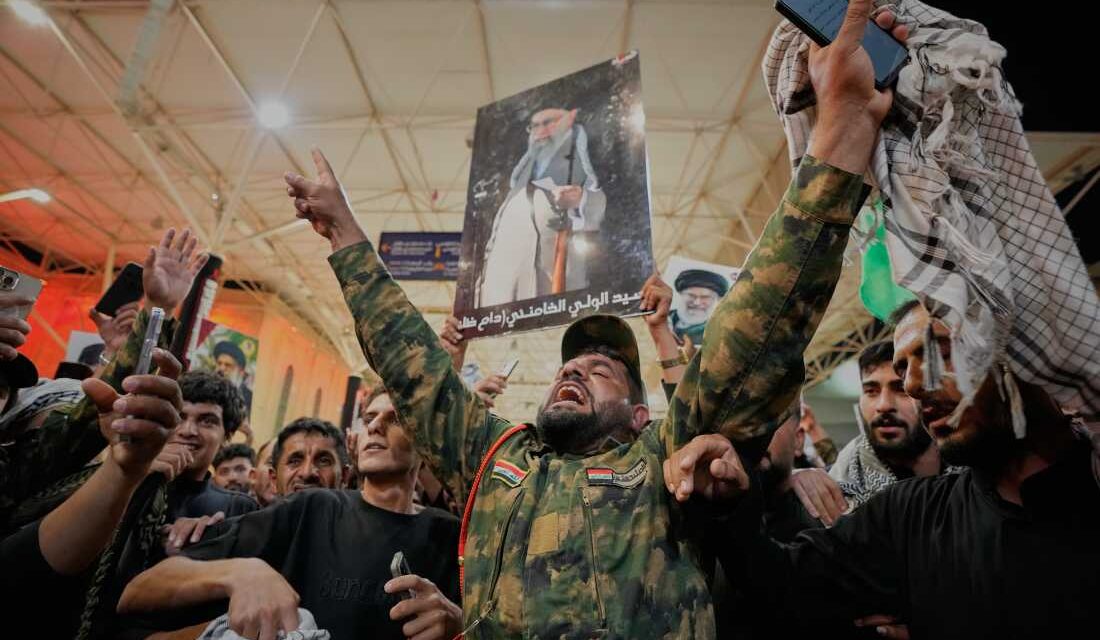
On Tuesday, July 7, 2026, an Iraqi Shiite soldier chanted in anticipation of the funeral ceremonies for the late Iranian Supreme Leader Ayatollah Ali Khamenei, occurring outside the Imam Ali Shrine in Najaf, Iraq. The following day, the situation in the region intensified. The United States military launched attacks on Iran early Wednesday. This action was a response to Tehran’s alleged strikes on three ships in the Strait of Hormuz. The U.S. effort also aimed to halt Iran’s ability to sell crude oil openly on the global market.
Iran’s response involved strikes targeting Bahrain and Kuwait. These actions heightened the risk of a breakdown in an interim agreement aimed at halting the ongoing war. This escalation threatens to plunge the Middle East into a broader conflict. The attacks occurred against the backdrop of Ayatollah Ali Khamenei’s funeral, which lasted for several days. Khamenei was slain on February 28 at the start of the war at the age of 86. While the funeral was expected to be a time of lowered tensions, mourners called for action against U.S. President Donald Trump and Israeli Prime Minister Benjamin Netanyahu.
Negotiations had been set to begin after Khamenei’s burial, focusing on challenging issues such as reopening the Strait and addressing Tehran’s contested nuclear program. The new attacks cast doubt on these negotiations. Iran’s Parliament Speaker Mohammad Bagher Qalibaf expressed defiance on his social media platform: “The era of bullying and extortion is over. It leads nowhere. We don’t fold.”
U.S. Strikes on Iran
The U.S. Central Command reported that American forces conducted strikes to punish Iran for targeting commercial shipping in an international waterway. The strikes targeted Iranian air defense systems, radars, and over 60 small boats utilized by Iran’s paramilitary Revolutionary Guard. These boats have been instrumental in harassing ships navigating the strait. The U.S. emphasized its readiness to hold Iran accountable for any agreement violations.
While Iran acknowledged the strikes, it did not report any losses. Iranian state media did report hearing explosions in Bandar Abbas, Qeshm, and Sirik. On Wednesday morning, both Bahrain and Kuwait, where U.S. military forces are stationed, activated missile alerts. The Revolutionary Guard confirmed attacks on U.S. military installations in both countries. They accused the U.S. of breaching the ceasefire and violating an Islamabad understanding.
Iranian Retaliation and International Response
Similar incidents occurred late last month with Iranian attacks on shipping and subsequent U.S. retaliatory strikes. These events resulted in Iranian attacks on Bahrain and Kuwait. Wednesday’s developments coincided with President Trump attending a NATO summit in Turkey.
U.S. Revokes Iranian Oil Sale License
In response to the strikes, the U.S. revoked a license that permitted Iran to sell oil on the global market as part of the interim deal. This license had enabled Iran to sell oil for U.S. dollars openly, marking a significant change from years of sanctions. Iran was believed to be selling discounted crude to China.
The revocation followed the attacks where a tanker near Oman’s coast was reportedly hit, catching fire. The U.K. Maritime Trade Operations center revealed Iran’s state television alleged the tanker ignored warnings prior to the attack.
Despite the attacks, the other two ships only suffered minor damages and continued through the Strait of Hormuz. Iran has maintained tight control over the strait, affecting global energy markets since a significant portion of traded oil and natural gas passes through this channel. Ships targeted on Tuesday were reportedly using a route near Oman’s shore, one Tehran has not sanctioned.
Majed al-Ansari, a Qatari Foreign Ministry spokesperson, labeled the attack on the Qatari tanker Al Rekayyat as “unacceptable” and held Iran responsible. As part of the interim agreement, Iran and the U.S. allowed ships to transit without fees for 60 days, although Iran insisted on controlling routes and seeking future passage charges.
Gulf Arab states and the U.S. reject Iran’s demand for charging fees, signaling ongoing tensions over navigation rights and regional security.
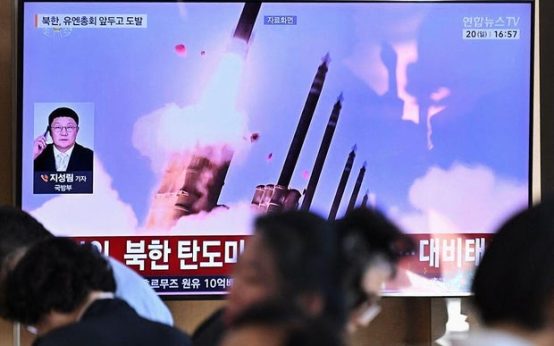 North Korea’s Missile Launches Escalate Tensions
 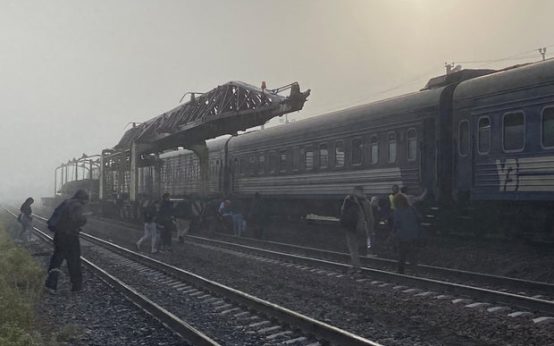 U.S. Plans for Permanent Army Base in Poland Amid Tensions with Russia
  Berlin’s Mayoral Race: A Candidate Inspired by New York Leadership
  Cuba Faces Sixth Power Grid Collapse Amid U.S. Fuel Blockade
  Daring U.S. Rescue Mission in Iran
 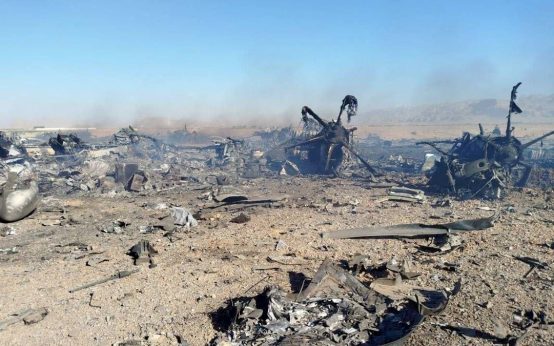 Inside the Daring Rescue of American Airman in Iran