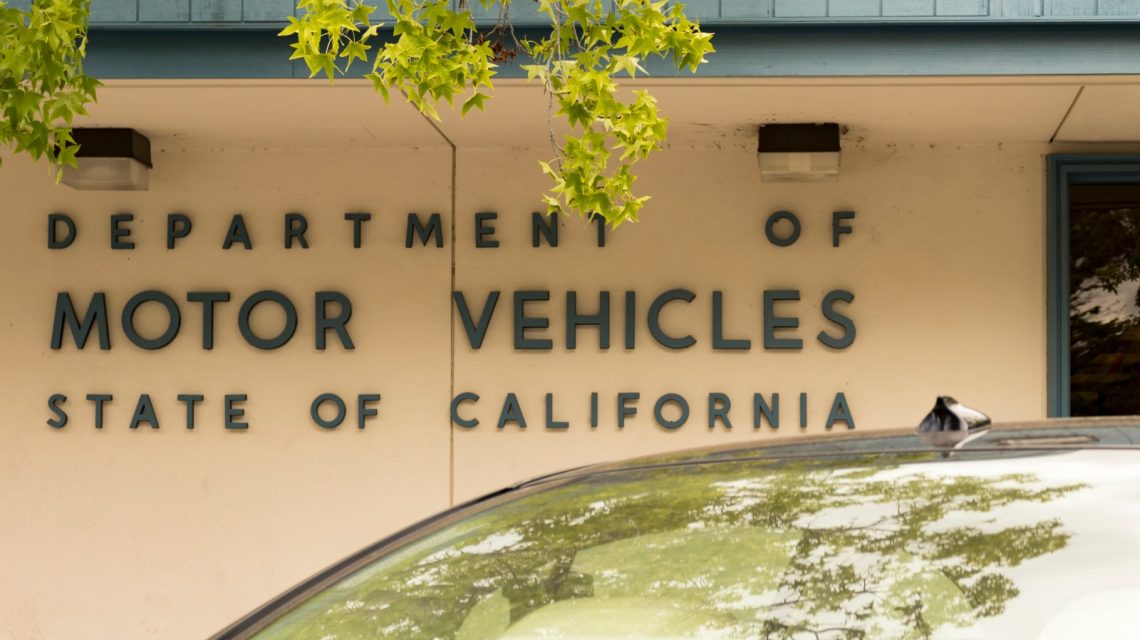
More than 11,000 drivers in California must retake their written driver’s license exam within 30 days. This follows the discovery of unspecified “irregularities” in their original test results by the California Department of Motor Vehicles (DMV). The DMV has given little explanation for these issues, and it remains unclear whether cheating was involved.
Concerns Over Automated Systems
The DMV clarified that the irregularities were not linked to artificial intelligence (AI) or internal technical problems. However, the demand for retesting has raised questions about the influence of automated decision-making systems in government services. As the use of AI-powered monitoring tools grows within public agencies, experts caution that technical errors can rapidly escalate into life-altering consequences for many people.
Alex Beene, a financial literacy instructor at the University of Tennessee at Martin, noted the state’s capability to impose penalties based on software flags before providing a clear explanation of the supposed issue. He highlighted the swift change in driver options due to the retesting requirement.
The Retesting Requirement
According to the DMV, about 11,000 drivers who took written knowledge tests between July 2025 and April 2026 must retake the exam within 30 days to avoid license cancellation. Letters sent to affected drivers stated their test results showed “non-compliance with driver testing criteria required by state law.” Despite these notices, many drivers report they have not received details about what irregularities were identified.
A DMV spokesperson emphasized the importance of maintaining testing integrity, explaining that knowledge tests are vital in assessing drivers’ understanding of road rules. The spokesperson assured the public that this initiative is led by the DMV and part of regular internal monitoring, confirming no involvement of AI or technical system problems.
One driver, David Specht from Sacramento, initially feared being accused of cheating. Specht said he contacted the DMV but received no clear explanation for the flagging of his test.
Insights Into California’s Online Testing
California has increasingly moved parts of its driver’s license testing online through a remote proctoring platform known as MVProctor. This system allows applicants to take their knowledge tests remotely while a software monitors their activities for compliance with testing requirements. MVProctor utilizes technology from Proctortrack, which provides automated tools for identity verification and behavioral monitoring to detect rule violations.
Remote proctoring gained popularity during the pandemic, but it has since faced controversy. Alex Beene pointed out the need for transparency regarding flagged tests, decision reviews, and drivers’ appeal rights. He also mentioned Proctortrack’s security and privacy concerns.
Automated Monitoring Issues
The DMV stated the retesting requirement wasn’t related to AI or internal tech. Yet, remote proctoring systems have long faced criticism over false positives. Such errors can occur when typical non-cheating test behaviors get incorrectly flagged as suspicious. False positives might arise from actions like looking away from a screen or experiencing technical issues.
Even Proctortrack has acknowledged industry fears regarding “false positives.” The company recently touted new features to lessen incorrect flagging and boost review accuracy. However, when governments heavily depend on automated monitoring, even minor error rates can lead to significant impacts for numerous individuals.
Tom Clayton, president and COO of digital safety firm Aura, warned that in the event of government agency glitches generating confusion or urgency, scammers are likely to exploit the situation with persuasive phishing emails and texts.
Proctortrack’s Security Practices Examined
Proctortrack has faced years of scrutiny over its security and data privacy practices. A 2020 Consumer Reports probe revealed concerns after a software leak involving Proctortrack hinted at possible exposure of sensitive student data. Cybersecurity experts criticized the company’s security measures and questioned whether involved education institutions were sufficiently overseeing the platforms used.
Bill Fitzgerald, a privacy researcher for Consumer Reports, expressed significant concerns over the findings, criticizing the careless mistakes evident in the code.
Steps for Affected Drivers
The affected California drivers must schedule appointments for retaking their written knowledge tests within 30 days. Walk-ins are not allowed, and drivers must bring the DMV notice to their appointment.
Contact Newsweek editors on this story: Kate Nalepinski and Edward T. Cummins.
 Texas Man Charged with Capital Murder in Shooting of 5-Year-Old
  Far-Left Groups Allegedly Organize Protests in Austin
  Austin Police Release Footage of Arrest After ICE-Involved Shooting
  Himalayan Pilgrimage: A Couple’s Narrow Escape and Lingering Questions
  Religious Trends: Decline in Affiliation with LDS Church
  UC Berkeley Student’s Harrowing Encounter Raises Questions About Safety and Legal Protections