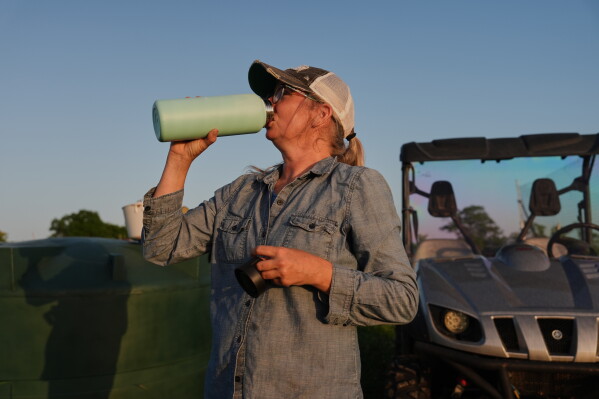
As the sun began to set, the heat of the day lingered as Annie Woods tended to her crops of squash and zucchini on her 50-acre farm in Brooksville, Kentucky. Climate change has led to patterns of extreme weather, causing challenges like excessive heat, severe flooding, and prolonged drought. This affects farmers by narrowing planting seasons and risking crop loss due to unexpected temperature shifts.
Annie Woods noted, “It’s pretty safe to assume these heat waves are here to stay.” Recent weather phenomena like heat domes create high-pressure systems that trap heat and humidity, affecting farmers who grow specialty crops like fruits and vegetables. These farmers must adjust to these changes, often by altering their schedules to harvest during cooler times of the day. Unlike commodity crop farmers, specialty farmers often lack the same safety nets.
Melissa Widhalm, associate director at the Midwest Regional Climate Center, highlighted the risks heat domes pose to farmworkers’ health. Woods, who harvests her crops by hand, limits her work to cooler parts of the day and sets up tents for shade when necessary.
Extreme heat and humidity can also bring diseases and pests that threaten crops. Woods focuses on harvesting vulnerable crops, like tender salad greens, first. She supplies vegetables and culinary herbs to local restaurants and a community-supported agriculture program. To protect seedlings from the heat, she keeps them in a cooler barn before transferring them to a greenhouse equipped with fans.
For other farmers, like Paul Rasch in Iowa, the heat has shortened the harvest window for crops such as raspberries. Rasch’s team harvests early in the morning to avoid unsafe conditions later in the day. He has installed air conditioning and added shaded areas for both workers and customers.
Rasch observed that extreme weather events seem more frequent and intense, complicating farming practices. Specialty crop farmers often plant a wide variety to hedge against losses from weather impacts. Woods and Rasch also point out the challenges of accessing crop insurance for diverse crops compared to single-crop insurance for commodities like corn and soybeans.
Duncan Orlander from the National Sustainable Agriculture Coalition explained that federal crop insurance programs typically cover single-crop seasons. The paperwork for insuring multiple crops can be overwhelming for smaller farms. While some federal programs offer revenue-based coverage, these are complex and underused.
Woods’s community-supported agriculture program offers a level of flexibility, allowing her farm to remain viable through diverse planting strategies and customer support. This diversity and customer backing provide a buffer against extreme weather events.
To adapt to extreme weather, farmers like Woods and Rasch plan meticulously, ensuring resilience through strategic planting and insurance strategies.
 Chicagohenge: When Sunlight Aligns with City Streets
  Fat Bear Week 2026: A Look at the Contest and Its Competitors
  California Governor Declares Statewide Emergency Ahead of El Niño Storms
  EPA Rollbacks and the Impact on Indiana Communities
  The Impact of Battery Innovations on Renewable Energy
  Challenges in California’s Home Insurance Market