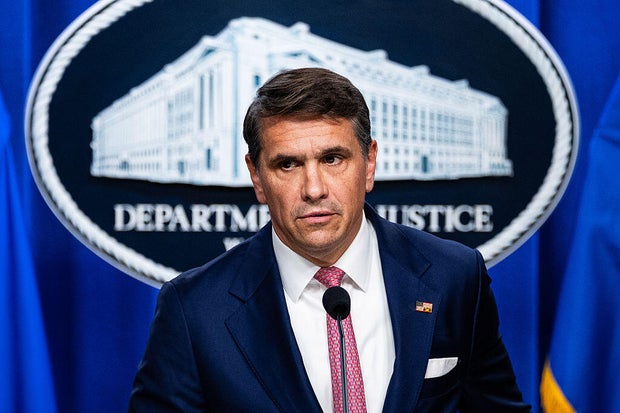
Acting Attorney General Todd Blanche will appear before the Senate Judiciary Committee for his confirmation hearing to become the permanent leader of the Justice Department. He is expected to address tough questions related to his previous actions in the department. Topics include what some Democrats view as politicized prosecutions, the department’s handling of the Jeffrey Epstein files, and his support for a nearly $1.8 billion ‘anti-weaponization’ fund.
President Trump nominated Blanche after Pam Bondi was ousted in early April. While Republicans have a majority in the Judiciary panel, the death of Sen. Lindsey Graham has slightly shifted the dynamics.
‘Anti-weaponization’ Fund and IRS Settlement
Blanche’s previous decision to create an ‘anti-weaponization’ fund has faced bipartisan criticism. This fund stemmed from a settlement between the IRS and Trump over leaked tax returns. The settlement granted immunity to Trump’s family and companies from future tax claims. However, Blanche later announced the fund would be scrapped, but skepticism remains.
Recently, a federal judge in Miami rebuked the Justice Department, questioning Blanche’s actions and raising ethical questions. In another case, the Trump administration declined to submit a statement confirming the fund’s termination.
Blanche reiterated that the fund is defunct, and a Justice Department spokesperson dismissed the Miami judge’s ruling as incorrect.
Blanche’s Handling of Political Cases
During his tenure, Blanche oversaw controversial prosecutions, including those of James Comey and Letitia James. These cases were later dismissed. Comey faces a separate indictment for allegedly threatening the president, a case experts doubt will succeed due to First Amendment protections.
Blanche faces criticism for actions viewed as politically motivated, such as the dismissal of charges against Kilmar Abrego Garcia, which were deemed vindictive by a Tennessee judge. Additionally, Blanche’s involvement in Ghislaine Maxwell’s transfer while her appeal was pending raised concerns.
Blanche’s Career Path
Todd Blanche’s career began as a paralegal while he attended night school. He worked his way up in New York’s Southern District and was later involved in high-profile cases like President Trump’s ‘hush money’ trial. His nomination as deputy attorney general followed Trump’s election return. Some colleagues viewed him as adhering to Justice Department norms, but others now see him as influenced by representing Trump.
Concerns about Blanche’s leadership style have led to significant departures from the department. An advocacy group highlighted hundreds of firings during his tenure, often viewed as politically motivated.
However, some former officials defend Blanche, seeing him as ethical and capable of challenging assumptions to ensure legally sound decisions.
 Marco Rubio: Effective Management in Trump Era
  Karoline Leavitt on Trump’s Tense Calls with Putin and Xi
  Florida Governor Race: Byron Donalds Adjusts Campaign Approach
  Trump Meets Zelensky and Plans for U.S.-China Relations
  Tight Senate Race in Maine as Susan Collins Faces Criticism
 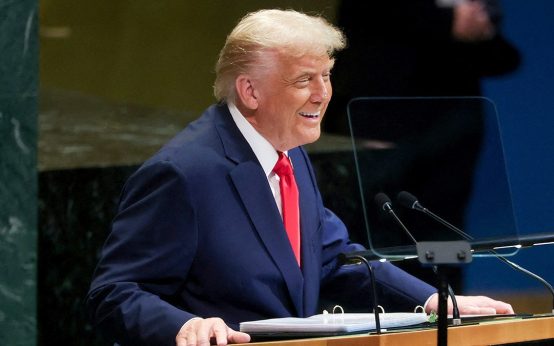 Trump’s Vision on Iran, AI, and Global Security at the UN