Britt Lundgren, a physics and astronomy professor at the University of North Carolina at Asheville, and David M. Klein, an entrepreneur and former business professor at the University of Massachusetts at Amherst, highlight a pressing issue: the increasing dangers of Earth’s orbit.
Kessler Syndrome: A Persistent Threat
For decades, scientists have warned about Kessler Syndrome, where collisions with orbital debris could trigger a chain reaction of further collisions. This would scatter countless reflective fragments in low Earth orbit (LEO), disrupting satellite operations and posing hazards for decades. These debris fragments can increase global light pollution, complicating astronomical observations, even in the most secluded regions.
Light Pollution and Satellite Launches
Even if Kessler Syndrome does not occur, space debris reflects enough light to potentially increase night sky brightness by up to 20% above its natural level within the next decade. Satellite launches have become more frequent, with numerous governments and private entities deploying thousands of satellites into orbit. Current cleanup standards are weak and mostly voluntary.
Incidents and Risks
Space debris risks are no longer confined to orbit. In 2024, debris from the ISS caused damage by crashing through a Florida home’s roof. Although no serious injuries were reported, the event underscored the already present dangers of orbital debris.
Need for Stronger International Cooperation
Stronger international collaboration and enforcement are crucial. The 1967 Outer Space Treaty provides fundamental principles for peaceful space activities but lacks enforceable provisions on orbital debris, space traffic management, or collision avoidance. A modern international framework is required, led by the United Nations Office for Outer Space Affairs.
Corporate and Government Responsibility
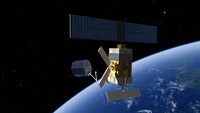
Governments and corporations benefiting from space infrastructure must take responsibility for its protection. To prevent further risks, an enforcement regime should mandate satellite disposal plans and limit destructive anti-satellite weapons testing. Investment in debris-removal technology, such as NASA’s prototype Active Debris Removal Vehicle, is essential. This vehicle aims to tackle larger debris pieces, coordinating with their speed and rotation for removal.
Conclusion: Urgent Change Needed
Continuing to crowd space with costly, collision-prone hardware risks severe consequences—not only for astronauts but also for a modern world heavily reliant on satellite technology. The ESA’s concept for managing defunct satellites involves controlled reentries into Earth’s atmosphere, where they would burn up safely, highlighting the need for innovative solutions.
Artist’s concept showing how a defunct satellite could be grappled for a controlled reentry into Earth’s atmosphere, where it would burn up and be destroyed harmlessly. (ESA/Mixed-Reality Communication GmbH)
 Concerns Rise Over AI Development and Geopolitical Implications
  Discovery of Tilcayo Tiger Cat, a New Wild Cat Species in Bolivia
  Impact of E.U. Regulations on Google Search
  Ancient Egyptian Warhorse Burial Unearthed in Beheira
  Humpback Whale’s Grief Over Stillborn Calf Reveals Emotional Complexity
  Discovery of Massive Lunar Crater Sheds New Light on Moon’s Surface