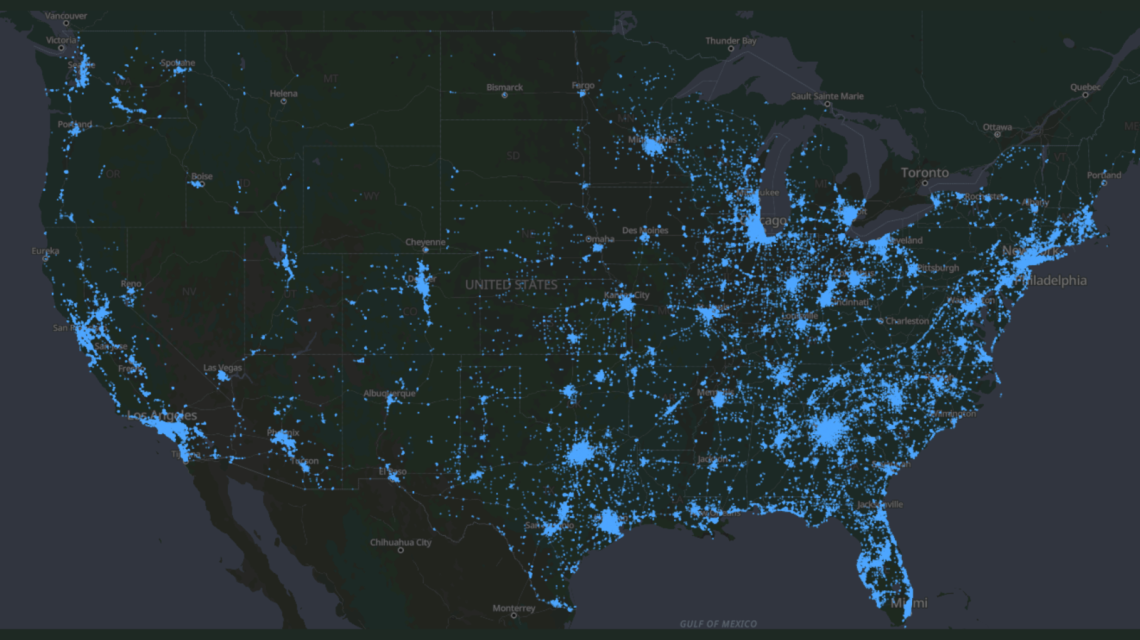
Flock Safety operates a network of automated license plate reader (ALPR) cameras. These cameras are installed on roads, intersections, and neighborhood entrances. They collect information about license plates as well as vehicle details like color, make, and model. Participating law enforcement agencies can then search this data.
The System’s Support and Growth
Supporters claim the system is a valuable tool for investigations. Agencies across the country attribute Flock cameras with helping to identify suspects, recover stolen vehicles, and generate leads. These benefits have led to Flock’s rapid expansion. Now, Flock cameras are present in thousands of communities nationwide. The surveillance deterrent group DeFlock has mapped over 122,000 such cameras across the nation.
Why Are Flock Cameras Controversial?
The same feature that supporters praise is the root of the controversy: the ability to track vehicle movements. Critics warn of privacy issues, as a network can document a person’s movements over time. This data could reveal where individuals live, work, worship, seek medical treatment, or attend political events.
Opposition has grown beyond traditional privacy advocacy groups. Some communities have rejected or removed Flock cameras due to surveillance and civil liberty concerns. Some Republican lawmakers propose legislation to regulate this technology. They argue that its use poses a privacy threat, potentially infringing on constitutional rights like the Fourth Amendment.
Concerns of System Misuse
Misuse of the system is also a worry. Some officers in various jurisdictions have faced accusations of improperly accessing the databases. Critics claim the safeguards to prevent such abuse may not work as intended. Supporters argue these instances should not overshadow the technology’s effectiveness. They believe stronger oversight, auditing, and access controls can prevent misuse while retaining a useful crime-solving tool.
The Fourth Amendment Debate
The debate centers on the Fourth Amendment, which protects against unreasonable searches and seizures. Historically, courts have ruled that there is no reasonable expectation of privacy for information exposed publicly. Thus, recording a license plate is often not considered a Fourth Amendment search. Supporters of Flock cameras rely on this principle.
Critics argue the technology changes the scenario. The concern is not just about observing vehicles on public roads, but about creating a database able to reconstruct movements and routines. This argument draws on the Supreme Court’s 2018 Carpenter v. United States decision. The Court found that cellular location records reveal enough personal information to warrant privacy expectations. Privacy advocates argue ALPR systems raise similar privacy concerns.
Are Flock Cameras Unconstitutional?
No court has definitively ruled Flock cameras unconstitutional yet. The significant case, Schmidt v. City of Norfolk, addresses Norfolk, Virginia’s Flock camera network. Plaintiffs claim that location data collection violates the Fourth Amendment. A federal judge ruled for the city in January 2026, stating the system did not track complete movements. The case is under appeal, making it a vital test for constitutional privacy protections with modern surveillance.
FlockHopper and Broader Surveillance Debates
The controversy has inspired tools like FlockHopper, which aim to show the interconnectedness of ALPR systems. Privacy advocates believe these projects illustrate how vehicle data can be accessed across different jurisdictions. Supporters contend such sharing is necessary for investigating cross-border crimes.
A Constitutional Test for the Digital Age
The debate over Flock cameras extends beyond license plates. Supporters view it as a crime-solving tool. Critics see an expanding surveillance network tracking millions who are not suspects. Courts have upheld that public roadway observations don’t infringe on privacy. The unresolved question is whether the large-scale collection and cross-jurisdictional searches constitute a different reality.
This question is making its way through courts, legislatures, and councils nationwide. Its resolution could shape how the Fourth Amendment is applied to future surveillance technology. Newsweek reached out for comments from Flock Safety and Orin Kerr, a leading Fourth Amendment scholar at Stanford Law School.
 Senate Democrats Block Data Center Bill
  USC Appoints David Madigan as New Chief Academic Officer
  Urban Innovations: New City Concepts
  Key Developments from Today’s News
  Key Events in Politics and Technology: U.S. and U.K. Developments
  The Shift Towards Work-Cations and Their Impact on Modern Workplaces