
Ice cream has evolved from a rare delicacy to a common dessert enjoyed worldwide today. This transformation owes much to advancements in storage technology and food innovation.
For years, the main obstacle to enjoying ice cream was the challenge of preserving ice. Back in the summer of 1790, George Washington spent a substantial $200 on ice cream, which equals approximately $7,259 today. The International Dairy Foods Association confirms this cost due to storage difficulties.
By the 1800s, mechanical refrigeration became available, lowering the price of ice cream and increasing its accessibility. Pushcart vendors in America faced a new challenge: how to serve ice cream to customers. Enter ‘penny licks,’ a solution where customers paid a penny for ice cream served in a thick glass. They would lick the glass clean and return it. Revolving this practice had drawbacks. Broken glass was problematic, and sanitary concerns led cities like London to ban penny licks in 1898.
Italian immigrants facilitated the next innovation. In 1902, Antonio Valvona, residing in England, received a U.S. patent for a metal mold that made it possible to craft edible cups similar to waffles. Selling quickly across the Atlantic, these cups revolutionized ice cream consumption. The following year, Italo Marchiony in New York secured a patent for a comparable device, later developing the ice-cream sandwich.
The St. Louis World’s Fair in 1904 saw the ice-cream cone gain its familiar shape and gain acclaim. Multiple concessionaires claimed to have invented this treat. Among them, the Joy Baking Group credits Ernest Hamwi, a Syrian immigrant, who improvised cones using his crisp pastries. Dubbed ‘cornucopias,’ they quickly became popular when paper cups ran out at the fair.
Technological progress followed swiftly, with the simplification of ‘cornucopia’ to ‘cone’ by 1910. Machines gradually replaced hand-rolling, enhancing production efficiency. The arrival of the cake cone in the early 1940s coincided with the establishment of Dairy Queen and Baskin-Robbins, catering to those favoring a lighter texture.
American consumption of ice cream has still declined due to changing health habits. In 1984, the average American ate 17.8 pounds of ice cream yearly, falling to 12 pounds by 2024, as reported by the U.S. Department of Agriculture. Yet, the timeless allure on a warm evening remains undeniable, as affirmed from Washington to Ben & Jerry.
This entry is part of an ongoing series celebrating ‘American Objects’ for the nation’s 250th anniversary.
 Nordstrom’s Sale Offers Discounts on Top Brands
 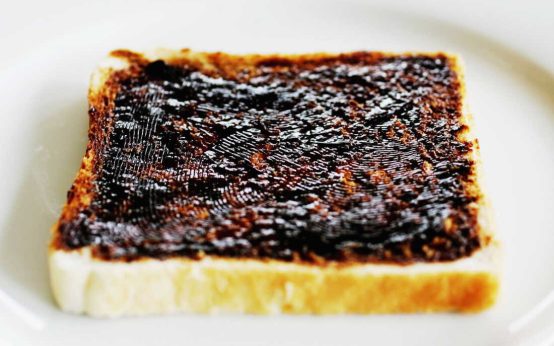 The Cultural and Culinary Significance of Vegemite
  Exploring the Museum of Bad Art
  Mother Struggles with Teen’s Coldness Over Work Contest
  Conor Kennedy and Giulia Be’s Three-Day Wedding Celebration in Rio de Janeiro
  How to Perfectly Prepare and Cook Rice at Home