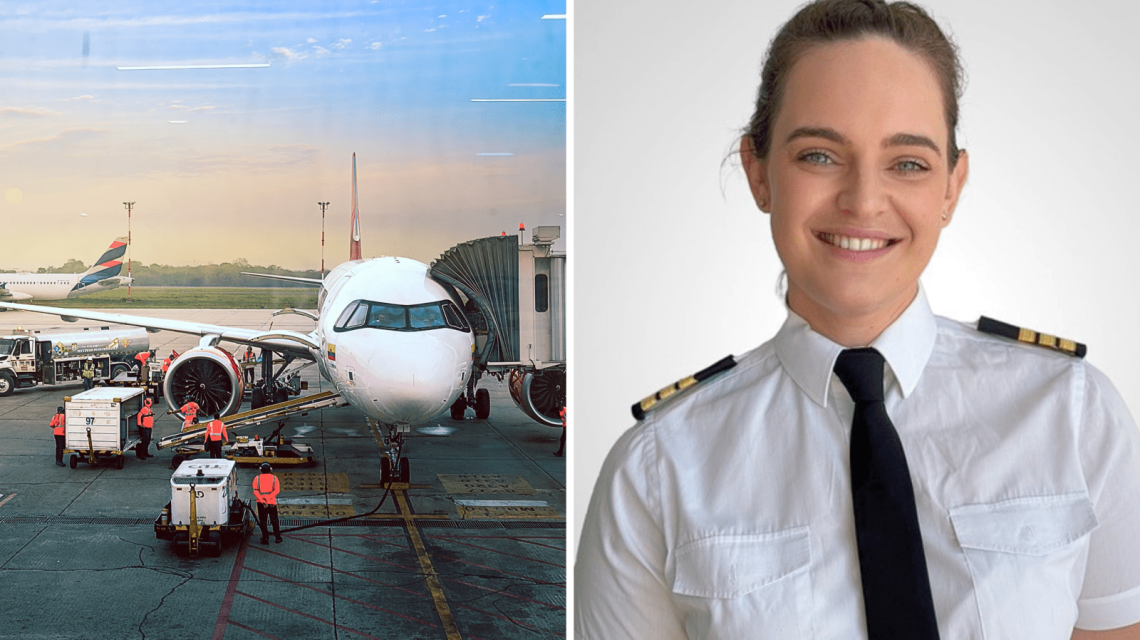
Passengers often experience fear when flying, their hearts racing and minds filled with doubt. Hanna, a 38-year-old commercial pilot, witnessed these panics firsthand. Statistics on aviation safety proved less effective in calming anxious flyers than she had hoped. Through personal experiences and conversations with passengers, Hanna realized that physical responses to anxiety needed to be addressed first.
From Cabin Crew to Cockpit
Hanna’s journey to becoming a pilot was unique. Her mother was cabin crew, and Hanna grew up on planes, fascinated by the cockpit and the pilots. This early exposure inspired her career in aviation. Hanna began flight training while working as cabin crew, and swiftly moved into her first pilot position.
Why Facts Alone Don’t Calm a Nervous Flyer
The turning point in Hanna’s approach to nervous flyers occurred six years ago when she pursued a psychology degree and trained in yoga and breathing techniques. She discovered that anxious passengers needed to understand what was happening in their minds and bodies, rather than solely relying on flying facts. Facts were helpful, but they couldn’t calm an anxious mind because fear shut down the brain’s rational side.
“The brain is very clever and it shuts down what it thinks you don’t need when it’s reacting to danger,” Hanna explained.
In moments of perceived danger, the brain prioritizes survival over rational thinking, making facts ineffective during panic situations.
Breathing as the Reset Button
According to Hanna, takeoff often triggers anxiety because it’s the start of the journey and fears are at their highest. Providing passengers with facts was part of her support but often not enough. She found deep breathing to be crucial in regaining control over the mind and body. Her breathing techniques delivered immediate results for many flyers who no longer panicked during flights.
By teaching breathing exercises, Hanna began transforming in-flight conversations into a global support network. Many people messaged her, sharing how they had booked flights for the first time in years or traveled without panic after following her guidance. Hanna emphasizes compassion, noting that fears are met without judgment and are simply the brain’s normal reactions to perceived danger.
While the mind and body may sense danger, Hanna reassures that these perceptions are not always accurate.
 988: An Alternative to 911 for Mental Health
  Potential Fat-Burning Benefits of Blueberry and Grape Compound
  Nocturia and Its Impact on Sleep and Health
  Tackle HIV: Gareth Thomas and Brazilian Advocates Break Barriers
  CDC Declares End to Cyclospora Outbreak Linked to Iceberg Lettuce
  Potential Dangers of Wasp Stings: A Personal Account