On September 11, Iran-backed Houthi rebels took control of Perim Island, located in the Bab el-Mandeb Strait. This move has sparked concerns about a new front at an essential global shipping chokepoint. A former Pentagon official described the situation as the militants entering a “kill box.” The Associated Press reported that a prolonged offensive led to the capture, resulting in over 1,500 casualties among soldiers along Yemen’s western coast, and a “painful” defeat for Yemen’s government.
“With Perim, they have gained what we could call the cork in the Red Sea bottle,” commented Morgan Murphy, a former Pentagon press secretary and retired Navy captain.
Despite this achievement, Murphy cautioned that the Houthis have positioned themselves in a susceptible area. They lack the capability of the United States, which retains significant firepower in the region. If necessary, the President could initiate decisive military action against them.
Strategic Importance of Perim
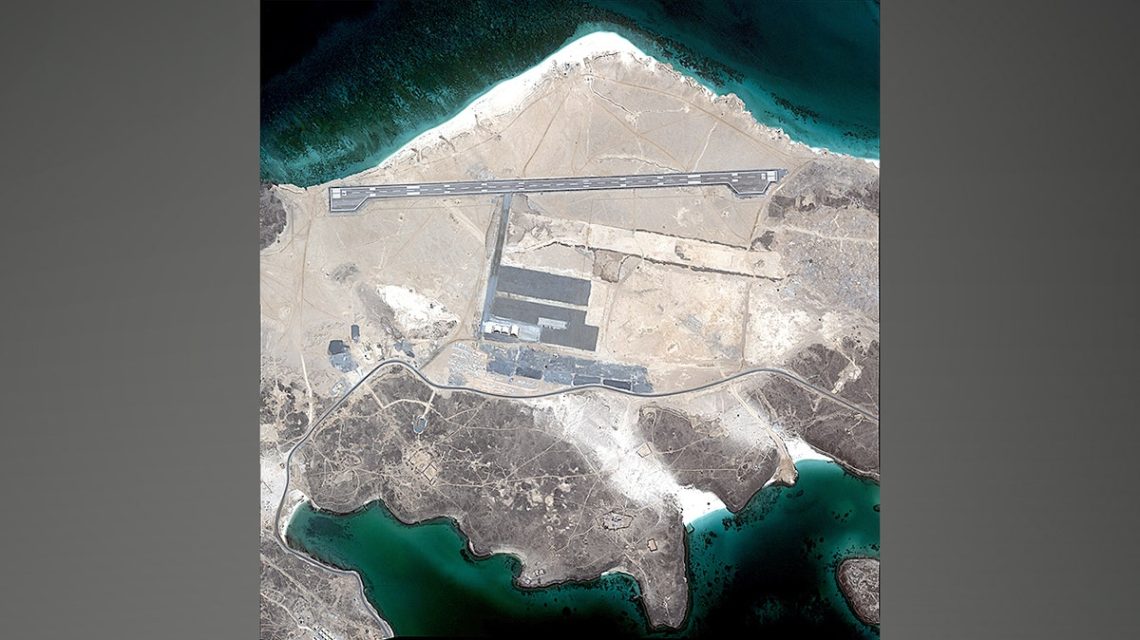
Perim sits amid the narrow passage of the Bab el-Mandeb Strait, dividing it in half with a width of just 18 miles. For centuries, this island has been a crucial maritime point, once targeted by French forces and under British control for over a hundred years. Known also as Mayun, this barren volcanic island lies approximately 20 miles from Africa’s Horn. It is near Camp Lemonnier in Djibouti, a major U.S. military base.
Satellite images reveal a runway and military hangers on Perim, attributed to construction efforts by the United Arab Emirates. Though equipped with a 6,000-foot airstrip, the Houthis lack the sophistication to project power from it like the U.S. and its allies. “They could easily be overwhelmed if targeted,” Murphy suggested.
Geopolitical Tensions and Military Considerations
Recent diplomatic interactions between Washington, Riyadh, and the Houthis underline growing tensions. On September 10, Saudi Crown Prince Mohammed bin Salman appealed to President Donald Trump for military actions against Houthi positions. Trump chose not to intervene directly but maintained support through intelligence assistance.
As Trump addressed reporters, he indicated the Houthis prefer avoiding confrontation with American forces. He stated, The Houthis called us, and they don’t want to fight with us.
However, Murphy expressed that restraint should not be equated with inaction. He emphasized the administration’s readiness to use force if necessary to maintain global energy supply stability.
Iranian Influence and Strategic Concerns
Reports indicate that Iran sustains the Houthi advance by providing weaponry and guidance through the Islamic Revolutionary Guard Corps (IRGC). U.S. officials estimate significant IRGC presence in Yemen, pointing to Tehran’s broad strategy to increase global fuel prices by constricting critical shipping routes.
“They’re using a 19th-century playbook, not 21st-century warfare,” Murphy said, highlighting the Houthis’ strategic limitations.
The potential closure of essential waterways like Bab el-Mandeb represents why major powers require strong naval capabilities. Murphy concluded that the Trump administration aims to coordinate efforts with allies to ensure these waterways remain open for navigation.
 Ms. Rachel Criticizes Silence on Palestinian Children’s Deaths
  Trump Sparks Controversy Over Northern Ireland Comments
  Canadian Prime Minister Seeks New Economic Ties with EU Amid U.S. Tensions
  Uncovering a Forgotten WWII Train Liberation
  U.S. Military Arsenal: Challenges and Advancements
  U.S.-Oman Relations Strained by Presidential Statement