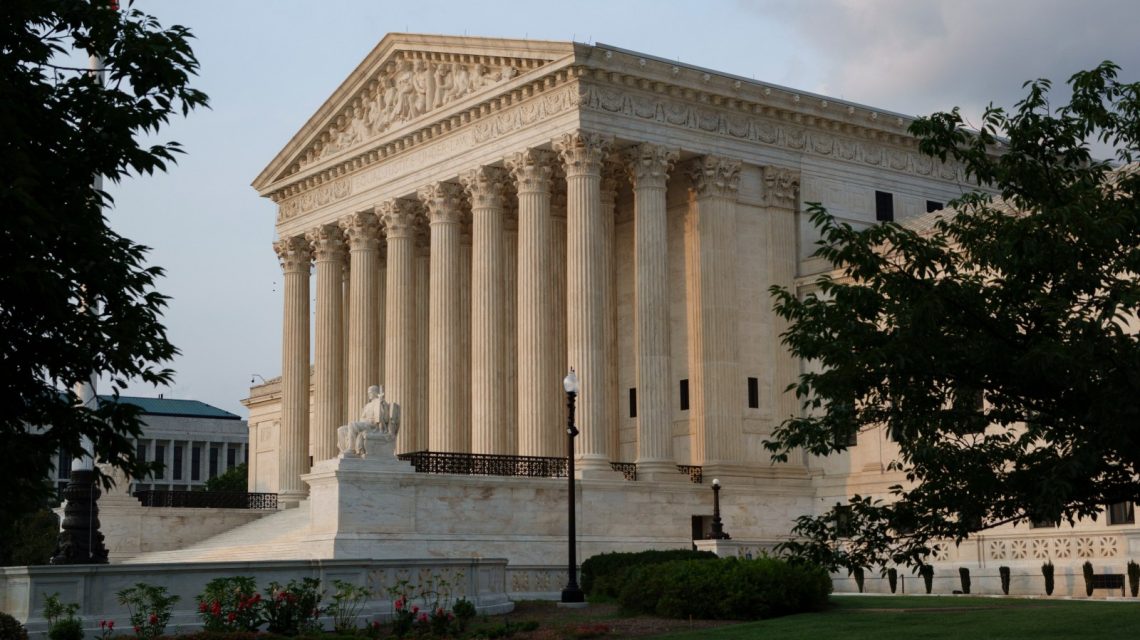
The U.S. Supreme Court is evaluating whether the Trump administration can enforce new mail ballot requirements before the November midterm elections. The High Court reviews an appeal against U.S. District Court Judge Indira Talwani’s decision in Boston. Talwani’s ruling prevents the U.S. Postal Service (USPS) from applying this rule before the elections.
After the USPS finalized the rule, states and voting-rights groups filed lawsuits. On Sunday, another Trump-appointed federal judge also blocked the USPS from implementing an executive order by Trump. This decision is pivotal as ballots are distributed nationwide. The Supreme Court’s judgment will impact the handling of mail ballots and decide the fate of one of the administration’s key election-security measures.
The USPS rule outlines how it will support Trump’s executive order from March. This order directs federal agencies to create eligible voter lists and instructs the USPS to deliver mail ballots only to these individuals. The rule requires prior approval of ballot envelope designs by the USPS. It also mandates states submit voter lists to an inactive online portal. According to experts, it’s likely too late for these changes to apply in the November elections. Some states have begun sending mail ballots, and others plan to do so shortly.
Newsweek contacted the plaintiffs, the White House, and USPS for comments.
Why It Matters
Nearly a third of voters use mail ballots. The legal dispute’s result could significantly affect voting practices, especially in states where mail voting is common. Proponents of Trump’s measures argue for stronger safeguards to enhance election confidence. They express concerns about voter-roll accuracy and ballot verification procedures, fearing ballots might reach ineligible voters. Detractors worry about the risk of electoral confusion and possible disenfranchisement of eligible voters before the midterms. Control of Congress hangs in the balance, with Republicans striving to maintain slim majorities in the House and Senate.
Issues the Supreme Court Will Address
The Supreme Court, with a 6-3 conservative majority, must soon decide on the USPS rule. The legality of Trump’s executive order is not up for debate, only the lifting of Talwani’s injunction against the USPS plan as the case moves through courts. U.S. Solicitor General D. John Sauer asserted that the order nullifies USPS efforts to prevent fraudulent use of federal mails, potentially diluting lawful votes and compromising public confidence in the electoral process.
Attorneys for California and other states opposed the USPS rule. They claimed the rule represented an illegal experiment with voting rights, requesting denial of the stay. In August, the High Court lifted an earlier block Talwani issued against the USPS prior to the finalization of the rule. The court did not assess Trump’s order legality at that point, implying uncertainty regarding the lawfulness of future government measures to enforce the Order.
The Supreme Court’s three liberal justices dissented vehemently, with Justice Jackson critiquing the court’s ruling as unnecessarily chaotic and vague ahead of the midterms. A White House representative stated that the USPS measures are commonsense actions to secure mail ballots and that the administration remains committed to improving election safety and security. Despite criticizing mail voting, Trump has repeatedly used this method himself.
Lower Courts’ Decisions
The Trump administration urged the Supreme Court’s involvement before the 1st U.S. Circuit Court of Appeals in Boston could rule on Talwani’s injunction appeal. On Thursday, a panel of judges appointed by President Biden upheld the injunction, reasoning that the president lacks authority over state election policies.
The panel highlighted the administrative shortcomings in Trump’s plans, predicting disruptions and voter disenfranchisement. Talwani issued an injunction against the USPS rule in early September, signaling her concerns over election official challenges adapting late in the cycle, assuring significant disenfranchisement risks for voters.
A second federal judge, appointed by Trump, also halted the USPS rule, citing increased disenfranchisement risks due to the rule. Judge Carl J. Nichols stressed that USPS overstepped authority by imposing new election procedures, data collection mandates, and mail transmission refusals. Nichols also noted the government’s lack of evidence for anticipated fraud in upcoming elections absent the rule.
Expert Opinions on USPS Lawsuit
Michael Morley, of Florida State University’s Election Law Center, commented on the low probability of implementing USPS changes by November. Regardless of court findings, it seems unlikely due to an incomplete online portal. Requiring election officials to alter procedures now risks errors or distribution delays.
David Schultz, election law expert at Hamline University, noted apprehension about lifting the injunction due to ongoing early voting. The chances decrease amid widespread voting and potential implementation chaos. Schultz doubted Supreme Court action due to practical and constitutional nuances favoring the administration’s loss.
The Court’s conservative majority introduces outcome uncertainties. Despite existing laws suggesting a presidential defeat, the Court’s conservative leanings affect final decisions.
Contact Newsweek editors for this story: Matthew Cannon and Shakeema Edwards.
 Sen. Tom Cotton Opposes Year-Round Daylight Saving Time Amid Trump Pressure
  Pressure Mounts on Democratic Governors to Join Trump’s Federal Scholarship Program
  A Meeting with Steve Hilton’s Vision Amid California’s Political Dynamics
  BP Lockout Spurs Push for Indiana Legislation on Unemployment Benefits
  Urgent Reforms Needed in Republican Nomination Process
  Debate Heats Up Over Permanent Daylight Saving Time