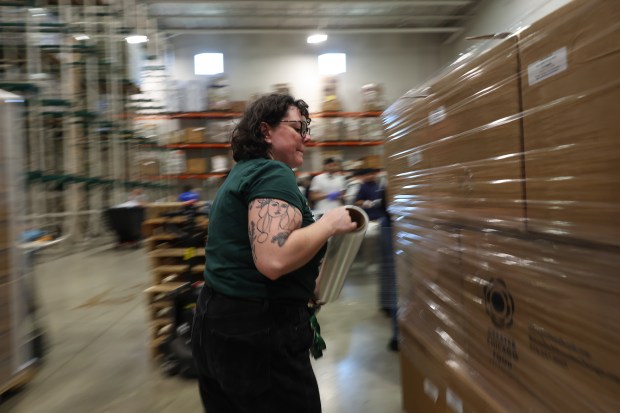
A new report from Chicago’s leading anti-hunger organization, released on Monday, highlights a deepening hunger crisis affecting the city and its surrounding areas. Affordability challenges, cuts to assistance programs, and economic pressures are making it increasingly difficult for families to secure food.
Data from the Greater Chicago Food Depository as of June 2026 shows that around 417,000 Chicago households, approximately 1 in 3, are facing food insecurity—defined as lacking consistent access to adequate food. This crisis is particularly severe in the southern and western parts of Chicago.
All of it is what we have experienced and what we see every day. Somehow, seeing the numbers attached to it just gives it so much more weight,
said Kate Maehr, CEO of the Greater Chicago Food Depository. She emphasized the alarming statistic that nearly half of the households with children are food insecure, describing the situation as devastating.
Maehr warned that the consequences extend beyond the current year, with children in the city struggling to access nutritious food necessary for a healthy life. She explained that food insecurity reflects broader economic challenges, not a lack of effort. Many adults in food-insecure households are working, with over 56% employed, yet still unable to afford basic needs.
The report outlines disparities in food insecurity across Chicago, pointing to poverty, systemic inequity, and structural racism as root causes. It notes severe food insecurity on the city’s South Side (41% of households) and West Side (45% of families), areas with long histories of underinvestment and a scarcity of fresh food options.
Saria Lofton, a researcher and professor at the University of Illinois Chicago, described these areas as experiencing food apartheid due to historical neglect. Lofton highlighted the interconnected issues of food insecurity, housing insecurity, and job insecurity, which add significant stress to residents. Benefits are being reduced or lost, placing immense pressure on families.
While food insecurity is most pronounced in certain areas, high rates also exist elsewhere. About 20% of north central Chicago households face food insecurity, as do 44% of Hispanic households and 31% of Asian-Pacific Islander households. Black households experience a 61% food insecurity rate, starkly higher than the 14% in white households.
Financially, 31% of all Chicagoans and 70% of food-insecure households have had to delay or skip other payments, such as utilities or medications, to afford food. Maehr identified cuts to the Supplemental Nutrition Assistance Program (SNAP) as significantly contributing to the crisis. Economic inequality, inflation, and unemployment also play substantial roles.
As of July 1, between 173,000 and 200,000 Illinoisans lost SNAP benefits due to President Donald Trump’s policy changes, with thousands more noncitizens expected to lose benefits. In a survey, 52% of food-insecure households and 10% of food-secure households received SNAP benefits, showcasing both the program’s impact and the unmet need.
The Illinois initiative FRESH aims to assist families affected by SNAP cuts by providing a one-time $400 cash deposit for groceries. Maehr stressed that SNAP reductions have strained the emergency food system, requiring local food pantries to step up. These pantries, often faith-led and volunteer-driven, provide crucial support but cannot replace broader nutrition safety nets.
New Life Centers, operating multiple food pantries, sees a wide demographic of visitors, highlighting the non-discriminatory nature of hunger. Director Verenice Martinez observed a shift in clientele, now including professionals like construction workers and nurses, due to economic pressures.
Martinez noted systemic gaps exacerbating the crisis, such as a six-week strike by food service contractors affecting children’s access to meals during summer camps. Rising summer camp costs have also left parents to manage meals at home.
Surveys for the 2026 Hunger in Chicago report were conducted by NORC at the University of Chicago, supported by the Greater Chicago Food Depository. Maehr emphasized the urgency of the findings, calling for a concerted response to address and mitigate food insecurity in Chicago.
 Daring Rescue of American Fighter Pilots in Iran
  Giants Honor 9/11 Anniversary During Game Against Cowboys
  Tragic Incident at Shasta Lake: Man Dies Trying to Rescue Dog
  High-Speed Crash in Irvine Results in Two Fatalities
  Teen Charged with Murder After Man Pushed from Train in Chicago
  A Look Back at September 14: Significant Events in Chicago’s History