
College sports, a long-standing American tradition, face significant challenges. Over 150 federal and state lawsuits question NCAA rules that have supported it for over a century. The Protect College Sports Act seeks to address these challenges by protecting the current model, which contrasts with professional sports.
Professional sports leagues like the NBA, WNBA, and NFL consist of privately owned for-profit teams. These teams provide top-tier competition, with players functioning as unionized employees. The NCAA, however, includes 1,075 nonprofit colleges, divided into three divisions. These schools offer 24 sports and over 90 national championships across various competition levels.
NCAA athletes are full-time students who must meet academic requirements, unlike professional athletes. In 2024-25, NCAA institutions had around 20,000 teams offering 554,298 participation opportunities for student athletes. Only Division I men’s basketball and FBS football generate profits, supporting other sports financially.
Few athletic departments, less than 3%, have revenues exceeding their expenses. They belong to Division I FBS Power Four conferences: ACC, Big Ten, Big 12, and SEC. After graduation, under 2% of NCAA athletes play professionally. Over 5 million students have participated in NCAA sports since its 1906 inception, often achieving higher graduation rates than peers, although frequent transfers may impact this.
“The Protect College Sports Act preserves the commercial and educational nature of college sports,” said a spokesman.
The Act stipulates that only student athletes meeting academic criteria can participate for up to five years, typically aged 24 or younger. It restricts transfers to one per student without eligibility loss, thereby aiming to stabilize graduation rates.
The Act also safeguards educational value by prohibiting athletic department interference in students’ course or major choices and against reducing scholarships due to performance or injury. It requires Division I schools to support former athletes financially for 10 years following eligibility expiration, valuing aid at each one’s athletic scholarship amount.
A nationally uniform law for athlete compensation through Name, Image, and Likeness (NIL) rights is included, overriding conflicting state laws and demanding disclosure of earnings over $600. The Act prevents excessively high non-university endorsement deals and grants antitrust immunity for enforcing these rules.
From July 2025, athletes could receive up to $20.5 million annually from their universities, with potential annual increases. The Act allows going over this cap by $22.5 million for retaining athletes and $5 million for non-revenue sports.
This legislative plan maintains college sports’ integrity by establishing balanced rules on athlete eligibility and compensation. It also supports internal management of athletics in alignment with education objectives and public interest, preventing disruption from inconsistent state laws or court decisions.
Enacting the Protect College Sports Act is crucial for securing the future stability of college athletics, as argued by Matthew Mitten, a law professor at Marquette University and senior advisor, urging Congress to act decisively.
 Aaron Rodgers’ Journey Through High-Profile Relationships to a Secret Marriage
  Sunday Highlights: Lane Kiffin, Nancy Mace, and College Football Drama
 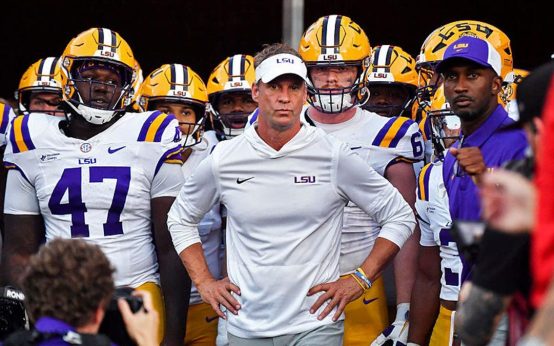 Lane Kiffin’s Return to Ole Miss: Controversy and College Football Drama
 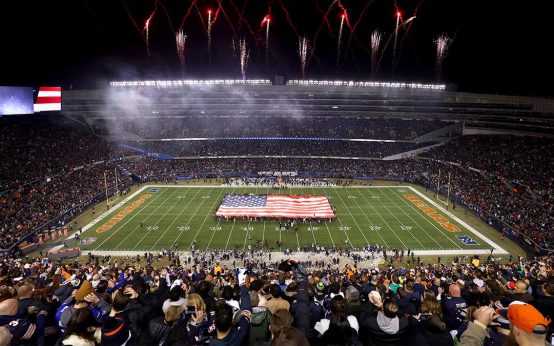 Chicago Bears’ Potential Move to Indiana: A Closer Look
 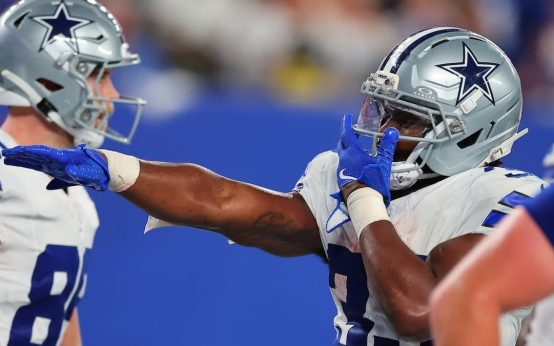 NFL Fines Three Dallas Cowboys Players After Season-Opener
  Soldier Field Introduces New Culinary Delights for Chicago Bears Fans