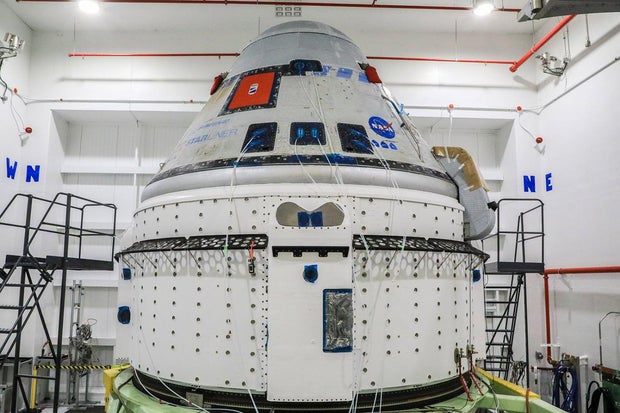
NASA is collaborating with Boeing to launch an unpiloted Starliner capsule in the December-January timeframe. This mission aims to test upgrades following a 2024 incident where propulsion system failures stranded two astronauts at the space station for over nine months.
Should this test flight succeed, NASA and Boeing plan to conduct a piloted Starliner flight by mid-2028. This future mission will feature redesigned propulsion system valves, enhanced subsystems, and modifications to prevent 2024-like failures. Veteran astronaut Warren “Woody” Hoburg is slated to command the mission.
Currently, SpaceX’s Crew Dragon capsule is the sole operational U.S. astronaut transport. NASA seeks to reintegrate Boeing swiftly to maintain consistent capability in transporting astronauts to the International Space Station until its retirement in 2030.
Boeing’s Starliner spacecraft, as displayed at Kennedy Space Center, plays a critical role in sustaining U.S. aerospace capability.
Equally important, NASA intends to ensure an American spacecraft is ready for commercial space station flights beyond the 2030s, as SpaceX anticipates phasing out Falcon 9 rockets and Crew Dragon spacecraft.
“It’s always been the Commercial Crew Program’s goal to have two crew transportation providers to ensure commercial access to low Earth orbit,” said Dana Weigel, manager of NASA’s low-Earth orbit operations.
Boeing underscored their commitment on X, stating, “Together with @NASA, we’re enhancing Starliner hardware and adding resources for human spaceflight certification. These modifications position the spacecraft as a long-term provider for crewed missions.”
In June 2024, astronauts Barry “Butch” Wilmore and Sunita Williams launched aboard a Starliner for what was scheduled as a 10-day test flight to the International Space Station. It marked the first piloted Starliner launch after two uncrewed tests, both plagued with issues. During their space station rendezvous, propulsion system leaks and thruster malfunctions occurred, delaying their return while NASA and Boeing addressed the technical challenges.
An independent review later deemed the propulsion issues a “close call,” risking astronaut safety.
Eventually, the Starliner returned to Earth without astronauts three months post-launch. Wilmore and Williams remained at the station, hitching a return flight via Crew Dragon on March 18, 2025, extending their mission duration to 286 days.
The review identified three primary problems with Starliner, along with several lesser issues needing resolution. During the station approach, five thrusters in the service module failed, causing temporary loss of maneuverability due to Teflon “poppet” issues in propellant valves. Moreover, a Starliner crew module thruster failed during the descent, eliminating redundancy in a critical system. Helium leaks in propulsion system plumbing constituted the third major issue.
The board also noted a lack of necessary redundancy in the rocket system for orbit descent. Boeing clarified that these issues are being addressed, including operational adjustments to minimize unexpected heating linked to thruster problems. Enhancements include replacing valves in all crew module maneuvering thrusters, redesigning service module thruster poppets, implementing erosion-prevention measures, and adding a faster flight data recorder for precise thruster performance measurement alongside upgraded batteries and parachutes.
Nasa and Boeing aim to launch Starliner 1, an unpiloted mission, in December or January to rendezvous and dock with the space station. Flight controllers will test thrusters and pressurization systems thoroughly to validate improvements. “Our goal is to fly Starliner One once the vehicle and team are ready,” Weigel noted. “We need to test thermal modifications and put the propulsion system through rigorous evaluation through on-orbit demonstrations.”
In support of the Starliner and ensuring commercial crew access to lower Earth orbit long-term, NASA plans to get United Launch Alliance’s new Vulcan rocket certified for astronaut missions.
ULA expressed commitment on X: “We are already preparing the Starliner-1 mission, continuing efforts with @BoeingSpace and @NASA to certify our #VulcanRocket for human spaceflight.”
ULA remains dedicated to being a long-term provider for human spaceflight capability in low Earth orbit.
 NASA’s New Space Telescope Launch: A Breakthrough in Cosmic Exploration
 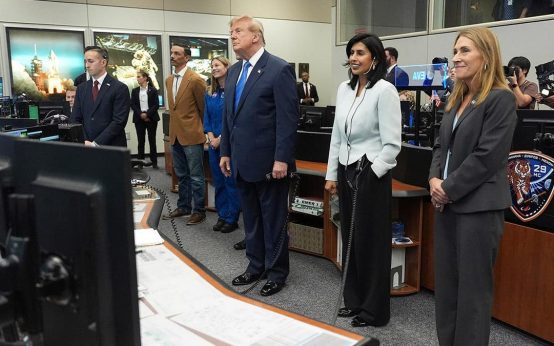 Trump’s Call with ISS Astronauts and Honors at NASA
 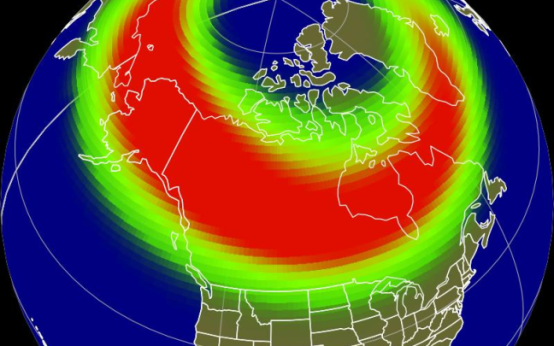 Anticipated Northern Lights Due to Solar Activity
  NASA’s Nancy Grace Roman Telescope Prepares for Launch
 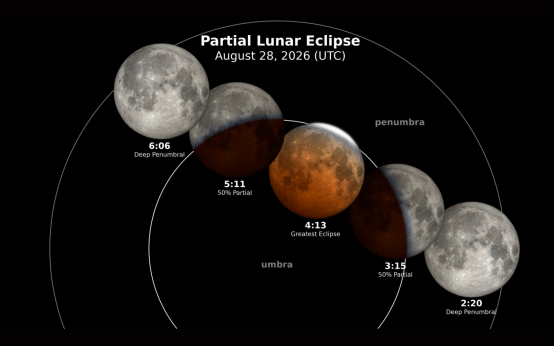 Rare Deep Partial Lunar Eclipse Visible Across the U.S.
  China Delays Chang’e-7 Lunar Mission Plans