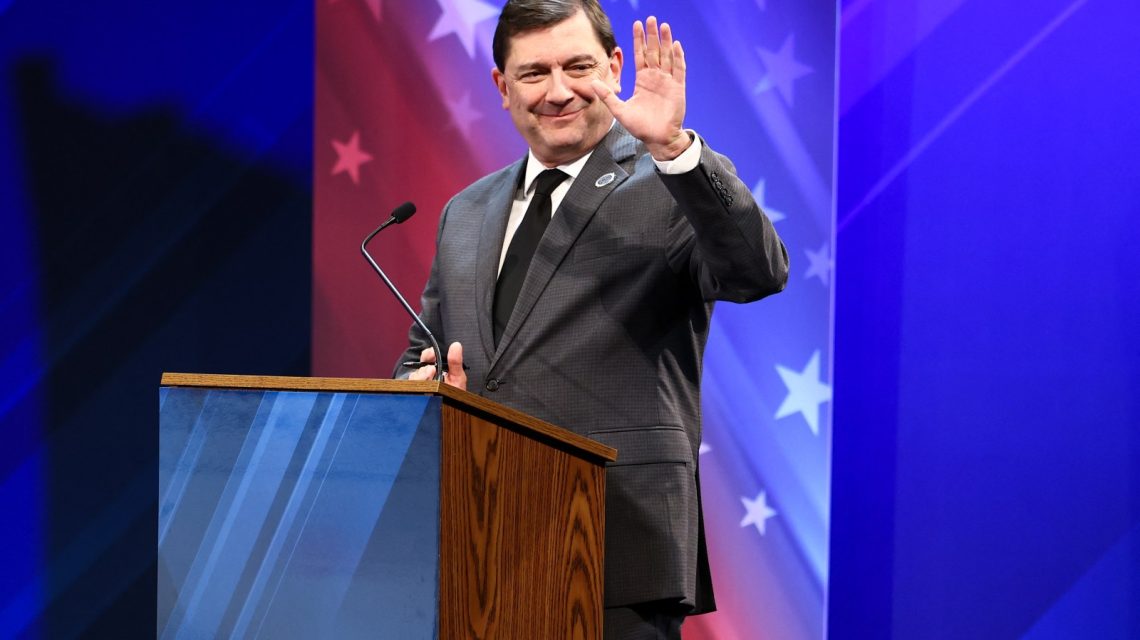
Democratic candidate Troy Jackson has raised significantly more money than his Republican opponent, Susan Collins, in the ongoing U.S. Senate race in Maine. Recent financial reports highlight the rapid pace of Jackson’s campaign since he entered the race at the end of July.
Over the past three months, Jackson’s campaign amassed $20.4 million, quadrupling Collins’ fundraising. Jackson’s campaign emphasized the grassroots support for his candidacy, aiming to prioritize working people in Washington.
In terms of expenditures, Jackson spent $16.5 million compared to Collins’ $10.9 million, ending the quarter with slightly less cash on hand. He asserted his independence from wealthy donors, stating, “I owe Donald Trump and the billionaires nothing. I owe the people of Maine everything.”
“Troy has pledged to ‘always disclose my campaign’s donors fully and transparently.'”
Collins’ campaign spokesperson raised concerns about the lack of transparency in Jackson’s campaign practices. Jackson, however, clarified that his third-quarter funds were sourced from 350,000 donations, with 95 percent under $100.
Financial reports reveal Jackson’s campaign ended with $4 million in cash and $1 million in debt. Collins raised $5.2 million and spent $10.9 million, finishing September debt-free with $5.4 million. Despite Jackson’s fundraising gains, the Republican party holds a broader spending advantage in Maine.
AdImpact noted substantial spending in Maine, with $149 million supporting Republicans, compared to $109 million for Democrats. Maine’s race ranks as the most expensive per voter, at $221.55 per voting age adult.
Troy Jackson vs. Susan Collins: Poll Insights
Jackson has maintained a slight lead in several polls, with Collins ahead in only two since July. The latest survey from InsiderAdvantage shows Jackson leading by two points, while a Suffolk University poll reported Jackson at 49 percent and Collins at 47 percent.
Despite the close margins, many polls fall within their error ranges. Collins has historically overcome polling deficits, notably in the 2020 midterms when she defeated Sara Gideon despite polling behind.
Final Debate and Campaign Dynamics
Both candidates have completed four debates leading up to Election Day on November 3. Collins highlighted her bipartisan record, while Jackson scrutinized Collins’ alignment with President Trump.
The final debate touched on U.S. Supreme Court issues, campaign finances, and immigration policy. A protestor interrupted, leading Collins to joke about Jackson’s supporters. Jackson dismissed the protestor, underscoring the tension between the candidates.
 The White House and Communication Challenges
 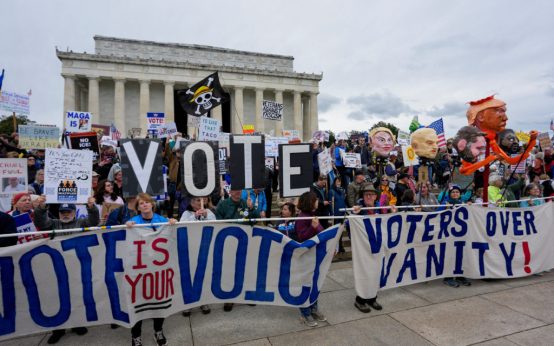 Rallies Encourage Early Voting Amid Tensions Over Voting Rights
  Geography and Politics Shape Future of AI Data Centers in Red States
  Protests and Early Voting Initiatives Mark ‘No Kings’ Day of Action
  The Movement for Guaranteed Income Gains Momentum
  Thousands to Participate in ‘No Kings’ Rallies Across Southern California