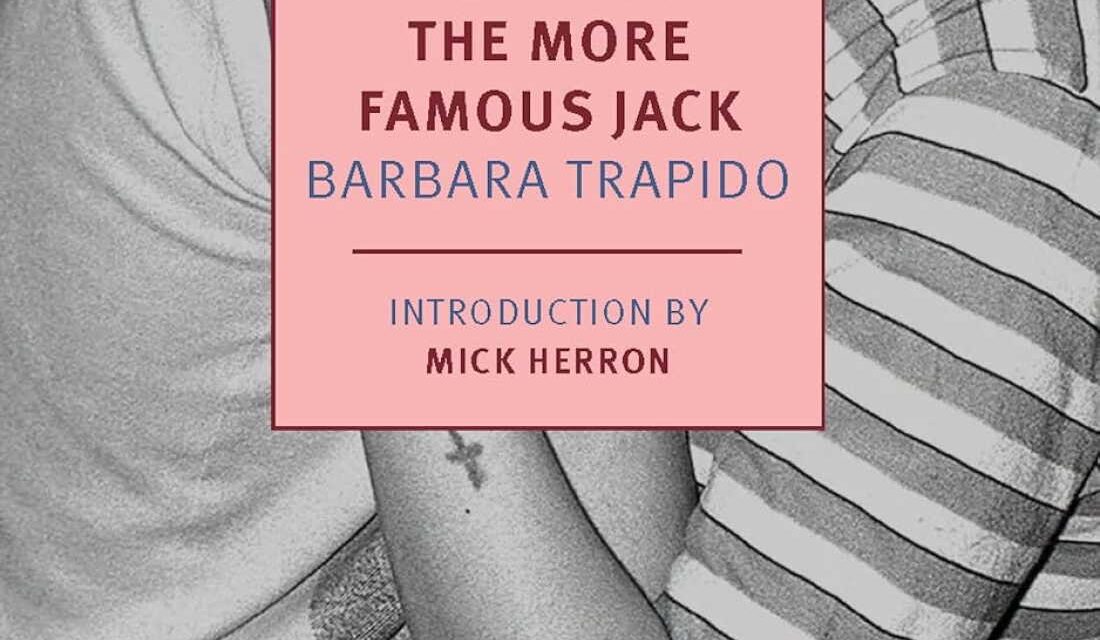
When Brother of the More Famous Jack by Barbara Trapido first came out in 1982, I encountered it during my twenties. At the time, I was on bedrest with my first pregnancy and about to release my debut novel, which dealt with the topic of a failed college relationship. Trapido’s novel, focusing on a smart but inexperienced young woman who often falls for the wrong men, resonated with me.
The book remains captivating every time a new generation celebrates it. New York Review Books’ Classics imprint released the latest edition in October. While the cover photograph gives off an 80s melancholy rather than conveying the swinging late ’60s London period where much of the novel occurs, this should not deter readers. Katherine Browne, the spirited narrator, is impossible not to love.
Katherine attempts to escape her restrictive and bourgeois upbringing, eagerly seeking adventure. She openly admits her lack of fuss-making abilities and perceives others’ shocking behavior as an educational process. Her encounters with her university philosophy professor’s chaotic family serve as a liberating experience.
The family, led by the left-wing patriarch Jacob Goldman, is an example of bold, radical iconoclasm. Katherine develops infatuations with each family member, including Jacob’s wife, Jane, and their irreverent oldest sons. Her first visit to the Goldmans introduces her to candid conversations concerning birth control and childbirth, leading Katherine to observe the overwhelming sex education that contrasts with her past.
Trapido, born in Cape Town, South Africa, moved to England in 1963. Writing her first novel at 40, while balancing marriage to an Oxford professor, raising two children, and working on an unfinished dissertation, demonstrates her rich life experience that influences her writing.
The novel’s 50 brisk chapters, filled with captivating incidents and engaging dialogue, embody a delight in chaos.
Unlike many debut novels, Trapido’s work steers away from autobiography. Subsequent novels like Temples of Delight, Juggling, and The Traveling Hornplayer interweave characters and explore further stories. Her novel Frankie and Stankie tells the tale of two sisters under apartheid, contrasting the buoyant tone of Brother of the More Famous Jack with a bleaker narrative.
The title nods to the poet William Butler Yeats, older brother to artist Jack Butler Yeats, drawing from a family joke relatable to the characters. Trapido frequently features siblings, yet Katherine, an only child, immerses herself in the lively chaos of the Goldman household.
The novel embeds recurring themes such as classical music, literature, social class, mental health, and interpersonal relationships. Brother of the More Famous Jack has earned admiration as “a sort of bohemian Brideshead Revisited” by the Times Literary Supplement.
Writers like Lily King and Rachel Cusk praise the novel, calling it “literary comfort food” and “brilliantly lewd.” In the introduction to the latest edition, Mick Herron describes the work as exploring “the eroticism of the intellect.” In the Riverhead 2014 edition, Maria Semple remarks on the novel’s enthralling contradictions.
Despite its age, Brother of the More Famous Jack remains a worthy read in any available edition.
 A Review of Netta Walker’s Drama ‘Hayward’
 Travis Kelce and Others Defrauded in Ponzi Scheme; Erik von Detten Sued for Elder Fraud
 Mel Brooks Makes a Timely Return with ‘Spaceballs’ Sequel
 Understanding Tension in Horror Movies
 The Psychological Impact of Scary Movies
 The Cognitive Impact of Horror Films