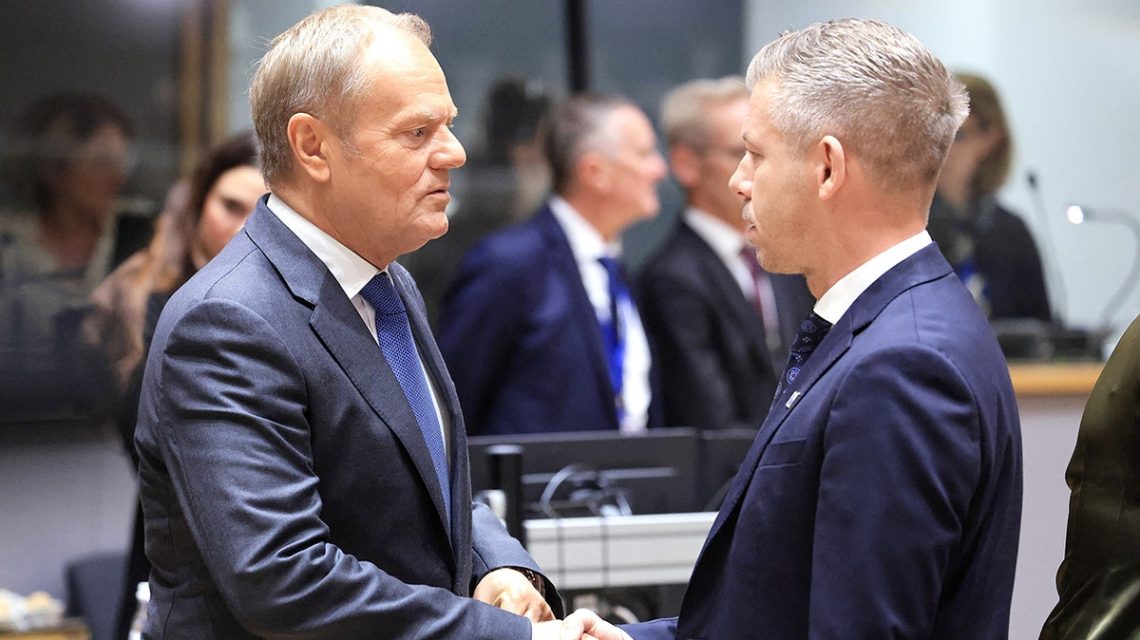
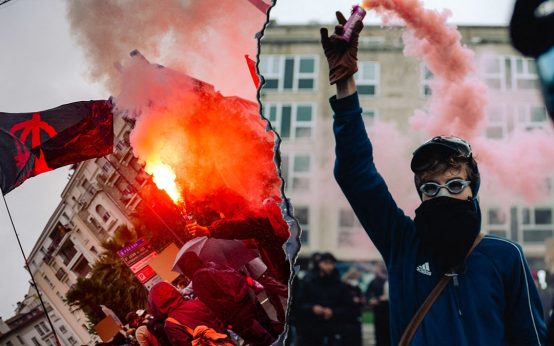
Dr. Qanta Ahmed, a fellow at the Independent Women’s Forum, has expressed concerns about increasing violence in Europe, where pro-Palestinian and communist groups are clashing with law enforcement. More than 800 individuals were arrested for rioting in France, as looting and arson escalated. Ahmed examines the cultural and political changes driving these protests in Europe’s major cities.
Images of burning cars and damaged buildings in France and Italy circulate widely. Meanwhile, leaders in Hungary and Poland are focusing on migration policy rather than addressing the unrest directly. Hungary and Poland have resisted opening their borders to migrants, leading to fines and sanctions from the European Union. Hungary’s former Prime Minister Viktor Orbán and Poland’s government faced these consequences due to their strict immigration policies.
Eurostat’s 2025 statistics indicate France had nearly 10 million foreign-born residents, Italy had about 7 million, Poland had roughly 1 million, and Hungary had fewer than 700,000. A considerable portion of Poland’s migrant population came from Ukraine.
In response to recent violence, Hungary’s Prime Minister Péter Magyar commented, “Europe can count on Hungary.” He emphasized Hungary’s strict migration policies and strong border protection. Similarly, Poland’s Prime Minister Donald Tusk affirmed Poland’s firm stance against illegal migration and commitment to security.
According to political scientist Daniel Schatz, images of chaos are being used politically to support tougher immigration policies. Leaders are highlighting these events to persuade voters of their need for strict policies. Eurostat crime statistics from 2024 reveal high offense numbers in France and Italy, while Poland and Hungary recorded relatively low numbers. The perception of crime among citizens also varies, with France showing the highest concern.
Boštjan Udovič from Slovenia’s University of Ljubljana notes a connection between the riots in France and immigration issues in Central and Eastern Europe. These regions focus on national identity and reject multiethnic societal norms.
The tensions suggest a broader confrontation, linking immigration to unresolved social issues. Protests in France are associated with groups like the Gilets Jaunes, who are advocating against issues such as education underfunding and economic austerity.
As political campaigns approach in Poland, migration remains a significant issue. Mateusz Morawiecki, a potential political contender, has voiced concerns about the unrest and emphasized the importance of security. Hungary continues to support strict immigration policies, reflecting a national consensus.
Á. Félix Debrenti, a former Hungarian government official, states that maintaining a firm stance on immigration allows Magyar to focus public attention on supportive issues amid domestic challenges. As Hungary commemorates historical events like the 1956 Revolution, the focus on peaceful protests is highlighted. Magyar stresses the difference between lawful protest and violent acts.
Report by Tyler Speicher, an American journalist based in Slovenia, with experience covering various global and local stories for New York City news outlets.
 Data Centers Spark Political Debate Across the U.S.
 Analyzing Maine’s Pivotal U.S. Senate Race
 Concerns in the U.S. Over French Riots
 Republican Concerns Over Changing Loyalty of Working-Class Voters
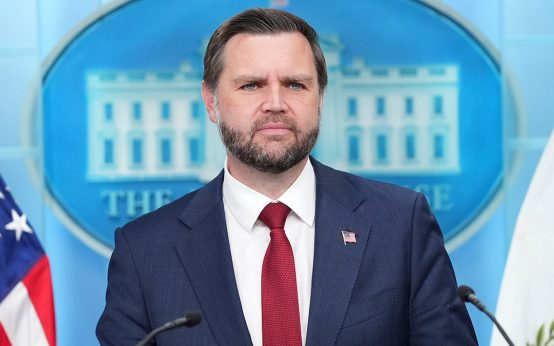 US Vice President JD Vance Chooses Not to Endorse Netanyahu Amid Israeli Elections
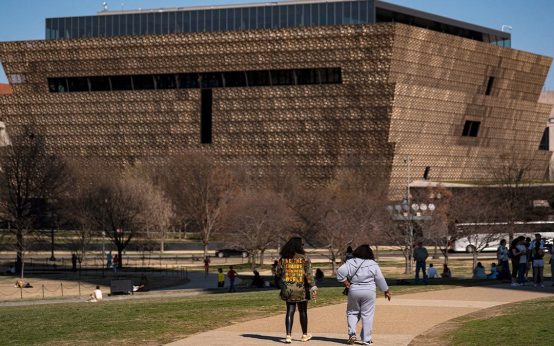 Controversy Over Smithsonian Screening of ‘White Guilt’ Documentary