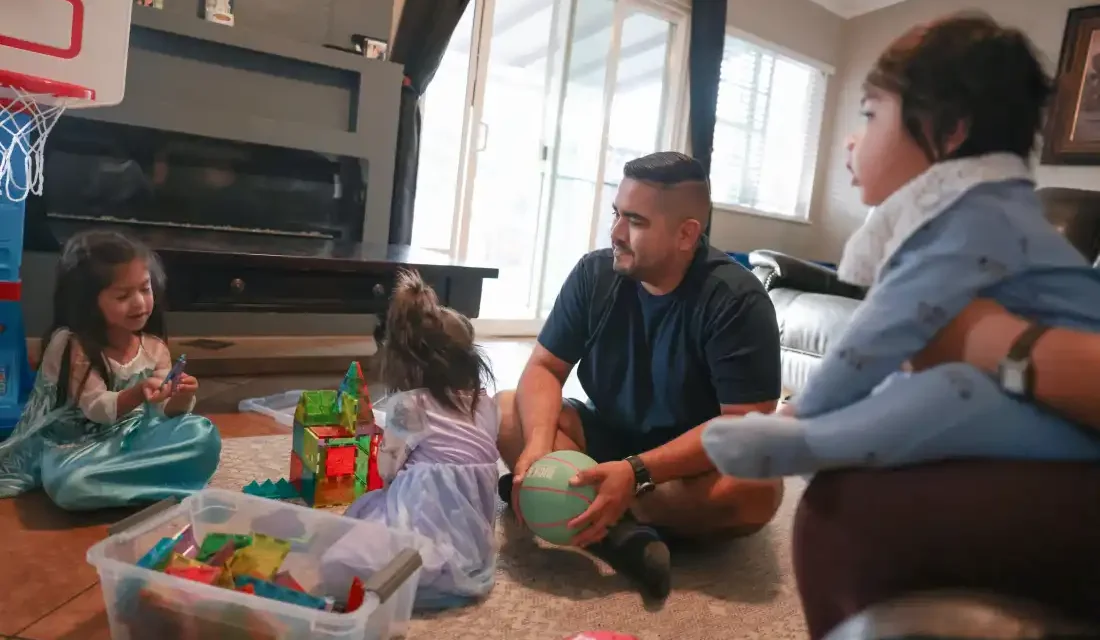
Karlo Campana, a father of three children under the age of 4, is among those embracing California’s paid bonding leave program. On a typical Saturday, he engages his daughters, Gianna and Giselle, in Magnatiles and basketball games while his 5-month-old son, Gianluca, observes from a bouncy chair. Campana opted for paid leave after Gianluca’s birth, as he did for his daughters, benefiting from time at home without work-related worries.
California offers up to eight weeks of paid bonding leave for parents within a year of birth, adoption, or foster care, in addition to maternity leave for mothers’ postpartum recovery. This program is part of a noticeable shift in gender roles and paternity involvement in caregiving tasks.
Campana mentions that having time off improved familial support. His wife didn’t feel alone; instead, she felt their partnership. Jokingly, he recalls overconfidence in his diaper-changing skills with his third child.
Recent statistics reveal an increase in fathers like Campana. In states offering paid leave, approximately half of the bonding leave claims now come from men. This trend suggests cultural changes and increased male participation in early childcare.
California dads accounted for 51% of bonding claims in 2025, surpassing women for the first time. Molly Weston Williamson, from Paid Leave for All, highlights changed perceptions of gender roles and paternity leave. She also notes factors like enhanced program awareness and benefit changes, boosting leave attractiveness.
While California’s program is entirely funded by employee payroll deductions, enhanced benefits now allow workers to reclaim up to 90% of their salary during family leave. Williamson acknowledges that this opens options for more families but points out gaps in understanding full implications, such as eligibility variations and decisions not to take leave.
The California Employment Development Department acknowledges the rise in male bonding claims. Data reflects only those using the state-funded program, missing private-sector leave usage.
Economic concerns underpin this shift in family dynamics. Surveys conducted in 2025 show seven in ten Americans view raising children as unaffordable. While public sentiment doesn’t favor government intervention in family planning, there’s interest in cost-reducing measures for childcare affordability.
Paid parental leave resonates strongly with full-time working parents who are not self-employed. Despite 84% acknowledging its potential benefit, only half perceive it as accessible, as reported by the Pew Research Center.
This overview derives from NPR’s collaboration with LAist and KFF Health News, examining evolving parental roles and economic pressures families face today.
 Popular Drinks Linked to Heart Attacks in Young Adults
 Illinois Faces Potential Ban on Hemp-Derived THC Products
 Wayne Gretzky: Legacy, Politics, and Hockey
 State Board Approves New Lurie Children’s Hospital in Downers Grove
 Adelaide Mom Bravely Faces Stage 4 Bowel Cancer with Exercise and Determination
 Students Discover Unidentified Muscle in Cadaver Lab