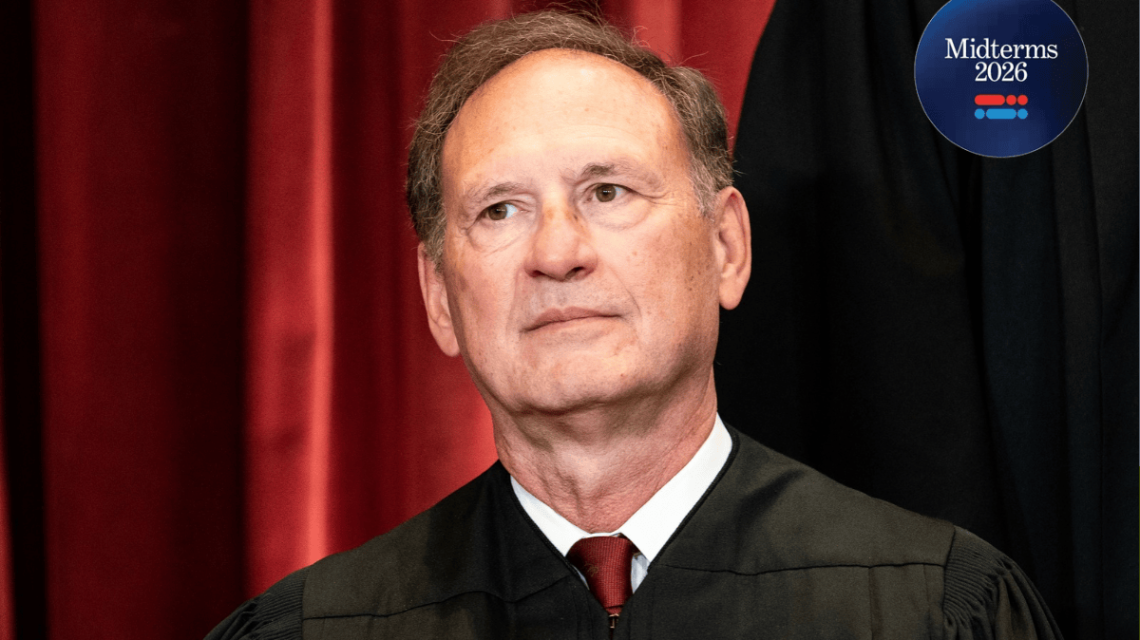
President Donald Trump may no longer have the opportunity to appoint a Supreme Court nominee as Democrats secure a Senate majority. Legal analysts suggest this majority could block any future appointments during his term’s second half.
Democrats are projected to win at least seven Senate seats following the midterms in states like Iowa, Kansas, Maine, and others. With races in Alaska and Mississippi still close, the potential impact of a Democratic Senate is significant. It could prevent Trump from appointing a new justice if a vacancy arises in the next two years, as nominations require Senate confirmation.
Historically, Supreme Court justices were confirmed with bipartisan support. However, recent confirmations have become partisan. The 2016 refusal to confirm Merrick Garland, a nominee by former President Barack Obama, marked a shift in confirmation battles. Republicans delayed the confirmation hoping for a Republican president, resulting in Trump appointing Justice Neil Gorsuch in 2017.
In 2020, Justice Amy Coney Barrett was confirmed despite arguments about the 2016 precedent. Trump also appointed Justice Brett Kavanaugh earlier. But during Trump’s second term, he hasn’t appointed more justices. Some Republicans hoped older conservative justices like Samuel Alito or Clarence Thomas might retire to make way for younger appointments.
Democrats Could Block Trump Nominees
With Democrats gaining 54 Senate seats in January, Trump faces challenges in appointing justices. Daniel Urman, a law professor, indicated Democrats would likely block such appointments.
“If a vacancy opens in 2027, Democrats would probably deny hearings for Trump’s nominee, leaving the seat open,” said Urman.
This situation could lead the Supreme Court to seek compromises, similar to the period following Justice Scalia’s death. Negotiations with Senate Democrats for a moderate nominee seem improbable given Trump’s track record.
Some Republicans express concern over future Supreme Court prospects. Florida Governor Ron DeSantis mentioned that with 56 Democratic senators, confirming a justice would be impossible unless circumstances change soon.
Possible Alito Retirement in Lame Duck Session?
Paul Collins, a legal studies professor, noted Republicans might confirm a justice if any retire before year-end, though the “clock is ticking.” He emphasized the unprecedented nature of a justice retiring for political reasons.
If Justices Alito or Thomas were to retire, both with strong conservative ties, Democrats could implement significant Supreme Court reforms. These might include Court expansion or term limits, driven by partisan perceptions of justice retirements.
“Retirement for ensuring a successor from Trump would reflect partisan politics,” Urman asserted.
Stephen Wermiel, a law professor, predicted Democratic outcry if Republicans attempted to confirm a justice during their last weeks of control.
Thomas’s Legacy and Potential Retirement Considerations
Justice Clarence Thomas, another senior conservative, could weigh his legacy as he nears being the longest-serving justice. Collins suggested Thomas considers his legacy both in terms of tenure and court ideology. He might contemplate retirement yet ultimately choose against it.
Wermiel doubted Thomas would retire soon, pointing out the likely difficulty in advancing a Trump-nominated successor.
Democratic Senate’s Impact on Supreme Court Reforms
Democrats might push for Supreme Court reforms despite likely vetoes by Trump. Proposed changes include term limits or ethics codes for justices, aiming to counter declining public trust. Public support for the Court is at historic lows, with only 34% approval according to a recent Gallup poll.
Efforts for reform may face challenges without Republican support, given Trump’s veto power. However, Democrats could still pursue initiatives to improve the Court’s ethical standards.
For inquiries on this matter, contact Newsweek editors Jason Lemon and Gray R. Thomas.
 Factors Influencing Tafoya’s Senate Race Loss in Minnesota
 Democrats Urged to Restore Checks and Balances in U.S. Politics
 Political Shifts Pose Challenges for Vance and Rubio in 2028
 Comedians React to Trump’s Response After Midterm Elections
 California’s Proposition 40: A Contested Billionaire Tax
 Establishing a Process for Protracted National Crises