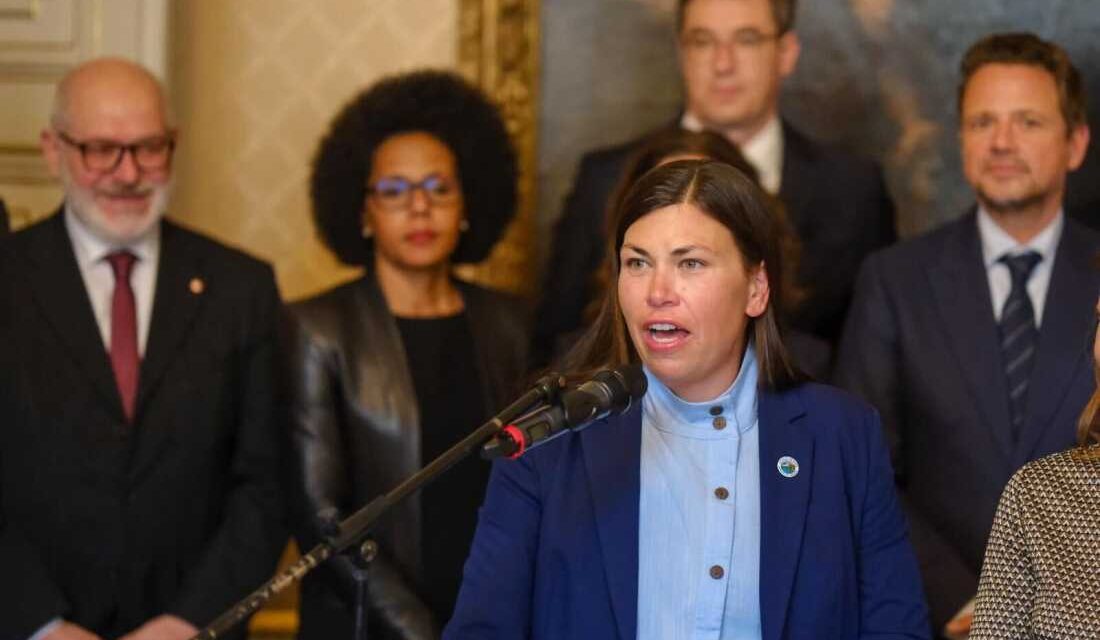
Recently, Lacey Beaty, the mayor of Beaverton, Oregon, joined the Pact of Free Cities meeting in Bratislava, Slovakia. This group consists of mayors from cities worldwide who collaborate on defending democracy and combating authoritarianism. Alongside her were notable figures such as Omar Al-Rawi from Vienna, Audrey Pulvar from Paris, Gergely Karácsony from Budapest, and Rafał Trzaskowski from Warsaw.
In recent years, right-wing populists in the U.S. have established ties with similar groups in Europe. Notably, former President Trump formed a close bond with Viktor Orbán, the former Hungarian Prime Minister. In response, ten U.S. mayors from liberal cities, including Boston, Chicago, San Antonio, and Cincinnati, have joined the Pact of Free Cities. This group aims to share strategies with European counterparts to uphold democratic values and resist authoritarian trends.
Cincinnati Mayor Aftab Pureval explained his reasons for joining, pointing to the actions of the Trump administration, which he believes have undermined democratic institutions and damaged relationships with Europe. The Pact, founded in 2019 by the mayors of Bratislava, Budapest, Prague, and Warsaw, focuses on promoting progressive values and addressing challenges posed by hostile national governments.
Strategies Against Populism
During the meeting, Budapest Mayor Gergely Karácsony shared insights on how Hungarian voters recently unseated Viktor Orbán, who was accused of challenging democratic systems. One key event was when the Hungarian government attempted to ban the annual Pride parade in Budapest, sparking public defiance. The city eventually took over the parade, framing it as an issue of free speech and assembly, which helped highlight Orbán’s political weaknesses.
Financial Challenges and Messaging
Gergely Karácsony and Matus Vallo of Bratislava discussed how national governments can pressure cities by threatening funding for services. For example, Trump’s administration allegedly attempted to cut funding to Beaverton due to its Diversity, Equity, and Inclusion (DEI) policy. In Budapest, similar threats jeopardized basic services like garbage collection. In response, Budapest used public messaging to highlight the impact of such financial cuts on its citizens.
Mayor Beaty reported that the collaborative meeting was beneficial. She observed that the issues faced by U.S. cities mirror those in Europe. Beaty emphasized the importance of effective communication to inform residents when federal cuts occur, ensuring local officials aren’t wrongly blamed.
Criticism and Broader Context
The White House, via spokeswoman Abigail Jackson, criticized Democrat mayors for participating in what it called “Trump Derangement Syndrome” stunts. The response suggested U.S. cities could focus more on local safety and security rather than international collaborations. Meanwhile, the Conservative Political Action Conference (CPAC) has fostered relationships with European right-wing populists. CPAC Chairman Matt Schlapp highlighted connections with figures like Nigel Farage and lessons they provide on addressing immigration policies.
CPAC’s long-established ties with Viktor Orbán include hosting several meetings in Budapest. Schlapp questioned how much American mayors might learn from European counterparts given the distinct issues U.S. cities face, like violent crime and homelessness. However, he acknowledged that organizing efforts and grassroots support could be advantageous for U.S. mayors.
 Trump Administration’s Plan to Resettle Afrikaners as Refugees
 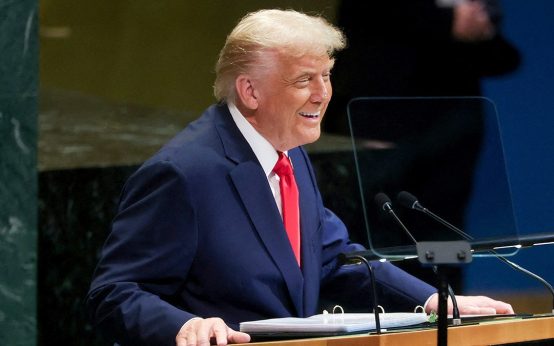 Trump’s Vision on Iran, AI, and Global Security at the UN
 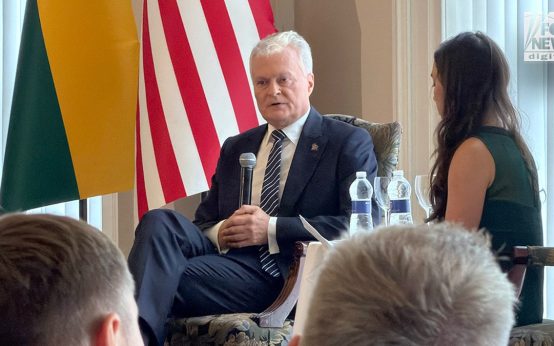 Lithuanian Leader Seeks U.S. Military Commitment Amid Rising Russian Threats
 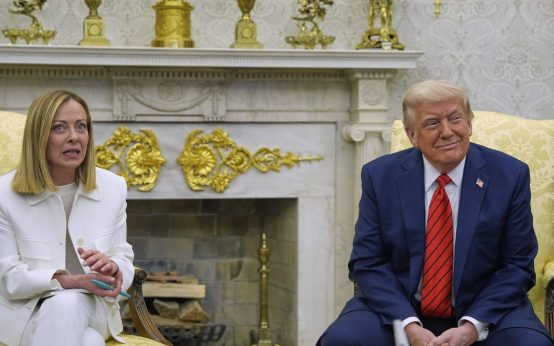 Italian PM Giorgia Meloni Skips UN General Assembly Amid Growing Tensions
  Calls Grow for Ireland’s Soccer Team to Boycott Matches Against Israel
  New U.S. Military Bases Planned in Greenland Amid Strategic Security Deal