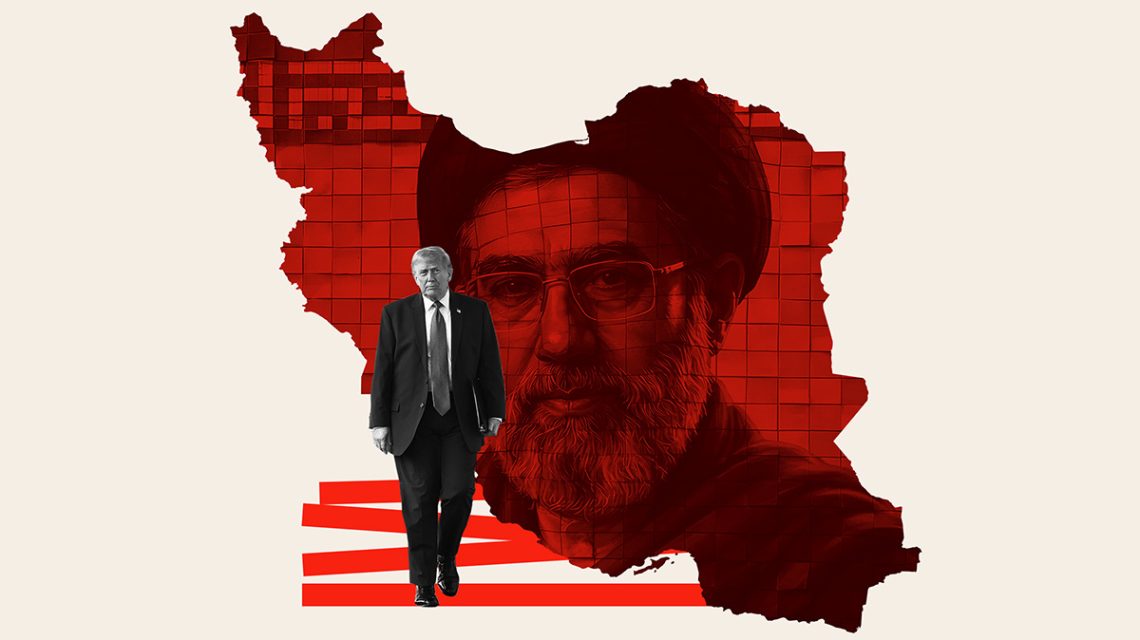
Nearly three months into the U.S.-Israeli conflict with Iran, Tehran continues to resist despite the blockade announced by President Donald Trump. The Iranian government remains steadfast, largely unified in the face of heavy losses and threats from Washington.
The Stakes for Tehran
Iran lost key leaders and military assets but maintains strong demands to conclude the war on its terms. This strategy is risky for Iran, and the cost is significant for the White House and global players as well.
Barbara Slavin, a fellow at the Stimson Center, commented on Iran’s preparedness, highlighting its control over the Strait of Hormuz and strikes on Gulf neighbors, particularly the Emirates.
Iran manages its resources to continue leveraging the Strait of Hormuz strategically. Its leadership views the conflict as existential, enduring economic strain, expecting to outlast Trump’s patience.
Trump’s Postponement
On a recent Monday, Trump postponed military action against Iran after consulting leaders from Saudi Arabia, the UAE, and Qatar, who assured him a deal ensuring Iran remains non-nuclear could be achieved. However, Trump warned of a large-scale assault if negotiations fail.
Iranian leadership shows resilience in response. Military commanders affirm their readiness to match any U.S. escalation. Iran’s demands include U.S. withdrawal from the region, reparations, and cessation of hostilities with Israel and Hezbollah.
Economic Pressure and National Unity
Tehran’s strategy burdens Iranian citizens, exacerbating economic conditions and putting security forces on high alert. Internal divisions, anticipated by the U.S., have not surfaced. Instead, historical unity remains strong against foreign aggression.
Amin Saikal of Australian National University described Iran’s system as rooted in theological and national resistance, which unites citizens in the face of external threats.
U.S. Objectives Under Scrutiny
Trump’s ambiguous strategy limits his options. He seeks a superior agreement to the JCPOA, aiming for a complete ban on enrichment, missile restrictions, and discontinuation of regional affiliations.
U.S. objectives have shifted, yet none are fully realized. Intelligence suggests Iran retains missile capability, while its nuclear program remains operational despite conflict.
Hamidreza Azizi notes Iran’s steadfastness, interpreting U.S. pressure as weakness, and says Iran remains committed to its core demands.
Domestic and International Dynamics
Domestically, Trump faces declining support amid the conflict. A poll reflects public disapproval of the war, and Trump’s approval ratings are low.
Paul Pillar remarked on the Iranian regime’s resilience, enduring under military and economic strain with a critical stake in their political survival.
The conflict’s impact on global oil and gas trade poses further challenges. Historians may see this war as a misstep, potentially leading Iran to reconsider nuclear capabilities as a deterrent to foreign aggression.
 Trump Administration’s Plan to Resettle Afrikaners as Refugees
  Trump’s Vision on Iran, AI, and Global Security at the UN
  Lithuanian Leader Seeks U.S. Military Commitment Amid Rising Russian Threats
  Italian PM Giorgia Meloni Skips UN General Assembly Amid Growing Tensions
  Calls Grow for Ireland’s Soccer Team to Boycott Matches Against Israel
  New U.S. Military Bases Planned in Greenland Amid Strategic Security Deal