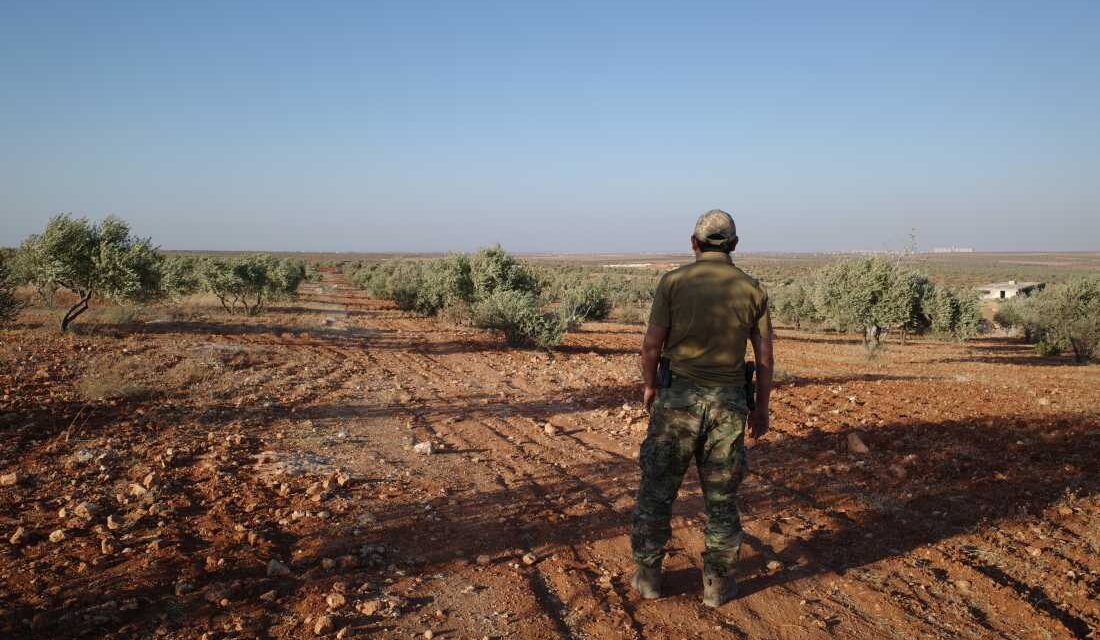
In a covert mission, a group of Uyghur militants launched a daring attack on Syrian government forces in November 2024. Their objective was to cut off critical supply lines supporting Aleppo, a regime stronghold.
A senior Uyghur commander, Hobayd, recalls how his unit carefully prepared over months, utilizing an abandoned water tunnel over two miles long behind enemy lines.
The Uyghur fighters, who have faced severe persecution in China, aligned with Syrian rebel forces led by Ahmed al-Sharaa. They aimed to free Aleppo, making significant headway in their mission.
Hobayd coordinated one unit equipped with oxygen tanks in the tunnel. Simultaneously, another unit lay in wait in olive groves, poised to strike. As dawn approached, the unit in the tunnel made a surprise emergence behind enemy lines, while the groves unit attacked from the front.
Within days, Aleppo fell into rebel hands. The veteran Uyghur fighters attribute their success to their unwavering determination and tactical skill.
This victory paved the way for a rapid advance to Damascus, leading to the collapse of Bashar al-Assad’s 24-year regime.
Uyghurs have faced decades of severe repression by the Chinese government, which has harbored suspicions about their motives. China’s crackdowns have included sending hundreds of thousands of Uyghurs to ‘reeducation camps’ starting in 2017, according to human rights organizations.
In interviews, fighters explained their deep-seated grievances and determination against China’s policies.
We had deep and overflowing hatred toward the Chinese.— Nurmemet, Uyghur fighter
The Uyghur community, once secretive, has now spoken out about their wartime experiences and aspirations. They dream of preserving their culture and perhaps one day returning to Xinjiang, which they consider their homeland.
Choghtal, a deputy commander, recounts the journey from Xinjiang, driven by desperation and repression experienced at home.
Despite their critical role in the Syrian civil war, their future in Syria remains uncertain. Syrian Arabs often view them warily, and China pressures Syria to expel them.
There is a proposal for the Uyghurs to receive Syrian citizenship, and the new government has integrated many Uyghur fighters into its national army.
Nonetheless, challenges remain. Many Syrians oppose foreign fighters, and China’s diplomatic efforts against Uyghurs persist. China’s Foreign Minister Wang Yi has reiterated Syria’s promise to prevent Uyghur militants from threatening China’s interests.
Most Uyghurs in Syria deny involvement with terrorist attacks against Chinese civilians, rejecting connections with the Eastern Turkistan Islamic Movement, labeled by China as responsible for attacks.
Uyghur fighters in Syria have focused on their cause, advocating for Uyghur rights and hoping for eventual liberation.
The Uyghur community in Syria numbers around 20,000, including families. They aim to preserve their cultural identity and have built communal businesses and schools.
As Choghtal and other Uyghurs adapt to a new life, they emphasize education and self-strengthening while keeping hope alive for a future return to their ancestral lands.
 Trump Delivers Warning to Iran, Cuba at UN General Assembly
  Lukashenko and Putin’s Unique Relationship and Belarus’ Strategic Role
  Alan Ritchson Faces Backlash Over Political Remarks
  Himalayan Pilgrimage: A Couple’s Narrow Escape and Lingering Questions
  Former CEO Sentenced for Bank Fraud and Sanctions Evasion
  Russia’s Potential Incursion Into Estonia: NATO’s Resilience Under Scrutiny