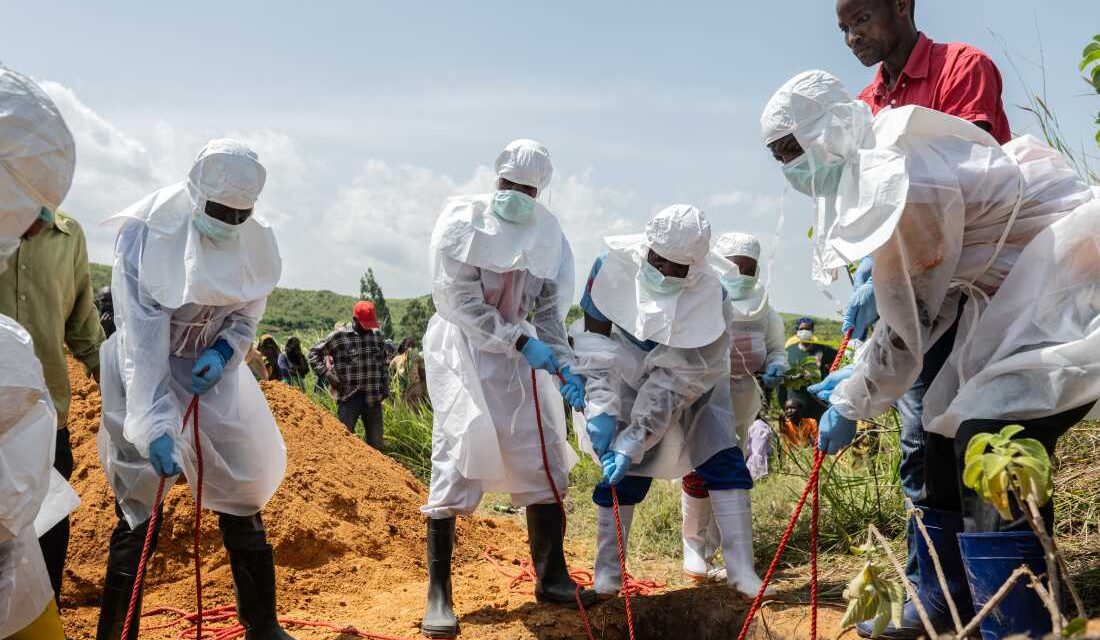
On May 15, the Democratic Republic of Congo declared an outbreak of the Ebola virus, resulting in over 200 deaths. More than 867 suspected cases have been registered. The disease’s rapid spread poses a threat across international borders. On Friday, the World Health Organization elevated the national risk level to ‘very high.’
Ebola causes severe symptoms such as vomiting, fever, and bleeding. It has a long incubation period and is often fatal. Health workers from various organizations launched operations to curb the disease’s spread. However, lack of early detection and undiagnosed cases complicate containment efforts.
The First Known Case and Delayed Identification
The initial case involved a nurse who showed symptoms on April 24 in Bunia, Ituri province. According to Congo’s health ministry, the nurse was buried in the town of Mongbwalu. This town experienced numerous unexplained deaths, heightening public panic and spreading rumors about supernatural causes.
The delay in recognizing the outbreak stemmed from a rarer species of the virus, Bundibugyo. Unlike the more common Zaire species for which a vaccine exists, Bundibugyo has been less studied.
Aid Efforts and Financial Constraints
Efforts to establish treatment centers in eastern Congo are underway. However, U.S. aid cuts impact the response as expenses rise. Roger Kamba, Congo’s Health Minister, stressed the need for increased funding to combat the virus: “The virus knows no borders and affects us all.”
Congo’s financial resources are limited, being among the world’s poorest nations. Proximity to armed conflict zones and poor infrastructure further complicate logistics. In particular, Ituri is affected by violence from groups like Codeco and the ADF.
Community Trust and Safety Concerns
Gaining local trust presents another challenge for health responders. Misinformation and suspicion proliferate, leading to attacks on health facilities. Gabriela Arenas from the IFRC highlights the mixed community response, with some seeking information while others deny the disease’s existence.
Recent assaults in Mongbwalu and Rwampara illustrate tensions, including incidents of arson targeting medical facilities.
International Risks and Measures
Confirmed cases have appeared in North and South Kivu provinces, complicating the situation. The proximity to borders raises fears of international spread. Uganda shares a land border with Ituri and records its own outbreak elements, linked to Congolese travelers.
In response, Uganda has restricted flights and controlled border crossings. The interconnected economies of Congo’s neighboring countries highlight the potential for the virus to affect the region more broadly.
 Upcoming Concerns and Influence in Health Politics
  Fraud Task Force Saves Billions by Tackling Obamacare Misuse
  Presley Gerber’s Passing Raises Addiction Recovery Concerns
  Understanding October SNAP Benefits: Payment Dates and Changes
  Managing Distress and Discomfort Effectively
  Trump Administration Seeks to Influence NIH Grantmaking