Federal judges blocked Alabama’s plan to alter its congressional map, which could have favored Republicans in the upcoming midterm elections. A three-judge panel ruled that the new map discriminated racially by having only one Black-majority district. Alabama must use a court-ordered map for the 2024 elections, ensuring two districts where Black residents are the majority or nearly so.
The judges stated that Alabama voters should not cast ballots under a discriminatory districting plan. This decision hinders Republican efforts to use the new map to contest a seat held by Democrat Shomari Figures. While pleased, Figures anticipates an appeal to the U.S. Supreme Court. He considers the ruling a positive step, though the issue remains unresolved.
“This is a significant step in the right direction, but there is still a long way to go before this fight is settled,” said Figures.
This decision unfolds in a broader context following a prior U.S. Supreme Court ruling weakening the federal Voting Rights Act after it invalidated a Black-majority district in Louisiana. Republican efforts across Southern states, including Alabama, aim to reshape districts with significant minority populations that favor Democrats.
The ongoing redistricting struggle aligns with Donald Trump’s efforts to maintain Republicans’ slim House majority. Alabama’s case has been active for several years, with a 2023 panel ruling that the Republican-drawn map diminished Black voters’ power. Despite Alabama’s 27% Black population, the map only supported one Black-majority district.
Following the Supreme Court’s Louisiana case decision, Alabama officials attempted to apply the 2023 map. The conservative majority in the Supreme Court lifted an initial map use block, sending the case back to the original panel. Alabama Governor Kay Ivey set special primaries on August 11 using the new map.
Upon further evaluation, the panel found undeniable racial discrimination evidence, ordering primaries to proceed under prior court-approved districts. Judges decided to block the new map switch after a lengthy hearing during which they interrogated state lawyers about issues stemming from the Louisiana ruling.
“Candidate and voter confusion is troublesome and warrants significant consideration, but we do not see that a preliminary injunction will worsen it. To the contrary, we expect a preliminary injunction to lessen it,” stated the judges.
Deuel Ross of the NAACP Legal Defense Fund hailed the ruling as upholding voters’ constitutional rights in the Black Belt. The expectation is that voting will proceed fairly under the map this fall.
Other states are adjusting primary elections amid congressional redistricting post-Supreme Court’s Voting Rights Act decision. Louisiana’s primaries have been postponed to allow for a new map excluding a majority-Black district. South Carolina and Tennessee also initiated changes, affecting black-majority districts for potential Republican gains. Republicans in states like Texas have implemented new voting districts following calls for redrawing, many facing legal challenges. Meanwhile, Democrats anticipate gains in states like Utah due to court-mandated districts.
 Gen Z Voters: Shifting Political Landscape Ahead of 2026 Midterms
  Virginia Gov. Abigail Spanberger Ends Division of School Sports by Sex
  California Families, Political Donations, and Alleged Foreign Influence: A Closer Look
  El-Sayed Secures Democratic Senate Nomination Amid Financial Controversy
 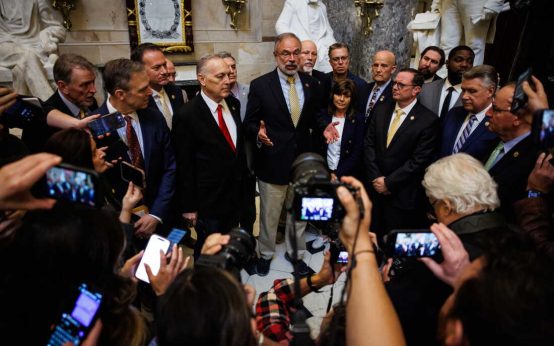 House Freedom Caucus Faces Transition as Key Members Depart
 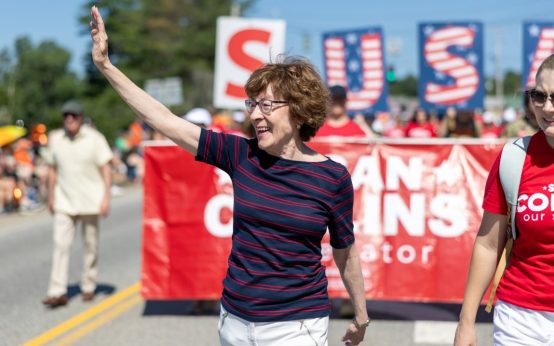 FBI Investigation Into Alleged Pay-to-Play Scheme Involving Sen. Susan Collins