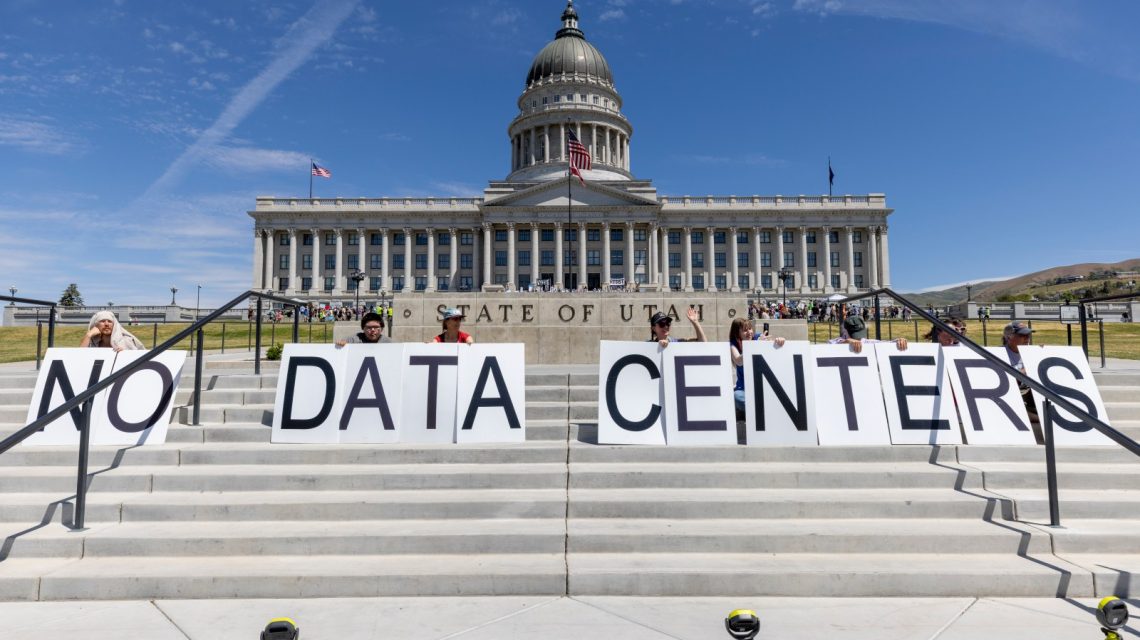
What began as local resistance to data centers is turning into a wider national issue. Public opposition is influencing policy actions. A Gallup Poll indicates that 70% of Americans oppose building artificial intelligence data centers in their communities. Currently, there are more than 4,300 data centers across the U.S., including over 600 in Virginia, more than 460 in Texas, and over 130 in New York, according to Data Center Map.
The rise of AI-driven facilities is causing friction with local communities. Environmental activist Erin Brockovich has launched a website to track concerns related to data centers.
Policymakers Begin to Respond
New Jersey Governor Mikie Sherrill recently proposed that data centers must support grid infrastructure and report on energy and water use. Pennsylvania Governor Josh Shapiro introduced standards for data center developers to qualify for state support, requiring benefits for communities and responsible development.
Businesses Push for a Moratorium in New York
Nearly 500 New York businesses have urged Governor Kathy Hochul and lawmakers to pause the construction of new data centers. They claim the rapid growth of these centers strains resources and raises costs for small businesses. The letter warns of increased fossil fuel pollution, land use dilemmas, and elevated electricity prices, potentially requiring additional gas infrastructure. Newsweek reached out to Hochul’s office for comments.
Texas Calls for a Pause
Texas Agriculture Commissioner Sid Miller has requested a temporary halt on new hyperscale data center developments. He cites concerns over impact on infrastructure and the environment, emphasizing that some centers use enough electricity to power entire towns and consume large amounts of water amid drought conditions.
Local Governments Block Projects
Some regions in New Jersey have banned data centers entirely. East Greenwich Township approved such a ban amid ongoing plans by American Tower for a facility. Millville city commissioners also voted against data centers. Similarly, Monroe Township enacted bans on facilities related to AI, cloud computing, and cryptocurrency operations. Similar actions have occurred in other municipalities like Andover Township and Logan Township.
Concerns in Arizona and Georgia
In Arizona, neighborhoods have little success in opposing new data center proposals. Concerns include noise, water strain, and declining living conditions. Industry representatives argue that outreach and the on-site power component of centers can help the local grid and generate taxes.
Georgia Power is developing Project Wansley, which may require demolishing homes for a high-voltage transmission corridor supporting data centers. Residents have expressed concerns about property impacts and compensation.
Economic Impact of Resistance
The opposition impacts development significantly. Miquel Vila from 10a Labs stated that local opposition is becoming mainstream. In 2022, 17 projects were delayed while 31 were canceled, valued at approximately $156 billion. Additionally, 11 states are contemplating temporary moratoriums on new data center projects.
 Expansion of Data Centers Fueled by AI Development
  Challenges Facing the Supreme Court’s Public Perception
  California Democratic Aide Arrested for Visa Overstay by Federal Authorities
  Experts Doubt Export Ban Will Lower Fuel Prices
  Trump Delivers Warning to Iran, Cuba at UN General Assembly
  Trump Delivers Stern UN Speech on Iran, AI, and Global Security