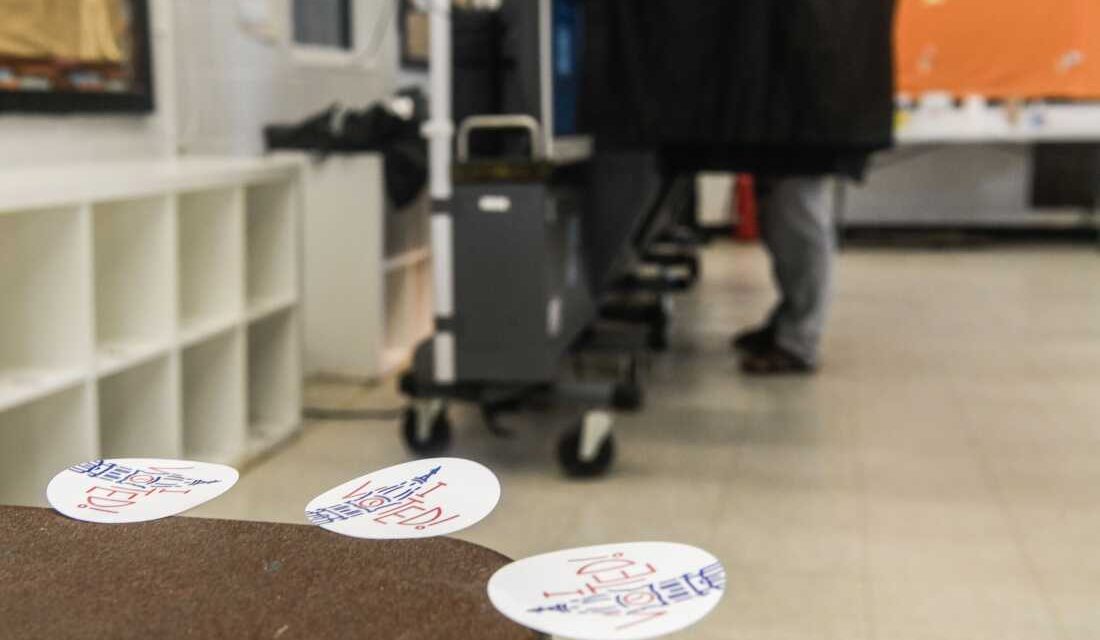
In Philadelphia, a person votes in Pennsylvania’s primary elections, displaying an “I Voted” sticker. Primary elections play a significant role in Congress’s growing polarization. Some lawmakers argue that closed, single-party primaries limit voter choice and prioritize party loyalty over independent political judgment. These concerns align with calls for primary reform.
John Opdycke, president of Open Primaries, highlights the manipulation of outcomes by both major parties, reducing voter influence. Recently, GOP primary voters in states like Indiana, Kentucky, and Louisiana have removed lawmakers who opposed Trump, including on issues like redistricting.
This criticism comes amid concerns about the effects of partisan gerrymandering. More than 90% of U.S. House seats are now seen as safe for one party. Consequently, primaries, often exclusive to party members and with lower participation than general elections, decide most House members.
Nick Troiano, executive director of Unite America, calls for nonpartisan primaries. He warns that the combination of gerrymandering and partisan primaries increases congressional polarization.
If you’re an elected official, your main threat is a primary challenger from your ideological extreme, Troiano explains.
Rep. Brian Fitzpatrick, R-Pa., known for representing a competitive district, explains how closed primaries discourage political independence. He believes the fear of challenging party extremism harms the country.
Despite options for independents to run in general elections, closed primaries complicate the electoral landscape. Fitzpatrick urges open primaries to ensure voter participation.
We should ensure every American citizen can vote in every election, he states.
Sen. Bill Cassidy, R-La., one of few Republicans to vote for Trump’s impeachment, faced party opposition. Louisiana’s election rule changes limited his chances of crossover support in a semi-closed primary, where only party-affiliated voters could participate. Cassidy criticizes the system, emphasizing the need for debate and compromise in American politics.
Sen. Lisa Murkowski, R-Alaska, provides a contrasting example. After losing a primary, she won a general election as a write-in candidate. Murkowski also voted to convict Trump, but Alaska’s open primary system, adopted in 2022, helped her reelection. She believes such systems reduce party control over elections.
Advocates for open primaries argue that political parties resist relinquishing control. Parties, having maximized gerrymandering, now focus on closing primaries. Opdycke explains the growing party interest in controlling the primary process.
Efforts to close primaries have faced challenges. Support for nonpartisan primaries remains strong in some states, but reform movements have faced setbacks. Troiano notes that party allegiance has increased to the point where 90% agreement isn’t always enough for incumbents to avoid challengers, worsening congressional dynamics.
Opdyke addresses a common misconception that open primaries always lead to moderate candidates. He argues closed primaries discourage collaboration across party lines, even on specific issues.
Polling by NPR, PBS News, and Marist indicates that a significant majority of Americans prefer compromise over gridlock in Washington. Despite this, congressional job approval remains low, a reflection of the challenges posed by current primary systems.
 Texas Senate Race Sees Intense Character Attacks
  Senate Leadership Fund Halts Spending in North Carolina
  Trump Team Challenges U.S. Military Structure
  Oregon School District Sued Over Denied Curriculum Reimbursement
  Democrats Anticipate Senate Gains Amid Poll Cautions
  Republicans Face Reelection Challenges Amidst Rising Living Costs