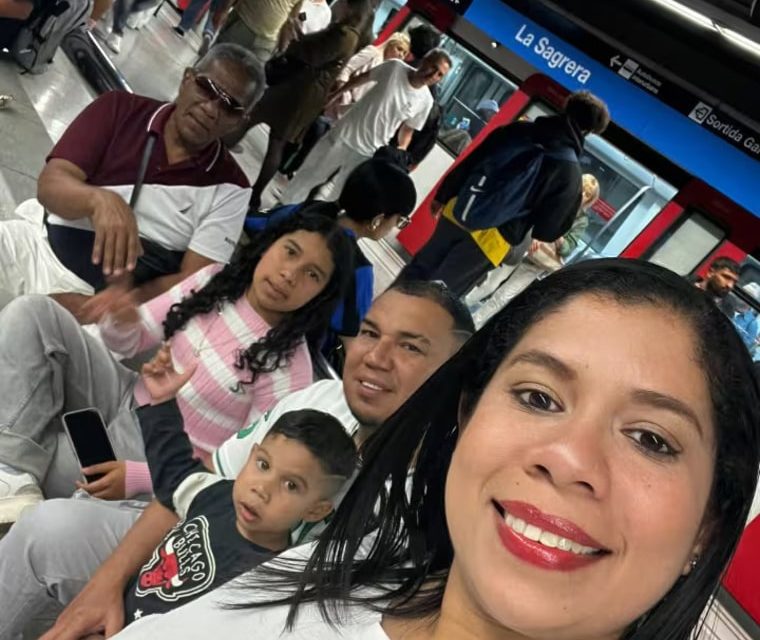
In Barcelona, Nariola Romo, 34, reflects on her journey from Colombia to Spain, a decision influenced by denied opportunities to travel to the United States. Initially aiming for the U.S., Romo and her family found a new home in Europe, interpreting the change as a stroke of destiny. Nearing legal status in Spain, Romo expresses gratitude for the path her life has taken, especially given the migrant challenges in the U.S.
Spain is currently implementing a significant regularization process for undocumented immigrants. This initiative might provide legal status to over 500,000 individuals. Adult immigrants will receive a one-year work and residence permit, contingent upon proving employment to renew it. Minors get a five-year status regularization. This contrasts sharply with the U.S. approach to immigration.
Spanish Prime Minister Pedro Sánchez describes the move as a step towards normalization, recognizing immigrants as integral parts of Spanish society. The process, initiated in January, witnessed a massive response, with over 43,000 applications in three days. The application deadline is June 30, and processing takes about three months.
Romo’s family, originally from Barranquilla, fled Colombia in 2024 due to threats from criminal organizations. They established several businesses there but sought safety in Spain. Romo, a teacher, has worked in various roles while attempting to regularize her family’s status. Appreciative of Spain’s hospitality, Romo feels confident in their decision to stay.
For Diadji Nguirane, another immigrant in Spain, regularization holds different implications. He and his partner, Maimouna Gueye, from Senegal, have three daughters born in Spain. Nguirane anticipates the benefits of the process as he awaits his legal status to begin formally contributing to his family’s needs. Until now, Gueye has sustained the family, working at a hospital while Nguirane managed occasional informal employment.
Nguirane plans to remain in Spain, seeking stability and opportunity. Both families look forward to a future in Spain, integrating into the society they have chosen as home.
The Regularization Process
This initiative marks the second major regularization in two decades in Spain. To qualify, applicants need to demonstrate certain criteria, including presence in Spain before January 1, 2026, and continuous residence for at least five months. They also need to submit documentation such as a passport, proof of no criminal record, and potentially a vulnerability certificate.
The regularization movement, supported by groups like #RegularizacionYa, aims to address the issue of undocumented immigrants in Spain. The process aligns with the needs of economies like Spain’s, which have aging populations requiring increased contributions to support systems like Social Security.
Despite benefits, the measure faces opposition from right-wing political factions. They argue it could overburden public services. Isabel Díaz Ayuso, Madrid region’s president, criticizes the initiative, suggesting it could manipulate voter demographics and impact cultural identity. However, regularization neither grants voting rights nor alters the electoral process.
For the Romos and Nguiranes, the mass regularization represents hope and a foundation for building a future in a country they aspire to integrate into fully.
 Alan Ritchson Faces Backlash Over Political Remarks
  Himalayan Pilgrimage: A Couple’s Narrow Escape and Lingering Questions
  Former CEO Sentenced for Bank Fraud and Sanctions Evasion
  Russia’s Potential Incursion Into Estonia: NATO’s Resilience Under Scrutiny
  Senators Urge Action to Free Imprisoned Journalist in Iran
  Trump’s Address at UNGA and Key Political Developments