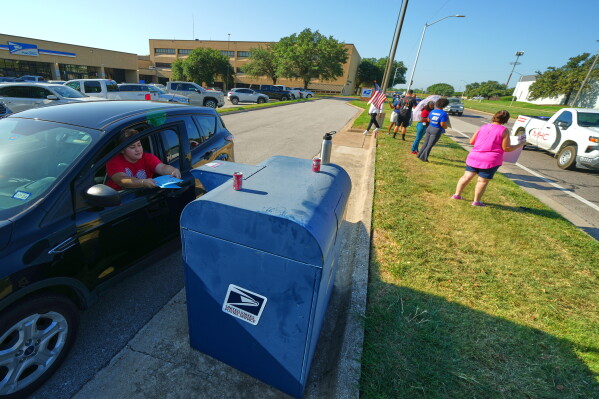
The economy’s outlook has recently declined among Americans. This drop is tied to rising gas prices, which have increased following renewed tensions between the U.S. and Iran. The Conference Board has reported that its consumer confidence index slid to 90.8 in July, down from 92.2 in June. Throughout the year, the index has lingered within this tepid range, a contrast to the highs above 100 seen in late 2024 and early 2025.
In June, consumer attitudes improved as gas prices receded to about $3.70 per gallon, from over $4.50 per gallon in late April and early May. However, prices climbed back to an average of $4.10 per gallon after renewed conflict in the Middle East, according to AAA reports.
After being attacked by the U.S. and Israel, Iran closed the Strait of Hormuz, a vital passage for global oil shipments. This action spiked gas prices.
This price surge has heightened inflation, leading to a decrease in inflation-adjusted incomes. Economic uncertainty persists, which could present challenges to President Donald Trump and the Republican party as the midterm elections approach in less than 100 days. Despite Trump’s blame on Democrat predecessor Joe Biden for inflation, rates have actually risen since Trump took office. Inflation increased to 3.5% from 3% in January 2025; it was just 2.4% when the Iran conflict reignited on February 28.
Surveys conducted from July 1 to July 22 revealed persistent pessimism, with many Americans expressing concern about elevated gas prices. While references to gas costs declined marginally, complaints about food and grocery expenses rose. Data indicates that groceries for home consumption have become 33% more expensive since 2019. In response, Americans have relied on coupon usage, comparison shopping, and cutting back on favorite foods to handle the most significant jump in grocery prices in fifty years. An example of this is beef, as the cost for a pound of ground beef hit $6.82 in June, marking a 79% increase since early 2019, according to the Bureau of Labor Statistics.
Concerns about jobs and unemployment have slightly risen this month, with a decline in views on the current job market. Although expectations for the job market six months later have shown slight improvement, they remain negative. In June, the U.S. job market slowed, with only 57,000 new jobs added, less than half the previous month’s figure. The unemployment rate fell to 4.2% from 4.3% in May, although this was mainly due to more people ceasing their job search.
Mentions of war and geopolitical matters decreased in the survey period. However, the Conference Board anticipates a potential rise in such mentions should fighting between Iran and the U.S. escalate further.
 Legal Battle Over Media Ban at White House
  Kyler Murray Cleared from Concussion Protocol, Set to Start Against Buccaneers
  Fat Bear Week: A Unique Annual Tradition at Katmai National Park
  Chicago Faces Lingering Cloudy Weather After Heavy Rainfall
  Nor’easter Threatens East Coast with Heavy Rain and Strong Winds
  California’s Growing EV Community Faces Challenges