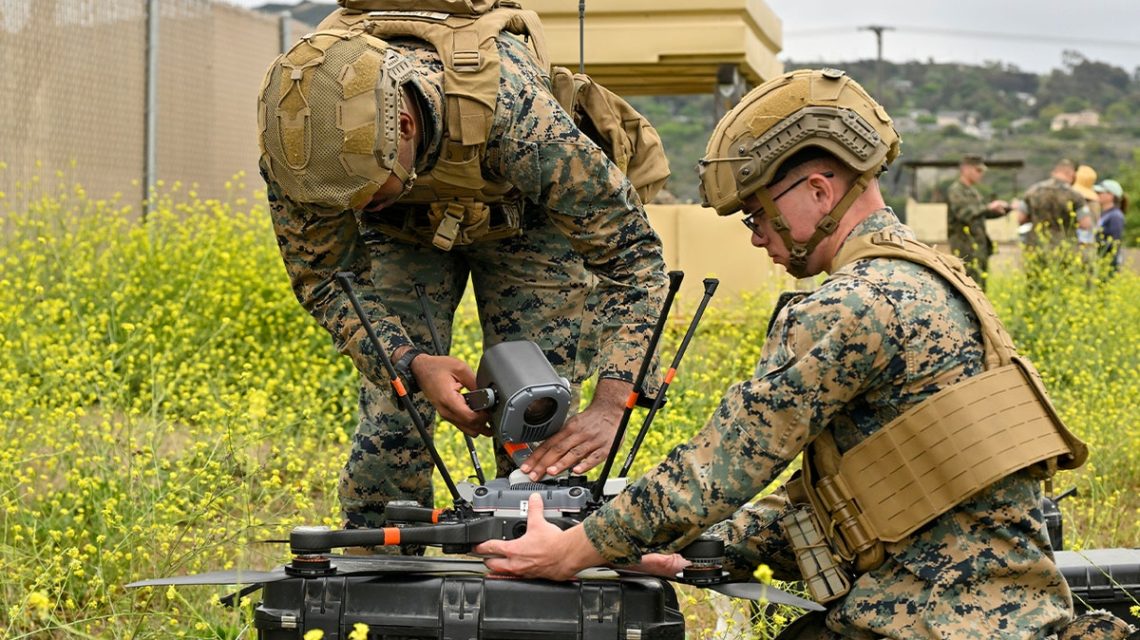
Modern warfare heavily relies on drones, with both Ukraine and Russia deploying thousands. Ukraine manufactured 5 million drones last year while Russia launched 805 in one night against Ukrainian targets. Success in this arena depends less on advanced weaponry and more on a robust industrial base capable of continuous production. A crucial component in drone production is the permanent magnet, found in the motors of all drones used today in Ukraine and Iran. Nearly all of these magnets come from China.
Former President Donald Trump’s Executive Order on drone dominance in 2025 focused on boosting American-made platforms. The directive accelerated traditional timelines, reducing them from years to mere months. Vendors now compete in real-world evaluations that lead directly to production agreements. The Pentagon’s Drone Dominance Program plans to acquire over 200,000 drones by 2027, escalating to 340,000 by 2028.
Achieving this goal necessitates addressing the supply chain beyond the motor. The U.S. consumes around 50,000 tons of permanent magnets annually, with most imports hailing from China. These magnets, though not sophisticated, are fundamental; without them, the production line halts.
“Almost the only processing for most critical minerals is occurring in China and Malaysia.” — T.S. Allen, former Pentagon official
China’s dominance in rare-earth minerals resulted from strategic subsidies and undercutting prices that drove Western competitors out of business. This leverage allows China to manipulate prices and impose restrictions, such as the export licensing requirements introduced in April 2025. These restrictions have hampered exports severely. Motor-G, a leading European drone motor manufacturer, and Ukraine have faced similar bottlenecks due to reliance on Chinese magnets.
Iron and nitrogen, low-cost and abundant materials in the U.S., offer an alternative for making magnets. These elements are free from export controls, providing a stable cost environment. Iron nitride magnets, emerging in commercial sectors, perform well under high temperatures and less weight, crucial for drones.
American research initiated the science behind iron nitride, and domestic manufacturers are scaling production to fulfill rising demand. By incorporating these magnets into drone motors, proven commercial technology enters a critical sector.
Drone warfare centers on production capacity. The side sustaining production succeeds, but supply chains face pressure from unforeseen disruptions and political crises. Ensuring a secure, independent source for every crucial input in drone motor production is vital, with permanent magnets remaining a key focus.
 President Trump Proposes ‘Super Intelligence’ as New AI Term
  First Lady Melania Trump’s AI Education Push Amid Concerns
  Expansion of Data Centers Fueled by AI Development
  Beijing’s Tactical Undermining of U.S. Supremacy Through AI
  Controversy Surrounds Automated License Plate Readers Across the U.S.
  Trump and Harp Sued Over Truth Social Subscriber Program